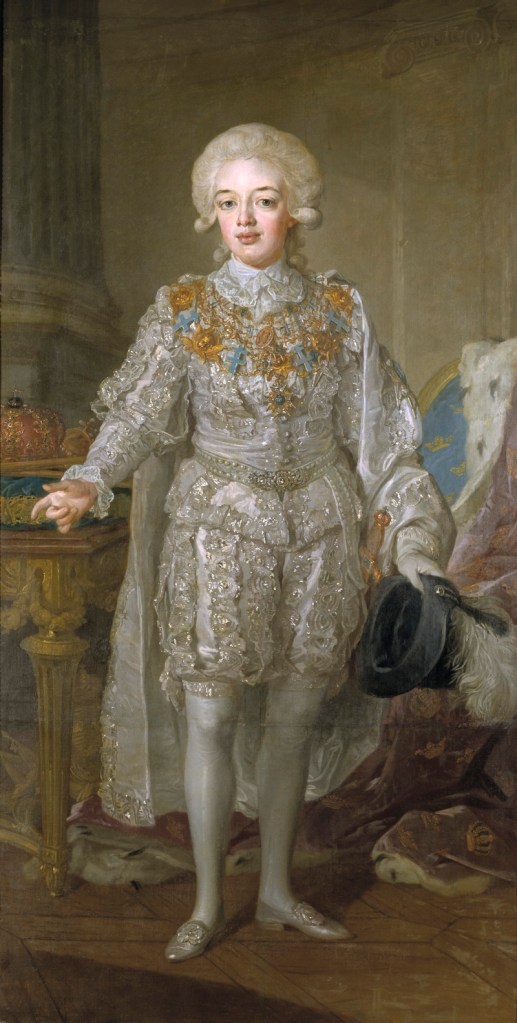
Today, March 13, it is 214 years since Gustav IV Adolf was arrested at Stockholm Palace and deposed.
Gustav Adolf was born on 1 November 1778 as the son of Gustav III and Sofia Magdalena of Denmark. Gustav III is said to have been very involved in his son, when it came to his godparents, staff and teachers. Perhaps, with today’s terminology, one would have said that he was a father who loved his son and wanted the best for him.
At the age of 13, however, Gustav Adolf saw his father die, almost two weeks after he was shot at a masquerade ball on March 16, 1792, and it is believed to have traumatized him deeply.
It is said that although the boy did his best to be stoic in public, he wept uncontrollably when he was out of sight of prying eyes.
He considered abdicating the crown himself, and his nervous disposition and trouble with spasms led his uncle, Duke Charles, to consider having him declared insane and unfit to rule.
However, this never happened, and when Gustav Adolf came of age, he was crowned Gustav IV Adolf.
What can be said to be positive during Gustav Adolf’s reign was his marriage to Fredrika of Baden, the marriage was happy. The reign itself cannot really be described in that way.
Not least his very strong and highly pronounced opposition to Napoleon, who at this time was marching across Europe, and his never-failing support for England put both Sweden and his regime under both pressure and criticism. This contributed to his time as king ending on this day.
After news of an uprising in Värmland that had taken place a week earlier reached the king in Stockholm, he decided to leave Stockholm, prompting his opponents led by Carl Johan Adlercreutz to act quickly. Along with six other officers, he marched into the castle and seized the king.
He and his family were placed under house arrest at Gripsholm Castle to be deposed on 10 May. When he realized how unanimous the decision was, he burst into tears.
At the end of 1809, the former king, his wife and their children were banished from the country, and lived for the first year on various estates belonging to Frederika’s family, when he suddenly left his family to travel alone to Switzerland.
It had been decided on an alimony for the former monarch, something he refused to accept as he reportedly did not want to burden Sweden.
Instead, the money went to Fredrika and their children, and just a year after they were banished, Gustav Adolf, against Fredrika’s will, requested a divorce.
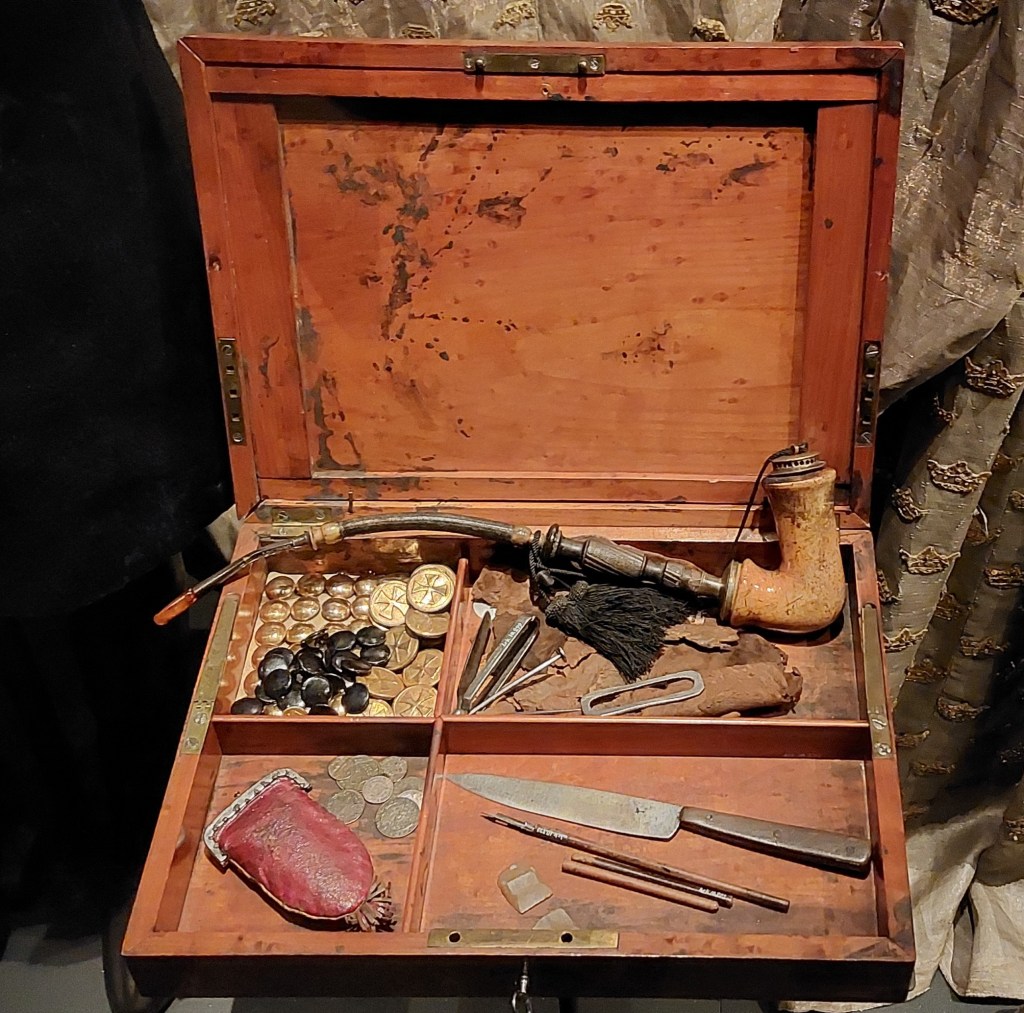
After leaving his family he led a wandering life in Europe, first under the name ”Count of Gottorp”. He began several relationships and had three children.
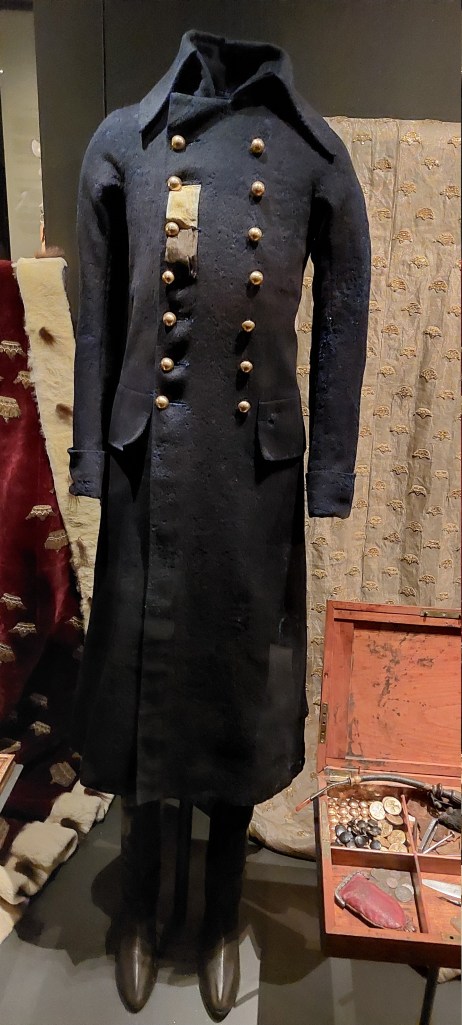
During the last years of his life he called himself ”Colonel Gustafsson”, and as him he died on 7 February 1837, at an inn in St Gallen in Switzerland, alone, alcoholic and empoverished.
After the future Gustav V married Gustav IV Adolf’s great-granddaughter Victoria of Baden in 1884, the former king’s ashes were brought home again, and he is now buried in Riddarholm Church.
Sources:
Avsatta : Fredrika och Gustaf IV Adolf : ett familjeöde i Napoleontidens Europa. Smygehamn: Ulfsäter. 1998.
Två dygn som förändrade Sverige : 1809 års revolution. Isakson, Börje (2009). Natur & kultur.
Gustav IV Adolf 1778-1837. – Nordin, Michael; Nilsson, Urban (2009)

 Scandinavian History
Lämna en kommentar