Not all names in the Norse or Icelandic sagas and secular myths refer to people who actually existed.
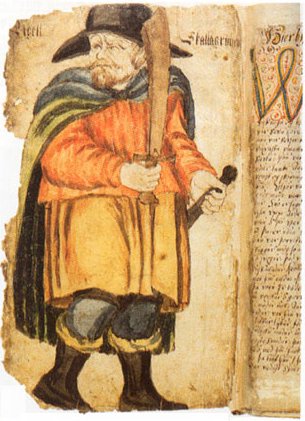
An exception is the Icelandic poet Egil Skallagrimsson; he lived once and has gone down in history as not only Iceland’s but the entire Nordic region’s greatest poet.
Given that he lived between roughly 900 and 992 AD, we shall not discuss what this says about the literary ability of the Nordic countries. Still, we shall dive right into Iceland of the Younger Iron Age (and no, the Middle Ages had not yet reached the North).
It is also like the Nordic region’s most outstanding poet who finds his way into a blog that is supposed to be about the history of Scandinavia. When Iceland was colonized by Norwegians, the country was supposed to return.
But. Egil.
While the 110 or so stanzas and stanzas of his poems that have survived through the centuries are believed to be authentic, Egil’s actual life is primarily shrouded in obscurity.
The source of his life is Egil Skallagrimsson’s Saga, possibly—but not entirely sure—written by Snorre Sturlasson, who was distantly related to him.
He is said to have been born in Iceland around the year 900, as the son of the country’s namesake, Skallagrim Kvällulvsson, who is said to have emigrated to Iceland from Norway in 878 as a result of a conflict with the ruling king Harald Hårfagre (Fair hair). Skallagrim Kvällulvsson was herse, in Old Norse ”hersir”, a group that until the 11th century were local chiefs in Norway. The authority came from successes in boat-borne raids and trade voyages; in other words, they belonged to the Norwegian so-called Vikings. When power came to be based more on land ownership and was also influenced by a central royal power, the influence of the lords decreased.
The name ”Kvällulvsson” – Evening wolf – came about because Egil’s grandfather must have been what we would identify as a werewolf today; although not dependent on the full moon, he simply turned into a wolf when evening came. But while this was at least intellectually an entirely conceivable possibility a thousand years ago, we can probably safely dismiss this today.
But evening wolves or not, Egil Skallagrimsson came from a family with power and influence, in which the men had been warriors. And Egil continued that tradition.
As previously mentioned, Egil’s Saga, the main source for this man, not only tells about the most outstanding poet in Old Norse history but is also considered one of the most outstanding sagas.

According to it, Egil must have been quite ugly – and this is subjective, not least depending on the age – black-musked and hot-tempered, in other words, with a short stubby, which is often expressed in the Saga of his life.
The stories also tell that Egil’s parents hesitated to take him to the guild as he must have been – as a child – challenging enough to handle when he was sober. Which suggests that the child Egil drank. The Norwegian professor of History of Religions, Gro Steinsland, believes that this particular part of Egil’s Saga reflects Egil as an adult. And yes, probably. It is not likely that Egil either wrote his first poem at the age of three or killed another human for the first time when he was seven, as is also claimed.
He is said to have embarked on Viking expeditions and, during these, to have ended up in England, where he fought, among other things, by King Athelstan’s side together with his brother Torolf in the battle of Brunanbruh in 937 against the Irish, ”Viking-descended” king Olaf Guthfrithsson.
According to the myth, the Skallagrimsson brothers were to have been decisive in the fact that the Anglo-Saxons won the battle, but Torolf died on the battlefield.
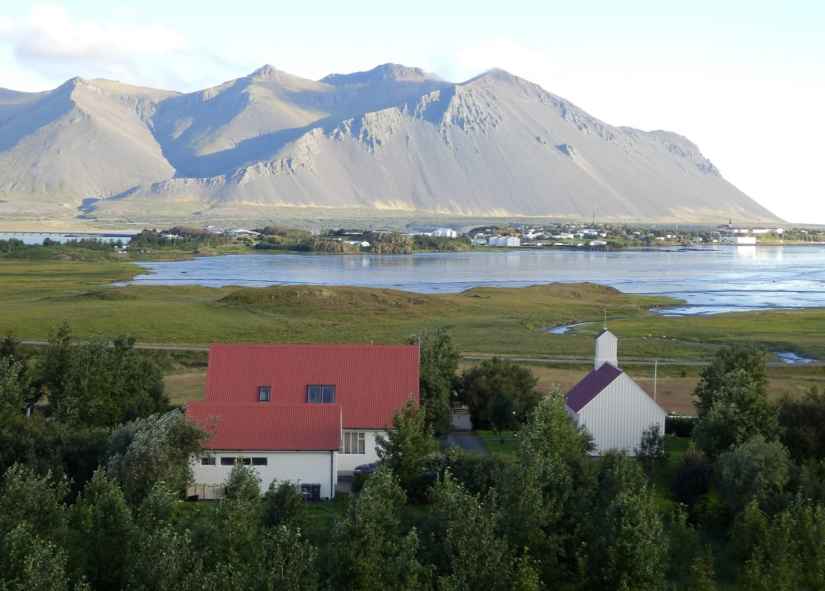
After this, Egil is said to have returned to Iceland and shortly found himself in a conflict with the Norwegian king Erik Blodyx, related to the inheritance to Egil’s wife, Asgard, who should have been entitled to.
Egil Skallagrimsson lived a violent life, perhaps entirely in line with the life a somewhat choleric man should have lived during the Viking Age.
But then it comes, the moment when Egil Skallagrimsson stretches out his hand through a millennium, and you, not least as a parent, can relate to what he felt. The beloved son Bödvar has drowned during a fishing trip, and Egil doesn’t want to live anymore. He has seen death before, even caused it, and even lost a son before. But this is the final straw.
Egil Skallagrimsson locks himself in, intending to starve himself to death, but his daughter Torgerd manages to get him to open the door and let her in because they will face death together. She gives him a piece of dried seaweed to eat under the pretence that it will hasten death. Instead, the algae makes Egil thirsty, and she persuades him to drink milk.
Together, they agree that nothing will be better if they leave mortal life and the scrub in which they locked themselves. Instead of dying, Egil writes the poem Sonatorrek, The Sonloss;
I can hardly move my tongue
or lift up the steelyard of song;
now there is little hope of Viðurs
theft, nor is it easy to draw it out
of the hiding place of the mind.
It is not easy, because of my
heavy sobbing, to let flow from
the mind’s place the joyful find
of the kinsmen of Frigg, which
in times of yore was carried
away from the lands of giants.
[Without faults, has come to
life at [name of dwarf?] ship of
Bragi]; [From] wounds on a
giant’s neck [blood] flows
down in front of Nain’s house
doorway.
Because my lineage has come
to an end, ike weather-beaten
trees of the forest, it is not a glad
man who carries a dead body
of a relative [down from the
benches.]
[Yet I must of my mother’s
death and fall of my father
first speak;] I carry out of the
temple of words the timber of
praise, leaved with words.
Cruel to me was the gap
which the sea broke in [my
father’s fence of kinsmen]; I see
the empty and open place
[stands] [the gap of my son],
which the sea has caused me.
Rán has given me rough
treatment; I have too few
dear friends; the sea broke the
strings of my kin, a hard-spun
strand of myself
You know, if for that offense
I took revenge with the sword,
the ale-smith’s life would be
over; If I could kill them, I
would fight Ægir’s wife [and
brother of the wind].
But I thought I had not the
strength to contend with my
son’s slayer, because [in front of
everyone’s eyes it becomes
known, the lack of support
of an old thane.]
The sea has deprived me of a
great deal; it is painful to
enumerate the deaths of
kinsmen, since [my shield of the
family] died and [went
on the paths of joy.]
I know myself that in my son
the stuff of a bad man would
never have grown if this [shieldtree] could have matured
until he got a soldier’s arms.
Nearly always he complied
with his father’s words, though, everybody else objected
. . .
and most supported my efforts
The loss of brothers
often comes to me in the
[favorable wind of the enemy of
the moon]; I consider (what to
do) when the battle rages,
I rack my brain about it and
reflect about this:
What other courageous
person will support me against
sudden danger? I am often in
need of it against obstinate men.
I become wary (?) when friends
depart.
It is hard to find anyone
trustworthy among all the
people[ of Óðinn’s gallows],
because an evil traitor to his
relations takes rings for the
killing of a brother
(Incomplete verse)
The saying is also that no
man gets compensation for a son
unless he himself rears another
son, one who is born instead
in order to take the place of a
brother.
I do not like the company of
men, even though they are in
agreement; My son, the son of
my wife, has arrived [at the home of Óðinn], to pay a visit.
But [the chieftain of the fen
of the beer-mash] weighs me
down with firm mind;
I cannot hold [the ground of the
mask], [knowledge’s carriage],
upright
since cruel fever removed my
son from the world, the one –
himself without blemish – who I
know kept clear of slander.
I still remember when [the
friend of the Gautar]
raised up to the world of the
gods the ash-tree of my race
which sprouted from me and the
family branch of my wife.
I had good relations with [the
lord of the spear], I had
confidence in him, until [the
friend of carriages], [lord of
victory], broke off friendship
with me
I do not [sacrifice] [to the
brother of Vili,] the protector of
the gods, because I am keen to;
nevertheless, [Mímr’s friend]
has, if I consider the better side
of it granted me recompense for
my ills
[The enemy of the wolf],
the experienced fighter, gave me a faultless art, and the mind
which enabled me to make shifty
cowards of obvious enemies.
Now I am in trouble, [sister
of the enemy to two] stands on
the headland; nevertheless I
shall, glad and unconcerned
and with good-will await death.
We leave Egil here, in the grief every parent can relate to. He survived and wrote a poem that still touches those who read it today. Egil Skalla-Grimsson is said to have lived to be 92 years old and, at the end of his life, was completely blind.
Some will focus on the word saga and think, ”Huh? Isn’t it true?” For those who do, it should be emphasized that fairy tales in this context should not be confused with, for example, the Brothers Grimm’s version of fairy tales. An Old Norse saga is a retelling of what happened based on the available sources.
Egil once lived; he was a Viking and composed in a way that means that his texts have survived through a millennium and still speak to us today.
Translation of Sonatorrek from Icelandic: Bjarni Einarsson
Sources:
Egil’s Saga/The Sagas of the Icelanders
Fornnordisk Regligion – Gro Stensland
Images:
The Saga Museum – The blog writer
Other images – Creative Commons.

 Scandinavian History
Lämna en kommentar