In 1036, what is believed to be the last major Viking expedition left what is now Sweden to head east in search of riches and possibly fame. Fame came, but certainly not in the way the participants had imagined.
As it has gone down in history, the Ingvar expedition became a disaster, as 26 recognized runestones in Södermanland, Uppland and Östergötland tell about. Four more stones may speak of the tragedy, but these are yet to be confirmed by runeologists and historians.
The runestone that tells the most detailed story about Ingvar expedition is the Gripsholm Stone, or SÖ 179, as it is called in the runestone context. Here you can read that:
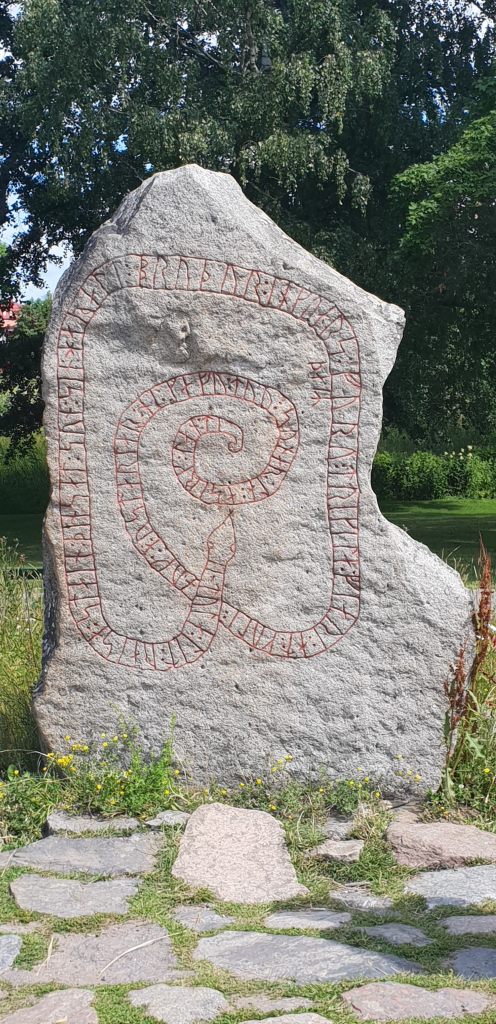
Tola raised the stone
after his son Harald, Ingvar’s brother
They went manly
far for gold
and eastward
fed the eagle.
They died south
in Särkland.
Who Ingvar was isn’t known with absolute certainty, but his name recurs on the runestones, which means that it is assumed that he led the train. Ingvar has also been immortalized in one of the Icelandic sagas, the Saga of Ingvar the Far-Traveled. Although the saga is full of imaginative creatures, researchers have also been able to corroborate it through what is told on the stones.
According to the legend, Ingvar was the son of Edmund, who in turn, through a daughter, was the grandson of Eric the Victorious, the first historically confirmed king of Sviþjod, the Kingdom of Sweden from 970 to 995, possibly also Västergötland and Östergötland. He was also the one who is considered to have founded Sigtuna. Of course, Erik not only had a daughter, but he was also the father of Olaf Scotking, the first wholeheartedly Christian king. Erik himself was baptized, but towards the end of his life, is said to have repented and returned to the old gods.
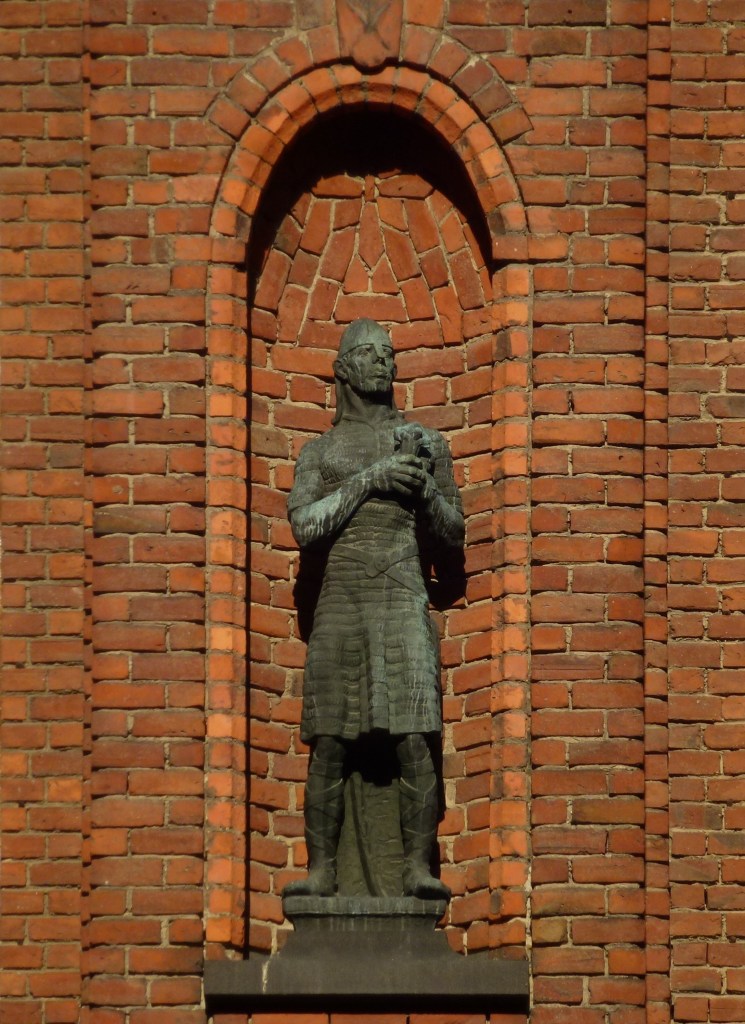
In other words, Ingvar supposedly was of royal blood and is said to have been brought up at Olaf Scotking’s court. The relationship between Olaf Scotking and his nephew Edmund must have been strained; Eric the Victorious’ daughter, Olaf’s sister, is said to have married an Åke against Erik’s will, who was later murdered by Erik at a guest banquet.
Edmund’s inheritance passed to Olaf, and it broke when Edmund wanted it back. Edmund went into exile with Jaroslav I of Kyiv, who was married to Olaf Scotking’s daughter Ingegärd.
We should not lose ourselves too much in family relationships because they can confuse the best if you follow them thoroughly. However, Ingvar is said to have contributed to a reconciliation between Edmund and his uncle Olaf.
Olaf Scotking died between 1021 and 1022, and the throne passed to his son Anund Jakob, who came to rule the kingdom until 1050. The extent of the Ingvar expedition, with reportedly 30 ships, and Ingvar’s supposed connection to Anund Jakob have led some scholars to believe that it was part of a battle fleet under the king’s command.
The stones also tell us that wealthy men participated with their own ships, including Banke from Svinnegarn, which today is a small town in the municipality of Enköping, located just under a kilometre from the western shore of Svinnegarn Bay. On the rune stone U 778, it can be read that ”Tjälve and Holmlög had all these stones erected for Banke, their son. He alone owned a ship and steered eastward in Ingvar’s army. God help his soul.”
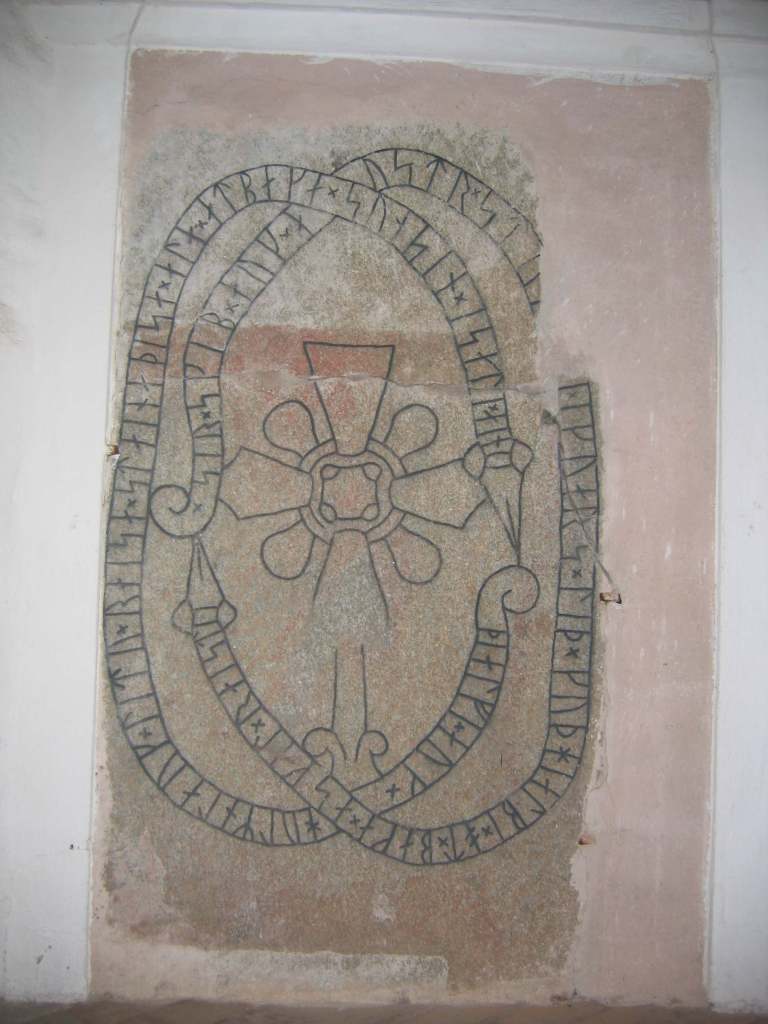
Today, the roughly two-meter-high stone is walled up in the armoury at Svinnegarn church, and it is not known where it originally stood. However, it is not likely that it was moved very far. According to archaeologist Mats G. Larsson, the concentration of Ingvar stones found around Strängnäs and Eskilstuna may indicate such individual involvement.
When it left Sweden in 1036, Ingvar must have been 20 years old, and the sights were initially set on Gårdarike. The Nestorian Chronicle tells us that Jaroslav hired Varangians, the name used in these regions for Scandinavians, to fight against the nomadic Petjenegers who had begun to besiege Kyiv while Jaroslav was in Novgorod. It was possibly Ingvar who led the Scandinavian forces in those battles, described in the source material as violent and bloody.
According to the legend, Ingvar’s party stayed with Jaroslav and Ingegärd in Gårdarike for three years, and it is possible that some returned to Sweden from here, not least those with families. The stones erected over those who died under the expedition after leaving Gårdarike are primarily erected by parents mourning their children, not by children mourning a parent. The fathers who died seem to have predominantly done so in Gårdarike.
While Gårdarike is the Old Norse name for the Kingdom of Kyiv, which was probably founded by Scandinavians from Svealand, Rus, Särkland is thought to mean the land of the Saracens, or possibly from the Latin word for silk. Another theory is that the word särk refers to worn clothing. In any case, today, it is considered to be the countries around the Caspian Sea: Armenia, Azerbaijan, Georgia, Turkey, Iran and Iraq, as well as Russian areas around the lower Don and Volga.
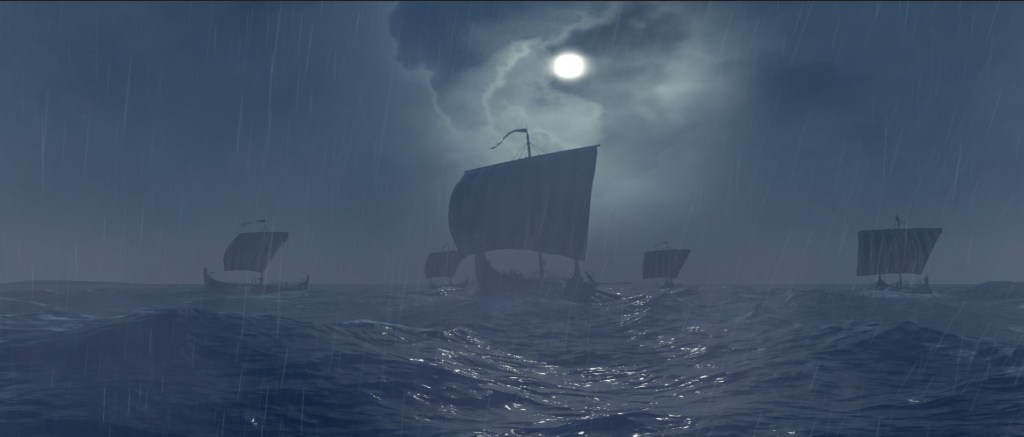
It seems that the force still consisted of 30 ships when they left Gårdarike, but whether it was the same ship as when they left Sweden or whether new recruits were made from Sweden or Gårdarike is impossible to know.
On the journey were now several men mentioned in the saga, including a Valdemar, the Nordic variant of Vladimir, who could possibly have been Jaroslav and Ingeborg’s son, four years younger than Ingvar, and who, according to Nestorskrönikan, two years after Ingvar’s death would come lead an unsuccessful crusade against Constantinople.
When the Ingvars here reach Georgia, they are said to have fought alongside the Georgian regent Bagrat. The Georgian chronicle Kartlis tsovreba says that in the early 1040s when the Ingvarståget is said to have been in the area, a force of Varangians arrived in Bashi. King Bagrat calls 700 to head inland to fight the king’s enemies outside Tbilisi. Despite the support of what may well have been Ingvar’s men, the king loses the battle and flees.

The journey continued towards the Caspian Sea, and the saga mentions some skirmishes, but on the whole, it seems to have been an uncomplicated journey under the conditions that existed. Now, they had reached the part of the world where they intended to acquire the gold mentioned on the Gripsholm Stone. Silk and spices were also attractive goods to bring back home.
The journey home via the Kura and Dnpr rivers is done upstream, which means that it takes longer than the journey out. When they reach Georgia, King Bagrat, called Julf in Ingvar’s saga, is once again waiting to use Ingvar’s army in battle, this time against his brother. In terms of the sequence of events, the Georgian chronicle is very similar to the Icelandic saga.
According to Kartlis tsovreba, there were 3,000 “Varangians” on the battlefield, but Bagrat’s forces were once again driven to flight, and Ingvar’s army was decimated. They probably retreated.
When the armed clashes were over, a larger group of women reportedly approached, singing and dancing. Even though Ingvar warned his men about these, some still chose to spend the night with them. When dawn came, 18 men lay dead in their beds.
During the continued journey home, the surviving men suffered serious illness. Whether it was actually the women who were infected with something, whether it was dysentery, food poisoning or simply poor resistance to foreign viruses and bacteria, it is impossible to say. Ingvar also died, aged 25, and is said to have been left to Bagrat’s queen in Georgia.
The Ingvars saga tells that only one ship returned home to Sviþjod, but it is unknown how the other ships perished.
But in Södermanland, Uppland and Östergötland, the stones remain.
Sources:
Runes in Sweden – Sven B.F. Jansson
Ingvarsstenarna i tid och rum (The Ingvar stones in time and space) – Svante Fischer
Vikingar i österled (Vikings going east) – Mats G. Larsson
Ett ödesdigert vikingatåg. Ingvar den vittfarnes resa 1036-1041 (A fatal Viking journey, Ingvar the Far-Traveled’s journey 1036 – 1041) – Mats G. Larsson
Images:
Gripsholm stone – the blog owner
Olaf Scotking – Holger Ellgaard
Remaining images: public domain

 Scandinavian History
Lämna en kommentar