She is believed to have been born around the beginning of the 11th century, Ingegerd Olofsdotter. Her father, Olof Skötkonung (Scotking), had been king for around five years after his father, Erik Segersäll (the Victorious), died in 995.
While Erik was the king who is considered to be the one who started the Swedish kingship, as he can be documented in history, Olof is the first to have reigned both over Svealandskapen – which then included Östergötland – and Västergötland.
Ingegerd’s mother was Estrid of the Obotrites, a confederation of West Slavic tribes living around the Gulf of Mecklenburg. Estrid’s father may have been chief here, possibly one of several.
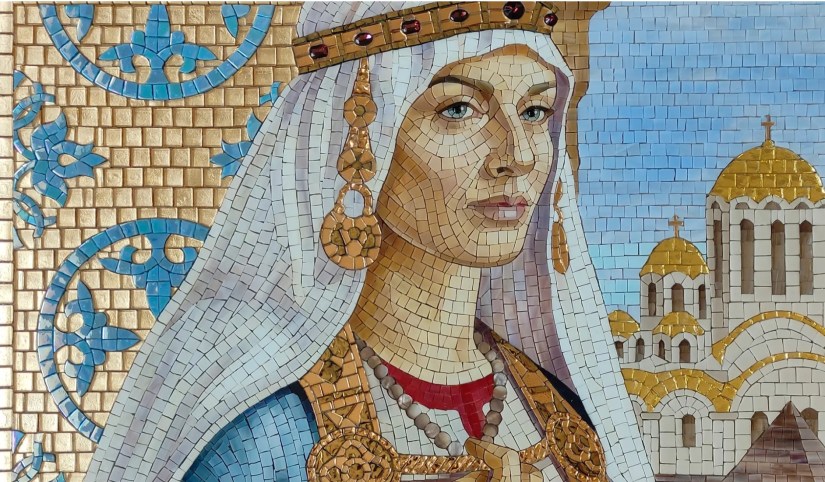
While the court of the early millennium was itinerant and would continue to be so a bit into the Middle Ages, Ingegerd is believed to have been born in Sigtuna, which can be said to be Olof Skötkonung’s main seat, a town founded by his father Erik, and which even today has the same street network as it had over 1,000 years ago. In any case, most of her upbringing should have occurred in the Mälardalen. They also stayed in Västergötland, and there, Olof and his family, according to sources, that should be taken with at least a pinch of salt (usually take a bucket when events are so far back in time, but here a pinch is enough) the whole family was baptised at the Husaby spring around 1008 by an English missionary. Erik Segersäll is said to have been baptised but is said to, over the years, have regretted that move and returned to the old faith.
However, his granddaughter, Ingegerd, is said to have stuck to the new religion, which is the prerequisite for the legacy she came to leave, but one thing at a time.
She was, according to Snorre Sturlasson, meant to marry the Norwegian king Olav Haraldsson, possibly better known as Olav the Holy, known, among other things, for forcibly Christianizing Norway and also being the reason for an Olav cult that was also large in Sweden and is said to have spread all the way to Jerusalem.
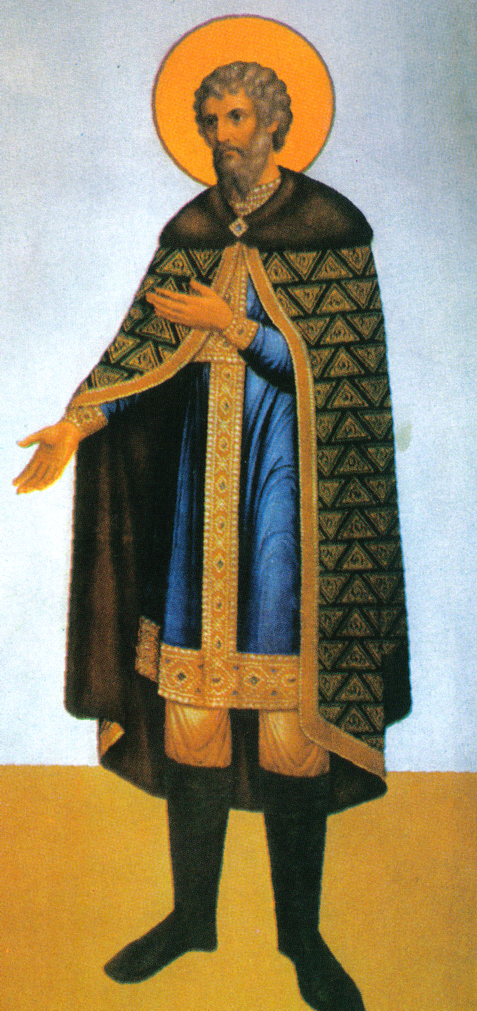
But this marriage never took place. Why it is difficult to know, but it is not unlikely that territorial conflicts between Olav and Olof were behind it. Perhaps Olof was also somewhat jealous of the other monarch’s greater kingdom and influence. Olav had to ”make do” with Ingegerd’s older half-sister Astrid, whom Olof Skötkonung had with his courtesan Edla. Ingegerd was married at 19, against her will, it is said. Still, she was probably aware she had no say in Grand Duke Yaroslav Vladimirovich of Novgorod, later known as Yaroslav the Wise of Kyiv or Yaroslav I.
However, it didn’t happen without protest from Ingegerd, who, according to Snorre Sturlasson, was hot-tempered and had no problem expressing her feelings.
Jaroslav was about 20 years older than Ingegerd and in his 40s when they married. When his father passed away in 1015, he fought with his brother for power, a fight in which he was supported by Olof Skötkonung and his son and successor, Anund Jakob. The result was that Jaroslav became the Grand Duke of Kyiv and ruler of Rutia, a Latinized form of Rus. This kingdom also has a connection to Sweden, as today it is acknowledged by most historians and already documented in the Nestorian Chronicle that the Rus came from the Roslagen under the leadership of Rurik.
After all, the marriage between Jaroslav and Ingegerd, who, when she came to Kyiv, had her name changed to Irina, worked out well. Together, they came to build the Sophia Cathedral in Kyiv and the Hagia Sophia in Istanbul as a model. The cathedral now has a facade from the late 17th and early 18th centuries. However, there are still plaster paintings and frescoes from the 11th century, including one depicting Ingegerd and Jaroslav’s daughters. Piety runs like a common thread through Ingegerd’s life, and according to orthodox tradition, she is also supposed to have contributed to the Christianisation of Norway through contacts with her brother-in-law, and once intended, Olav Haraldsson and his illegitimate son Magnus the Good. Olav also spent a few years in exile with Ingegerd and Jaroslav, and when he travelled home to regain the throne, he left his son Magnus at their court.
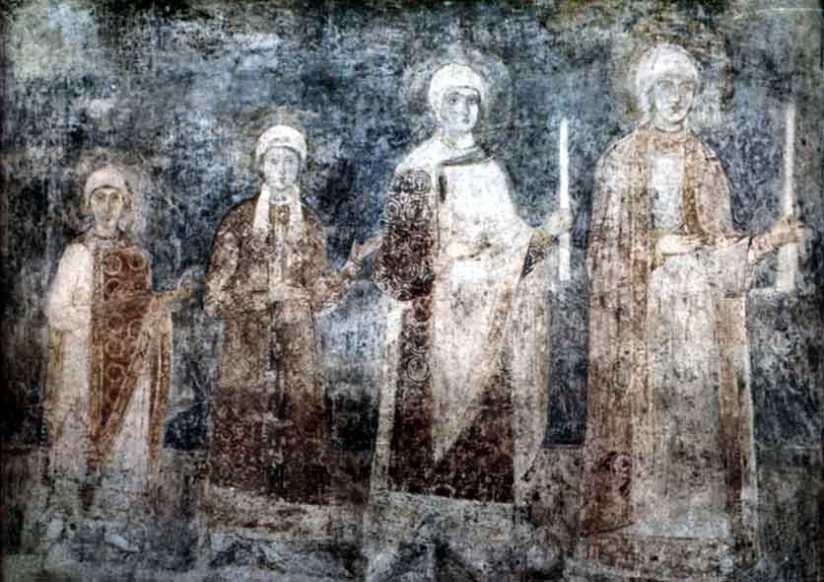
Ingegerd and Jaroslav are said to have had nine children, three of whom are daughters.
The daughter Anna of Kyiv was married off to Henrik I of France, and Ingegerd thus became a suppliant to all French monarchs. The daughter Ellisif, or Elizabeth of Kyiv, was married off to Harald Hardrada, Olav’s younger half-brother whom Ingegerd once wanted to marry. One theory is that Elizabeth met Harald during his exile in Kyiv after Olav fell in the battle of Sticklestad.
It is uncertain what actually happened to Elisabet after the marriage. No source material mentions her in Norway; theories exist that she stayed in Kyiv or died on the journey to Norway. At the same time, it is more likely that Harald Hardrada’s daughters were also her daughters than they would have been with his later wife or mistress, Tora. This is, among other things, because the daughter Maria would otherwise have been betrothed to her own uncle (Tora’s brother).
The eldest daughter, Anastasia of Kyiv, became Queen of Hungary through her marriage to Andreas I. Three of Ingegerd and Jaroslav’s sons, Izyaslav, Svyatoslav, and Vsevolod, were all Grand Dukes of Kyiv at different stages.
The eldest son, Vladimir, may very well be the Valdemar who travelled from Kyiv together with Ingvar the Far-traveled after he and his men had stayed three years in Kyiv with Ingegerd and Jaroslav before the disastrous end of Ingvar’s journey.
It is also uncertain why Ingegerd chose to go to a monastery in the last years of his life. It was not uncommon for upper-class women to do so after they became widows, but Jaroslav is said to have lived four years after Ingegerd’s death. She joined a convent and once again changed her name, this time to Anna.
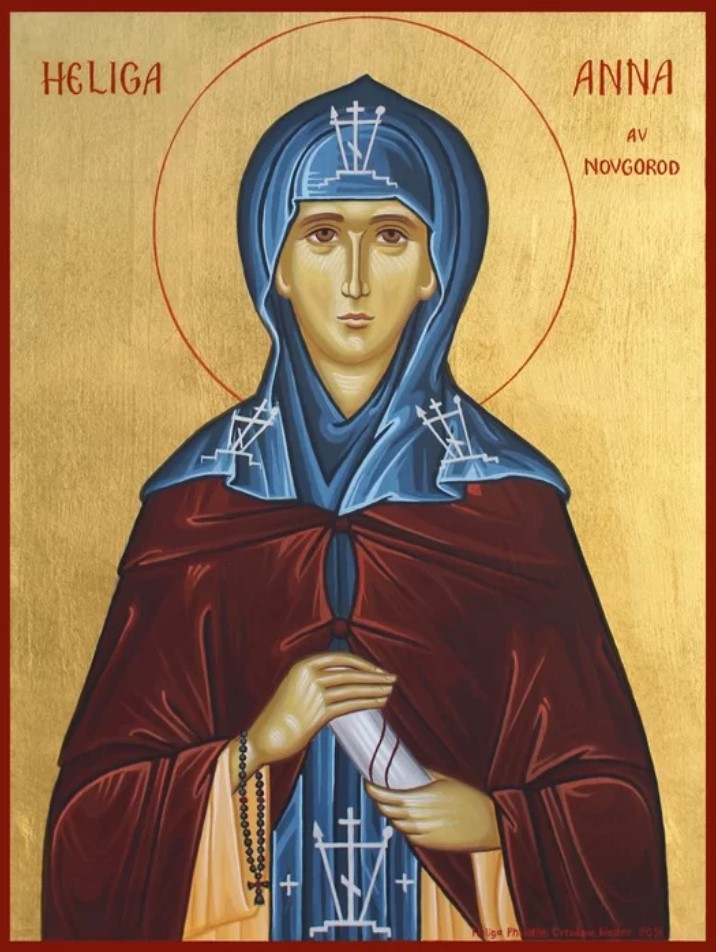
Ingegerd died on 10 February 1050, ( the 23rd according to our modern calendar) when she would have been around 50 years old. After her death, she was canonised within the Orthodox Church, a process handled by the patriarchs as opposed to the Catholic Church, where the Pope decides who will be canonised.
Anna of Novgorod, which has become her saintly name, became important during Russia’s war of aggression against Ukraine, which is what the Kyivan Empire once was. She symbolises that the country has always turned to the West and has a thousand-year connection to Europe through a Svea princess, Ingegerd Olofsdotter.
She rests in Sofia Cathedral together with Jaroslav.
Sources:
Ingegerd – en bricka i det politiska spelet (Ingegerd – a political pawn) – Catharina Ingelman-Sundberg
Nestoriran Chronicle
Olof den Heliges Saga/Heimskringla – Snorre Sturlasson
”Se också din rättrogna sonhustru Erina”, Skara stift 1000 år – Karl-Erik Tysk
Images
Public Domain

 Scandinavian History
Lämna en kommentar