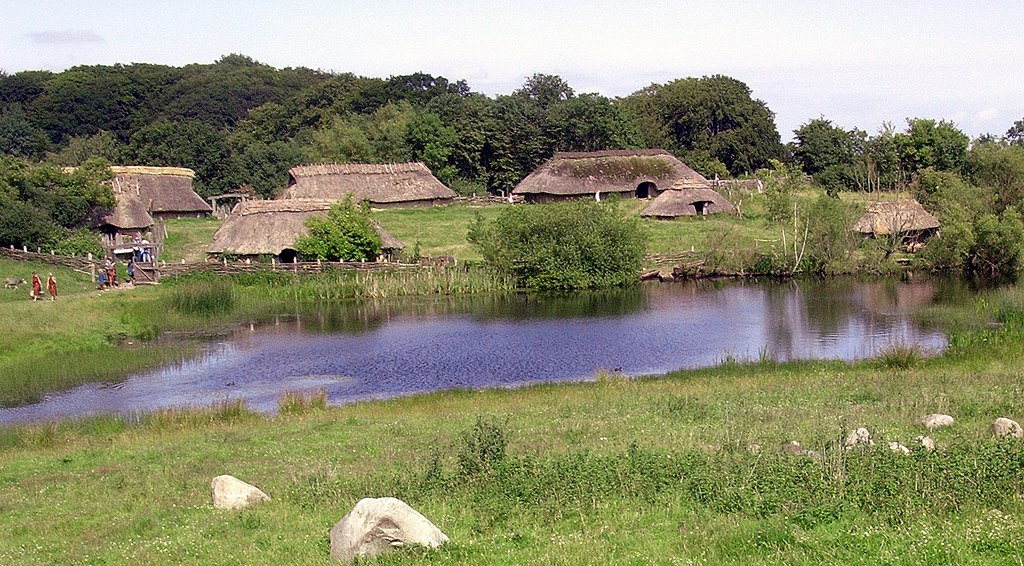
Lejre, located a few miles southwest of Roskilde in Zealand, was known as a village as early as the 6th century. According to mythology, this was the place of Denmark’s first royal dynasty, i.e. the Sköldungarna (Scyldings), and several archaeological finds have been made here and in the surrounding area.
At the beginning of the 11th century, the German historian and—from 1009—the prince-bishop Thietmar of Merseburg described Lejre as a seat of the Danish pagan cult, just as Adam of Bremen did about Old Uppsala. This has contributed to the image of the two places’ counterparts.
According to legend, the first king of the Sköldunga family, Sköld, arrived here as an infant, alone on board a ship to become the first king of the Danes. This, in particular, should perhaps not be taken in the bloodiest seriousness, but it is quite clear that there have been settlements here since the hunter-gatherer Stone Age. There is also a doze here that has been said to belong to the last Sköldung King Harald Hildetand. However, the doze is dated to around 3,000 BC.
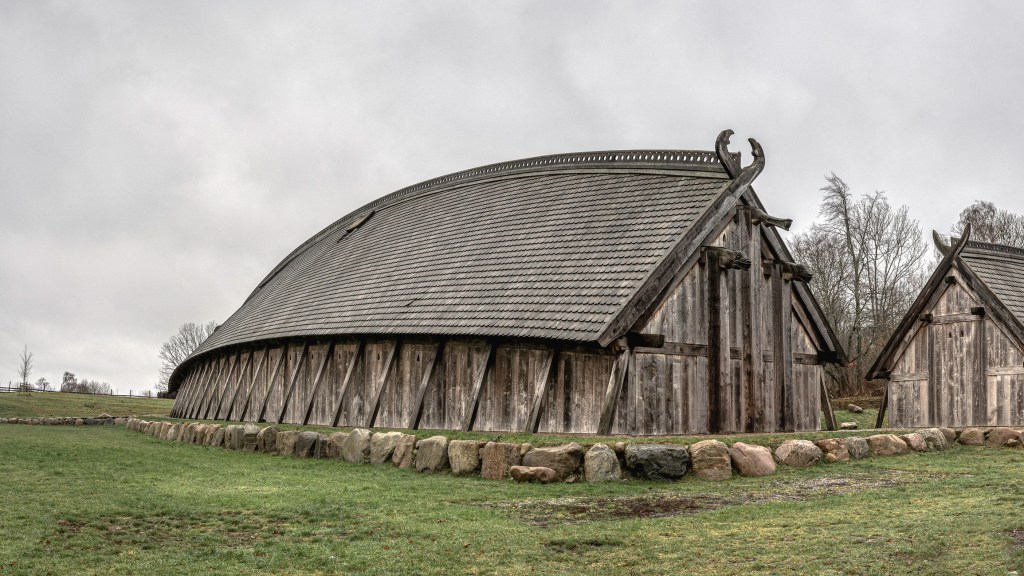
From the 6th century, there have been several finds, including traces of large hall buildings that bear witness to wealth and power, possibly royal power. These consecutive halls have also been surrounded by a palisade. As in many other places in Scandinavia, you can see how these buildings were replaced by a new hall when the old one was no longer kept up. Archaeological excavations have shown that this continued until about 900 AD. The largest hall where remains have been found is 650 square meters, over 60 meters long and 12 meters wide. This has also been recreated. In the area where the halls were located, the grave of a woman, around 35 years old, believed to have been buried in the 9th century, was also found.
Just like in Uppsala, they were placed to have a view over the landscape; thus, even those who travelled through the landscape saw the hall from afar.
The king Hroar, whom Beowulf visits in the epic of the same name, and for whose sake he kills the monster Grendel, had his seat in Zealand and belonged to the Sköldunga family. Myths and fairy tales are, of course, not wholly reliable sources. But with tweezer technology, you can still extract information from them that seems to be anchored in a past time to varying extents. As for Lejre, the archaeological findings show that, although it may not have been King Hroar or any of his predecessors and successors of the Sköldungarna, people of great power have had their seat here.
In the landscape around Lejre, there is, among other things, a ship setting, the second largest in Denmark with its hundred meters. There are also traces of four more ship settings in the area. Here are also the burial mounds Grydehøj, Ravnshøj and Hyldehøj.
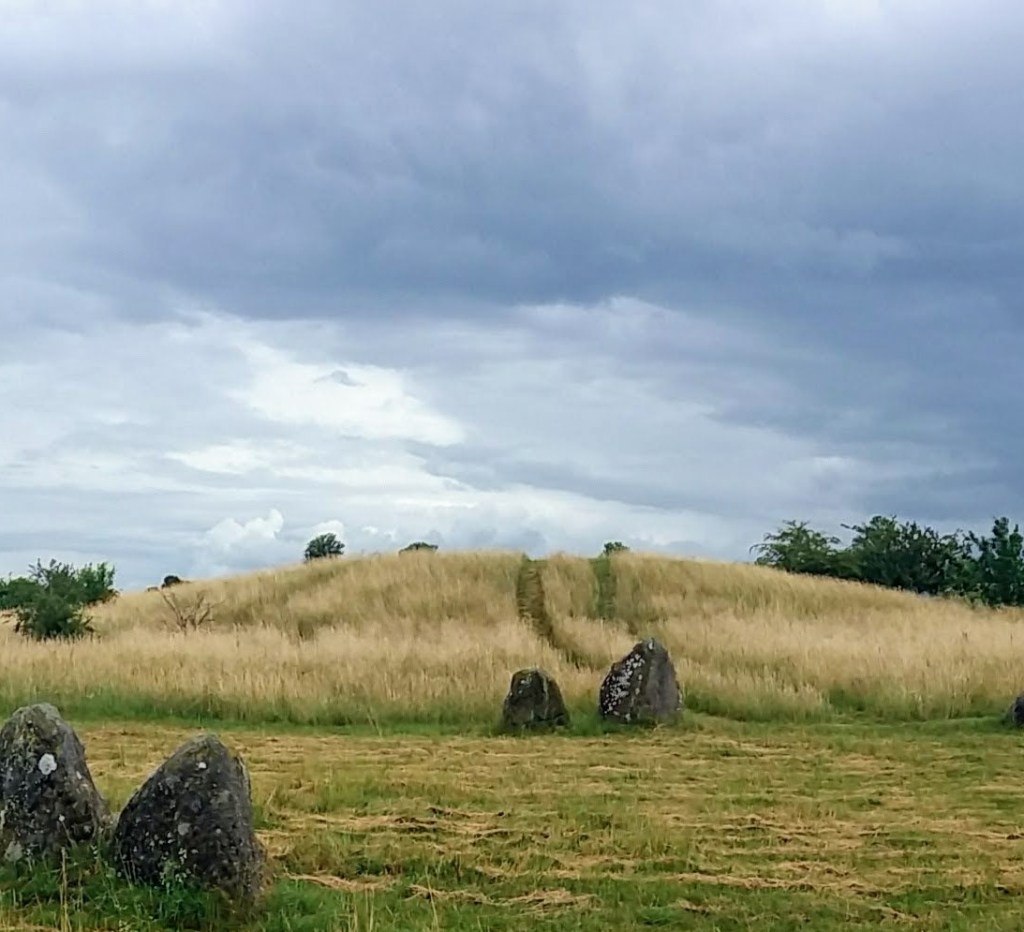
It was also in the Grydehøj mound that in 1958, the grave was found, from around AD 650, of the man who came to be called a prince because of the gold threads that were found, and which were probably once part of the clothing they wore. This, together with bronze objects, says it was a higher social class person. The gender of the deceased has never been determined, as the person was cremated. However, grave robbers had arrived before the archaeologists, and no more finds could be made in the grave. Wood remains were also found in the grave, indicating that a house was built over the remains while the mound was being filled.
In a nearby burial mound, a man was found, and what was interpreted as a slave person had been decapitated, which means that that grave also belongs to a higher position in society.
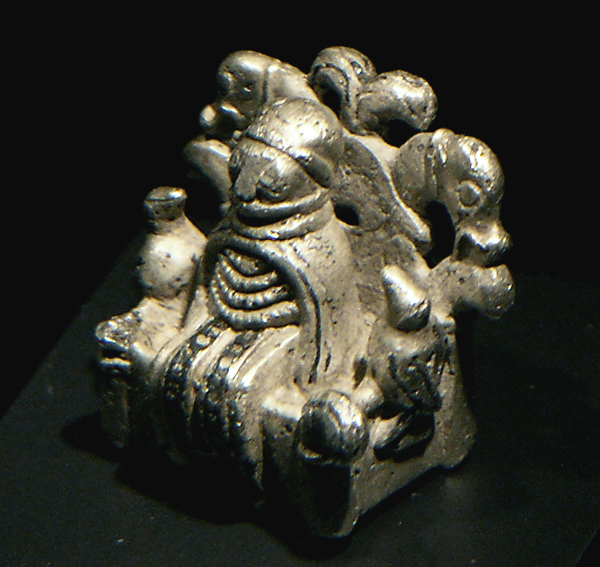
In 2009, during an excavation, an amateur archaeologist found an object that has sparked discussion: a silver figurine only 18 millimetres high, depicting a person in what is understood to be a dress sitting on an ornate throne which is also decorated with two carved animal heads on the backrest. Two birds sit on the throne’s armrest, and in addition to women’s clothes, the person also wears an apron, four necklaces, a neck ring, a cowl and a headdress.
The excavation leader believes that the figurine represents Odin, not least with reference to the two birds, whose pointed beaks may suggest that they are ravens, in which case Hugin and Munin. Danish and Swedish archaeologists have objected and pointed out the absence of male attributes such as beards and swords. Instead, it is believed that it is about Frigg or Freya. Something to keep in mind is Oden’s transgressive character; he dressed as a woman to learn how to practice seidr.
Sources:
Viking Dynasties – The Royal Families of Lejre and Uppsala Between Archaeology and Text – Red. Ted Christiansen, John Ljungkvist & Neil Price.
Magnificent Scandinavian helmet found in Lejre – Archaeology Newsroom
Naturstyrelsen.dk
Nordisk Vikingaguide – Lars G. Holmblad
Lejre: Ship Settings, Viking Graves, Grydehøj – Steen Wolff Andersen

 Scandinavian History
Lämna en kommentar