Red. Tom Christensen, John Ljungkvist & Neil Price
Aarhus University Press, 2024
623 pages

Ancient Scandinavia attracts many with its mythical kings and wars, tales of heroic deeds and grand central places with royal hall buildings, not infrequently adorned with details in gold that glimmer in the light of the fireplaces during the banquets held to receive other rulers or to ensure the loyalty of the local magnates.
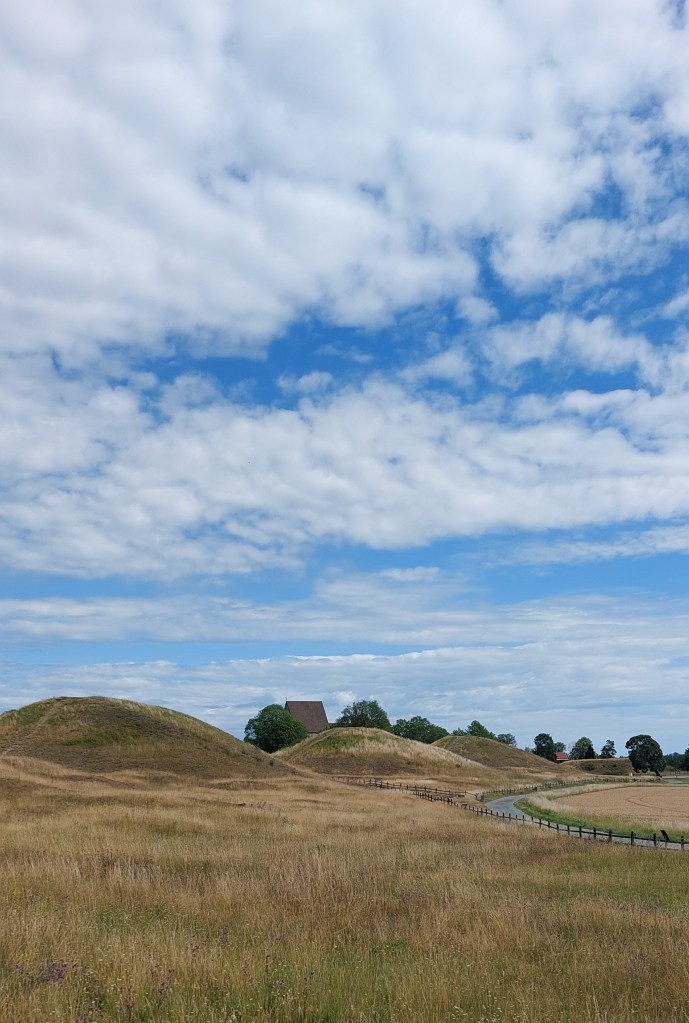
Not infrequently, the details are hidden by the mists of time, and sometimes it is difficult to know if the places and people the myths and legends tell about actually existed. The book Viking Dynasties – The Royal Families of Lejre and Uppsala Between Archaeology and Text is about two places where it all may have happened: Gamla Lejre in Denmark and Gamla Uppsala. The book results from a five-year Swedish-Danish research collaboration in which the National Museum of Denmark and Uppsala University have been responsible for the project.
The editors for the book are Tom Christensen, John Ljungkvist and Neil Price, with contributions from Julie Nielsen, Rudolf Gustavsson, Daniel Sävborg, Niels Lund, Ole Thirup Kastholm, Sandine Holt, Per Frölund, Daniel Löwenborg and Emma Sjöling. The project has been financed by KrogagerFonden
The sites under review, Lejre and Gamla Uppsala, both have their places in Norse mythology. The former is the supposed seat of the Sköldungaätten, and the latter of the Yngligaätten, both royal families that made their mark, even though we don’t know with absolute certainty if they ever existed.
”Between archaeology and text” is precisely about seeing if there is a connection between the two if you can find physical signs that what is being told has happened at some point.
The book is divided into three parts. The first is dedicated to archaeological finds, history, literature, and interpretations of these. The second looks at the Uppsala kings and the Viking Age kings, while the third explores the different expressions of power.
In other words, it’s packed with knowledge and facts for anyone interested in history that often lies outside absolute certainty.
Suppose you have visited one, or perhaps both, of the places. In that case, it becomes extra enjoyable to read about how archaeology and texts are connected and tell us something about this time that is so far away.
For example, archaeological evidence in Gamla Uppsala matches what was written down a long time ago, thus confirming the place as a seat of rulers over the svear.
The written sources that still exist and that claim to tell about these places and the people who are said to have ruled and lived here are from the 7th century up to the 12th century. They were largely written by people who lived and worked elsewhere.
Here, Beowulf is the best known to a larger public. Recorded by an English monk and seen as an English national epic, it takes place in Denmark and Sweden. Other writings referenced are the Vita Anskarii of Rimbert, Adam of Bremen, the 6th-century Historia Francorum, the Annales Regni Fran Corum, the Annales Bertiniani and the Anglo-Saxon Chronicle, to name a few.
The authors, of course, also look to Nordic authors such as Saxo Grammaticus and Snorre Sturlasson’s sources available from the 12th century onwards. Common to all of these is that Uppsala and Lejre appear in them.
The book presents interdisciplinary work connecting texts and archaeology, and each section’s chapter presents findings and theories in detail and informatively.
Topics such as Lejre and the rise of a dynasty, ship settings, Old Uppsala, animal husbandry in central locations and ”dynastic dialects”, the symbolic language of rituals and power, the seafaring of the two groups and much more are discussed here.
This means that even if you are interested in archaeology and history, you will find facts from these seats of power that you previously did not know or perhaps did not even think about. To the latter category belongs, for this writer, ancient animal husbandry in the respective place from the 5th century onwards.
Something that needs to be said is that the book, which is so far only available in English, requires a previous interest in the subjects it presents because it is a mammoth work. It is very well executed in terms of text and image, but at least basic knowledge is recommended to take in all the facts the reader is presented with.
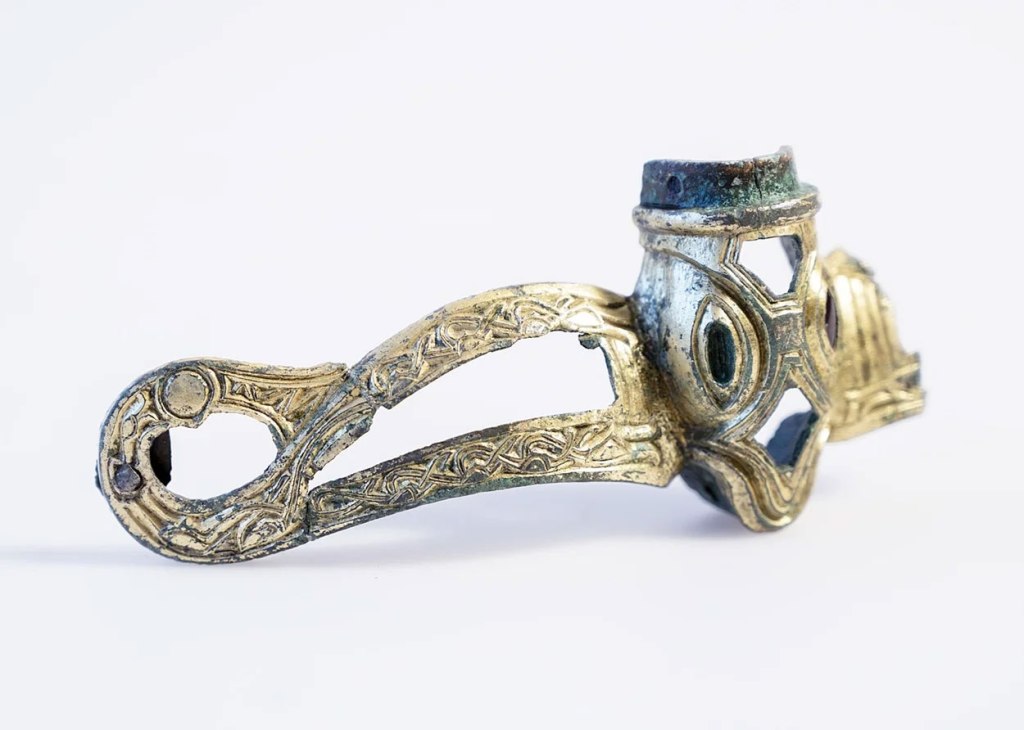
The book also contains many photos of the places and found objects, which are of interest to anyone who sees them.
For those who think they are ready for a deep dive into the history of Lejre and Gamla Uppsala, it should be an obvious addition to the bookshelf. You do not often find as much knowledge on the book’s subjects between two covers as you do here.
The layout of Viking Dynasties – The Royal Families of Lejre and Uppsala Between archaeology and text:
INTRODUCTION
Viking Dynasties,
Archaeological sagas and material histories – Neil Price, Tom Christensen & John Ljungkvist
Chapter 1. Lejre and the rise of a dynasty – Tom Christensen
Chapter 2. The ship settings and Grydehøj at Lejre – Julie Nielsen
Chapter 3. Gamla Uppsala – John Ljungkvist with contributions by Per Frölund, Emma Sjöling & Daniel Löwenborg
Chapter 4. Animals and people at the central places – Rudolf Gustavsson
Chapter 5. Places of consumption and production – John Ljungkvist & Tom Christensen
PART II HISTORY AND LITERATURE
Chapter 6. The Uppsala kings – Daniel Sävborg
Chapter 7. Viking Age kings of Denmark and Sweden – Niels Lund
PART III INTERPRETATIONS
Chapter 8. The dynasties at sea in the Late Iron Age – Ole Thierup Kastlund
Chapter 9. Dynastic dialects,
The symbolic languages of power and ritual – Neil Price
Chapter 10. Powerful performances,
Political dramas across Europe and in Viking Age Scandinavia – Sandine Holst
Chapter 11. Lejre, Uppsala and their North Sea connections – John Ljungkvist, Neil Price & Tom Christense
Conclusion
Power, Place and story,
A synthetic model for the Late Iron Age – Tom Christensen, John Ljungkvist & Neil Price

 Scandinavian History
Lämna en kommentar