April 19* marks the 336th anniversary of Queen Christina’s death, and it might be a good idea to examine her life after she left Sweden. Of course, my text is only skimming the surface, simply to function as a blog post.

After having assured herself that her cousin Karl, in his capacity as Karl X Gustav, would take over the throne, she laid down her crown on June 6, 1654, and departed.
At this time, she had not yet converted to Catholicism; this would come during her journey to Rome, more specifically, in Brussels on Christmas Eve 1654. She had arrived there via Denmark, Hamburg, and Antwerp. However, the fact that she had converted was not announced until she travelled to Innsbruck, where her change of religion became public.
While her conversion from Protestantism to Catholicism and the reason for it have been widely debated in later centuries, it was received, at least on the continent, with great fanfare. After Kristina and her entourage left Innsbruck, it was time for a triumphal journey that lasted several weeks. On the journey, she had a retinue of 200 people, mainly consisting of Spaniards and Italians. Festivities were organized in the cities the entourage passed through.

The Catholic countries of mainland Europe were overjoyed that the daughter of Gustav II Adolf, who liked to see himself as the standard-bearer of the Protestant faith, had actually abandoned Protestantism. Church bells rang, cannons were fired, and churches held masses and processions to celebrate the event and more profane celebrations, such as operas and other musical events.
There is no doubt that Europe’s Catholics, at least those in positions to benefit from it, saw Christina’s conversion to their own religion as a gift from above. The Swedish convert, it was thought, could be used for propaganda purposes. However, those who had such ambitions failed to take into account something: Christina’s strong personality made her by no means an easy person to handle.
Christina finally reached Rome in late 1655, arriving in the city in a grand procession that drew people from all walks of life to the streets and squares. Christina rode a white horse with a man’s saddle, not a lady’s saddle, with both legs on one side of the horse, which was proper for a lady. She was dressed in a grey robe, wore a black hat, and displayed a total lack of jewellery, something that was unusual among noblewomen and certainly not unusual for a queen, even an abdicated one. The procession route ran along Via del Corso to Piazza di San Marco, past Monte Giardino, ending in St. Peter’s Square. A salute was fired from the nearby Castel Sant’Angelo, and as befits a day of festivities, at least in the 17th century, all shops were closed.
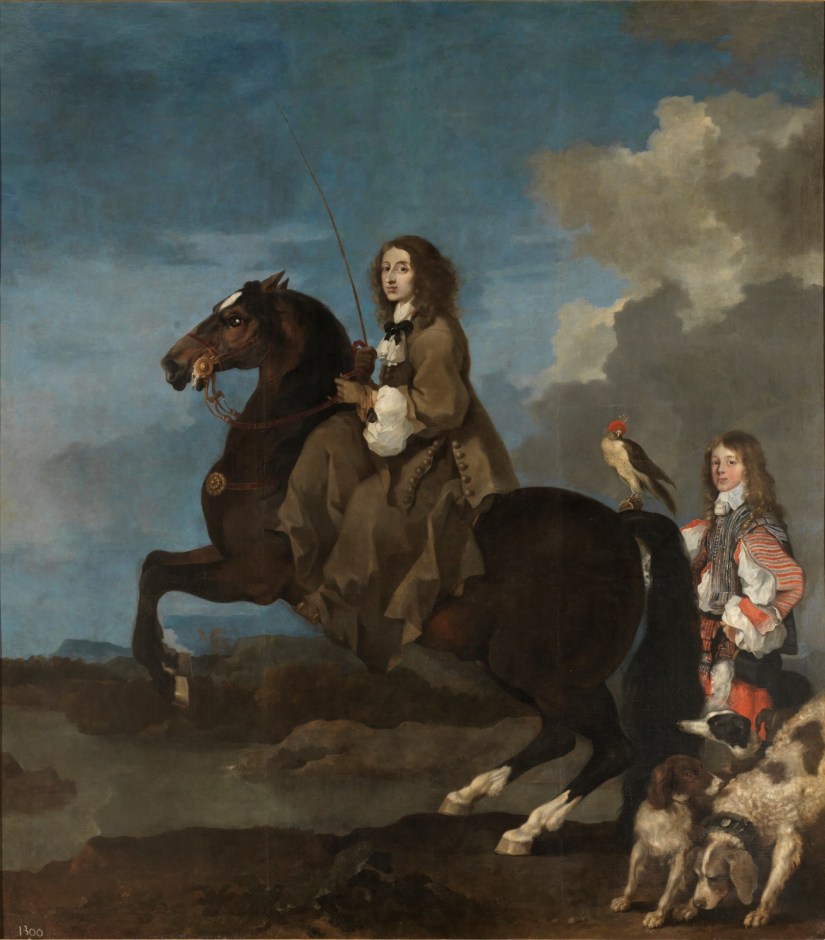
However, it wouldn’t take long for Kristina, who had changed her name to Maria Alexandra upon arriving in Rome, a name she never used to sign anything, to once again get on the nerves of the church men. This time, too, it was about her outspokenness, sharp tongue, and clear and open stance against being in any way a “show-Catholic.” Kristina was not particularly pious either. She enjoyed discussing, but the topic of discussion was rarely spiritual subjects. Nor did she go to church very often, but she enjoyed socializing with young men.
Pope Alexander VII, whom Kristina had known personally since he was Cardinal Fabio Chigi, was immensely disappointed in the former monarch and is said to have exclaimed, “A woman born a barbarian, raised barbarically and with a head full of barbaric thoughts” in a conversation about Kristina.
During the first of two visits to France in 1656, she was celebrated but also caused a stir similar to the one in Rome. Kristina had no trace of feminine tripping or a chaste way of sitting; on the contrary, there are stories about how she could throw herself into an armchair and throw her legs over one of its armrests without the slightest thought of hiding the fact that she had legs. Possibly acceptable behaviour for a somewhat rough-skinned man but not for a woman.
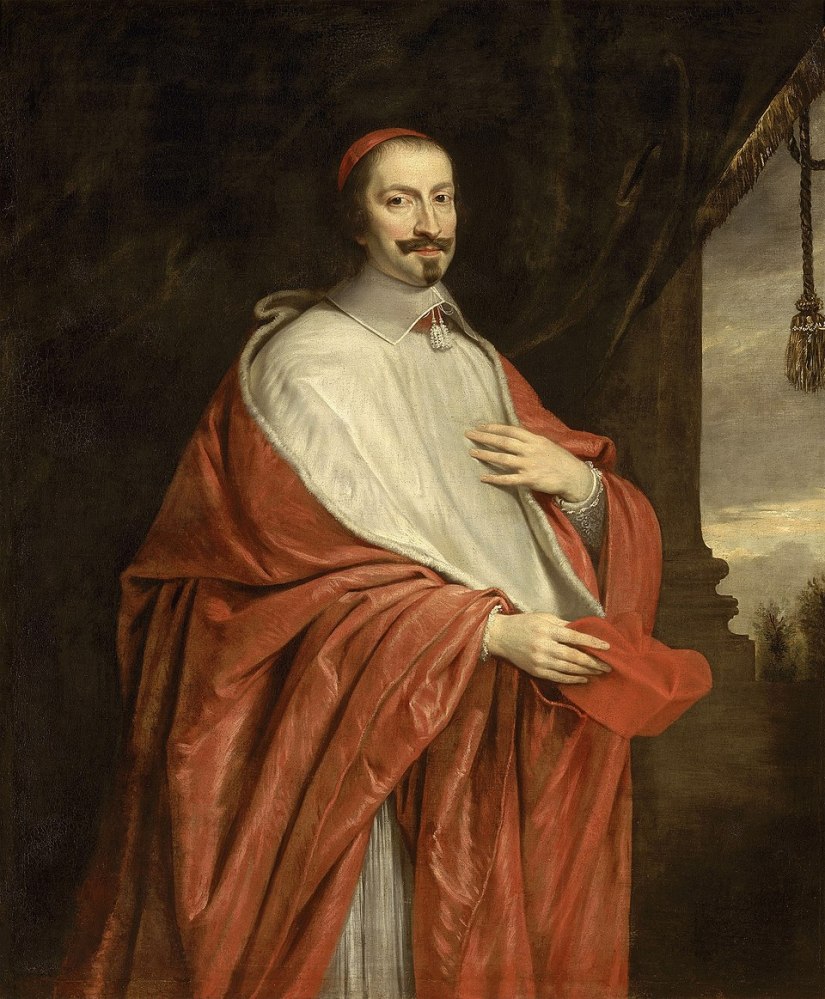
Together with Cardinal Mazarin, First Minister of France, she began planning a campaign of conquest against Naples, which was at that time under Spanish rule. It is impossible to know whether the Cardinal was actually on board or just wanted to please him because he thought it would benefit him. Christina returned to Italy but was only back in France a year later, where she continued to plan her conquest of Naples. Unfortunately, mainly for himself, her master of the court, the Marquis Gian Rinaldo Monaldesco, was from Naples. Whether it was because he suspected something was wrong specifically regarding Naples or whether he was a routine spy, history does not tell. But he opened and read Christina’s correspondence regarding Naples and revealed the whole thing. The result was that Christina had him executed, and she was branded a murderer. She was irrevocably out of favour at the French court and returned to Italy.
From 1659, Christina lived in Palazzo Riario, now Palazzo Corsini, on the right bank of the Tiber. Here, she lived with a court of 170 people, including four secretaries, a librarian and an academy secretary.
She returned to Sweden twice, in 1660 and 1667, and financial difficulties were one of the reasons for both. It was not that Christina was left on a bare hill when she stepped down as queen; the agreement reached with the Swedish government meant that she would still be financially independent with jurisdiction over her own court. Her income came mainly from the city and castle of Norrköping, Öland with Borgholm Castle, Gotland, Ösel and estates in Swedish Pomerania. However, the money flow was complicated, not least because Sweden was repeatedly at war. The first of her visits to her homeland also coincided with the funeral of her cousin Charles X Gustav, as he did not live long on the Swedish throne. On February 13, 1660, he died, at just over 37 years old, as a result of a respiratory infection that had turned into pneumonia, something that the medical science of the time, with enemas, herbs, and bloodletting, was unable to cure.

Although many considered Christina to have made herself at least somewhat impossible with her sharp tongue, she played an important role in Rome’s cultural life. On Fridays, the theatre was performed in Italian in the palace and on Sundays, Spanish plays. Her modern view of society for the time meant that both the church and the top brass could be criticized in the plays, and she thus continued to get on the nerves of the city’s rulers, not least the church. However, she had a strong supporter in Cardinal Decio Azzolini, a close friend with whom she was also said to have been in love for over 30 years. On the cultural side, she also offered lectures and concerts in her palace. Ten years after she prepared an invasion of Naples, she instead set her sights on the throne in both Poland and Bremen. After these ventures failed, she put her grand political ambitions on the shelf.
Christina died, as mentioned at the beginning of this text, on April 19, 1689, at 62. She was laid to rest, as the second woman ever, in St. Peter’s Basilica in Rome.
Sources:
Drottning Christina: en biografi – Marie-Louise Rodén
Silvermasken: en kort biografi över drottning Kristina – Peter Englund
Drottning Kristinas tronavsägelse – Torsten Thurén
Drottning utan land; Kristina i Rom – Erik Petersson
Drottning & rebell – Sven Stolpe
*According to the old, Julian Calender, she died on the 9th

 Scandinavian History
Lämna en kommentar