Like the vast majority of women during the early Middle Ages, Ingrid Ylva has left few traces behind for posterity to note. This is in contrast to her son, Birger Magnusson, much better known as Birger jarl.
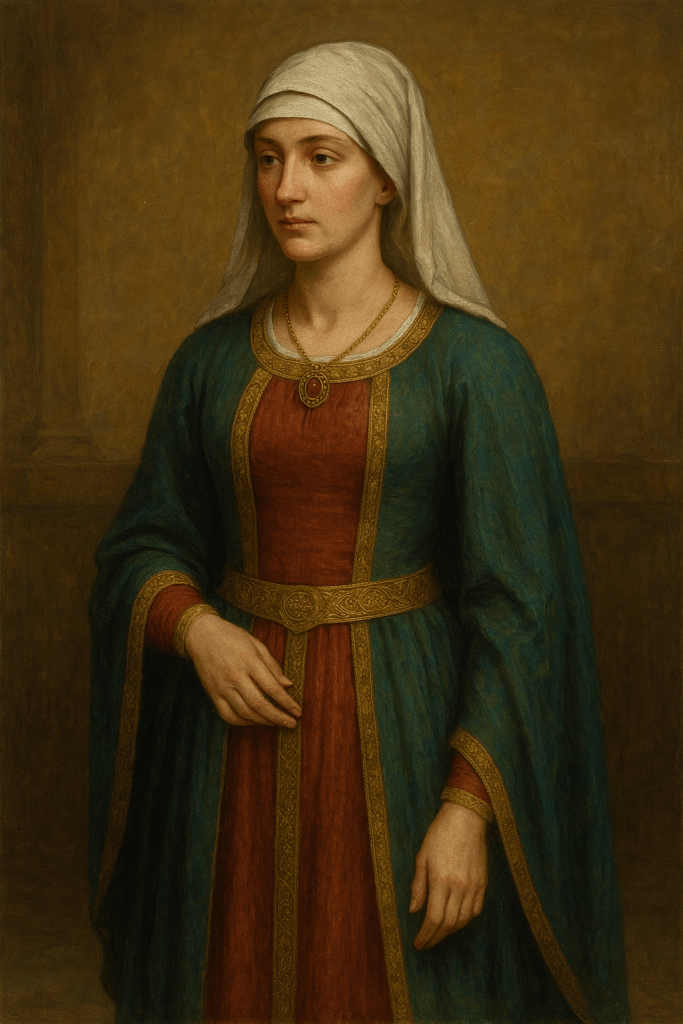
However, he becomes the subject of a post on another occasion; this is Ingrid’s moment. It is not known exactly when she was born, except that it must have been during the second half of the 12th century. It is also not known for sure who her parents were, but Olaus Petri, among others, said that she was the daughter of Sune Sik, also referred to as Simon Sik or Suno Syk. ”Well?” someone might think, as Sune/Simon is not one of the more famous people in Swedish history either.
But Sune, as he will be called from now on, was the son of Sverker the Elder, the king who gave his name to the Sverker dynasty, one of the two dynasties that held power in Sweden between 1130 and 1150. The other dynasty was the Erik dynasty, and between these two, there were recurring conflicts and changes of throne during the relevant period. Sverker the Elder was murdered by men from his own court in 1156 when he was on his way to church on Christmas Day morning, supposedly on behalf of the Danish prince and pretender to the throne, Magnus Henriksson, who only five years later would be behind the murder of Erik the Holy. He would ultimately be killed in the Battle of Örebro by Sverker the Elder’s son, Knut.
If Olaus Petris’s assumption about who Ingrid Ylva’s father was is correct, then she belonged to one of the first and, during the early Middle Ages, the most prominent Swedish royal dynasties.
Something unusual is that her husband is almost as anonymous in the historical sources – one could say that their son Birger compensates for this. Magnus Minnesköld belonged to the Bjälbo family, also known as the Folkunga family, from which several lawmen, bishops, earls, and, with the descendants of Birger, even kings descended. It should be noted that the Folkunga family is not identical to the Uppland political grouping known as the Folkungs. The family’s leading name came from the Bjälbo estate in Östergötland, where the family had its seat since at least the early 12th century. Nothing remains of this estate today; the centuries that have passed have swept away most of the physical traces of the once powerful family here.

There is one exception, however, and that is the tower of Bjälbo church, which differs from other church towers, not least in Östergötland. At just over 37 metres, it is taller than other church towers in Östergötland. The square tower has five floors, with sides measuring 10 metres in width, and the second floor has long been known as Queen Ylva’s Chamber. It was probably built on the orders of Ingrid Ylva, as dendrochronological studies have shown that the trees used for the tower’s wooden structures were felled around 1220.
By then, both Birger Brosa and Magnus Minnesköld had been gone since 1202 and 1210, respectively, and the eventually powerful son Birger was still only a child. Initially, the tower had six floors, and the two lower floors, including ”Queen Ylva’s chamber”, were probably used as a residence in troubled times.
Ingrid Ylva thus became a widow, but it is not possible to say precisely when, as there are different accounts of when Magnus Minnesköld died. Some sources say he died in the Battle of Lena in 1208, while other sources say he fell in the Battle of Gestilren in 1210. The latter seems most likely, however.
In any case, Ingrid became a widow. Since there is little information available about her personally or her life beyond the broad outlines, one must consider how life must have been for a widow in her social position.
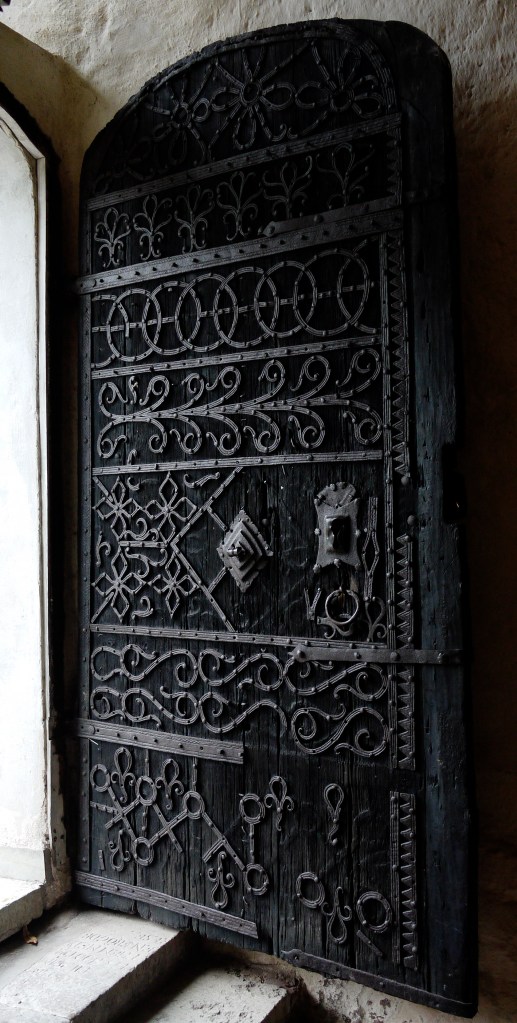
As previously mentioned, she may have come from a royal family herself and had been married to a wealthy magnate who had left his worldly assets in her care. This usually gave the woman, Ingrid herself and others in her position a leeway that was usually afforded to few women in the 13th century. The subordination that was the norm for daughters and wives in the patriarchal middle ages was lifted from a wealthy widow, who instead received powers that were otherwise reserved for men.
Ingrid Ylva likely took over as the estate’s representative in cameral matters, which concerned, among other things, accounts such as trade and tax payments. One expression of this that still exists is that the church bells that still ring in Bjälbo Church were commissioned by Ingrid Ylva. So, it is likely that she also had the tower built. Ingrid Ylva was a landowner in her own name.
We also know from the expectations of women in the higher social classes of that time, not least those with connections to royal families, that she should have had knowledge of how to behave at court. She was likely able to read, was culturally well-versed and had knowledge of needlework.
The late 12th and 13th centuries were turbulent times in Swedish history, marked by disputes between families vying for ultimate power in the country. As a widow, Ingrid Ylva was also responsible for the defence of her estate and family. This is where several historians believe the tower comes into play. That the two lower floors served as a shelter, and that the ones above served as a storehouse for what might be needed during more extended periods of strife.
There are myths about Ingrid Ylva, which claim, among other things, that she was a white witch, that is, a witch who possessed powers but did not use them to do harm. Perhaps the whole idea is that she, like many women with resources, strength and determination, both before and after her, worried. Women who worry had a tendency to be called witches, a tendency that still persists today. But the fact that she was then seen as a ”white” witch can possibly be interpreted as meaning that she was liked after all.
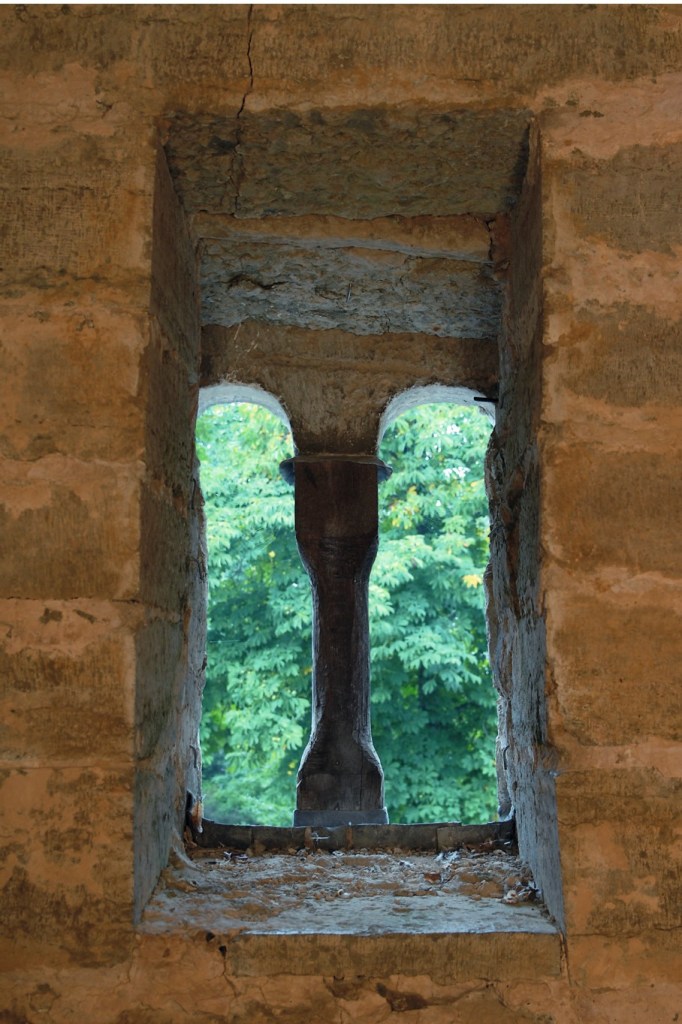
Within the framework of the ”witch rumour” falls the myth of how, from her window in Queen Ylva’s chamber, she was able to observe fighting between members of the Bjälbo family and their men on the one hand, and Knut Johansson’s forces on the other. Every time the enemy camp seemed to have the upper hand, Ingrid Ylva is said to have shaken her down comforter out the window, and every feather that landed on the hill was transformed into an armed horseman, ready to fight on the side of the Bjälbo family. She is also said to have been a psychic and predicted that her descendants would rule the country as long as she held her head high.
According to legend, Earl Birger is said to have had her buried standing in a stone pillar in Bjälbo church. However, her remains have never been found.
Ingrid Ylva died in 1250, and by then she had managed to bury two of her three sons with Magnus Minnesköld, both of whom had become bishops of Linköping: Karl, who fell in battle in Estonia in 1220, and Bengt, who died in 1237.
There remained Birger, who came to rule Sweden, first as guardian of his son, King Valdemar, and then at his side until Birger died in 1266.
Sources:
Källor:
Kvinnan, tornet och makten i Bjälbo – Ingrid Gustin (The woman, the tower and the power in Bjälbo)
Jarlens Sekel – Dick Harrison (Century of the Earl)
Häxornas Försvarare – Jan Guillou (The witches defender)

 Scandinavian History
Lämna en kommentar