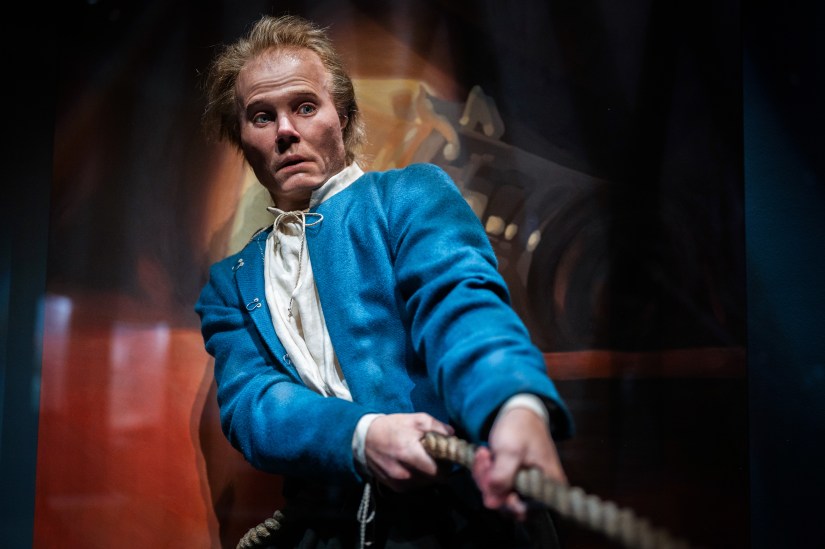
Perhaps we have stood face to face with them in a museum, and maybe it has been a little thrilling to look into the eyes of Birger Jarl, someone in the crew of the Vasa ship, or the Barum woman. People who lived hundreds or thousands of years ago, but who have been given a face.
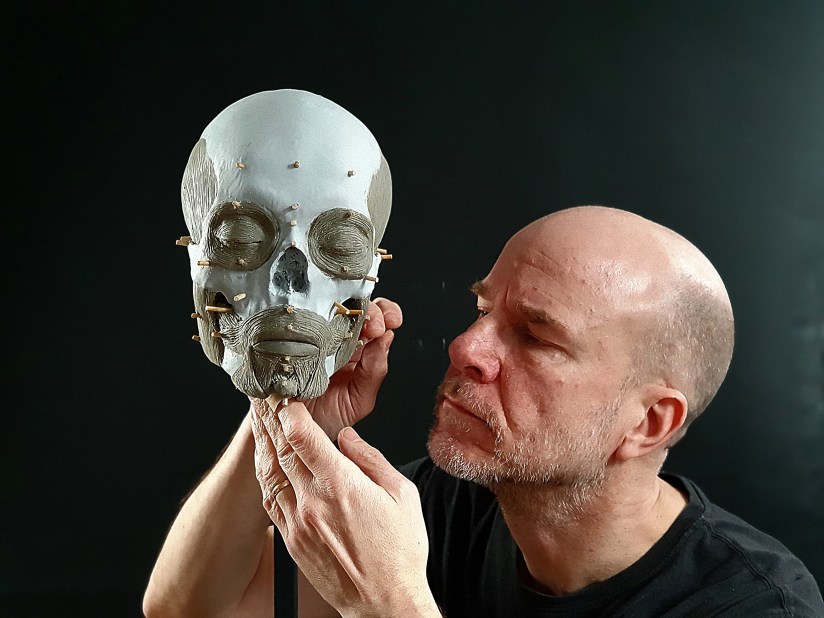
This has happened thanks to Oscar Nilsson, an archaeologist and sculptor who has made it his speciality to recreate those who lived long ago.
In a somewhat unusual post for this blog, here is a shorter ”interview” with Oscar. I sent him a few questions by email, and he was kind enough to take the time to answer.
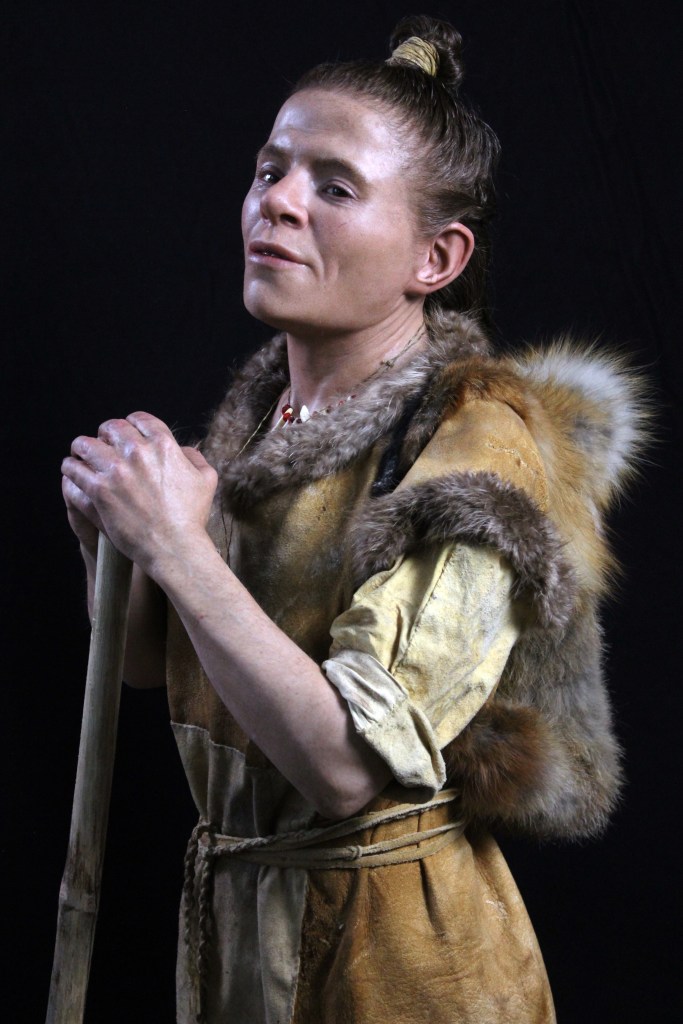
I also want to take the opportunity to thank Caravan Media and Dinah Lord for allowing me to use the photo of Zosia.
How did you get into this field, recreating historical faces?
I have been very interested in history and stories since I was a child. For me, it’s essential to start with a human being; that is what allows you to connect and be moved. My other great interest was creating, often drawing, but also sculpting.
When I started art school, I became quite ”hooked” on art history, not just classical art but actually the whole history of art with man’s inextinguishable need to express himself.
When I then started studying to be an archaeologist, we read about an English expert who reconstructed faces from history. I was utterly taken and wanted to know everything I could find out about this. However, this was in the early 90s, before the internet. So I found a few books, but not much else.
Then I started my studio, and after a few years, a request came up to do a facial reconstruction. I then contacted the Englishman I had read about during my archaeology studies, Richard Neave, and was invited by him to learn the technique under his guidance in Manchester. This was in 2001, and since then, it has been rolling, so to speak.
The reason I found this niche is that my two strong interests in art and history/archaeology, together with a deep fascination with the human face since childhood, have led me to this area.
What was the first face you recreated?
It was a man and a woman from the so-called Bergsgraven in Linköping, 2001. It is a c. 5,500-year-old grave from the battle axe culture. I want to remember that the man was first out, so that was my very first reconstruction (apart from practice reconstructions, of course)
Is there one of the historical facial reconstructions you have done that has touched you more than others, or that you feel you have developed a special connection to?

I am often deeply moved by the human destinies I work with, but some stories stand out as particularly strong and stay with me. In recent years, it is probably the girl called Zosia, from Pien in Poland, who has touched me the most, an 18-year-old who in the 17th century was buried in a terrible way: it was believed that she was a vampire/and/or possessed by evil demons, and she was then given a sickle placed around her neck and a padlock placed on her big toe. This was to prevent her from going back and haunting the countryside. It is impossible (for me anyway) not to feel a deep injustice when you take part in her fate. She suffered from several illnesses and needed care and help, so instead, she was buried as a monster. 😦
Does the person’s history play a role in your work, or is it just the bone structure and muscle attachments that affect the end result?
So even though I am touched by what we know about an individual, I have to be neutral about this when I reconstruct the face. It should be a technique that, based on scientific analysis and methods, produces an appearance that is as objective and repeatable as possible. But, of course, it is also partly about producing a face that seems to contain all of a person’s emotions and thoughts, so I usually say that the last 10 percent is ”my addition”, where I artistically go in and try to make the face come alive, so that we can believe in it, so to speak.
In the PBS documentary ”Field of Vampires”, produced by Caravan Media, you can see the work that led to the discovery of Zosia and her history. In the program, you can also hear Oscar Nilsson talk about his work with recreating Zosia’s face

 Scandinavian History
Lämna en kommentar