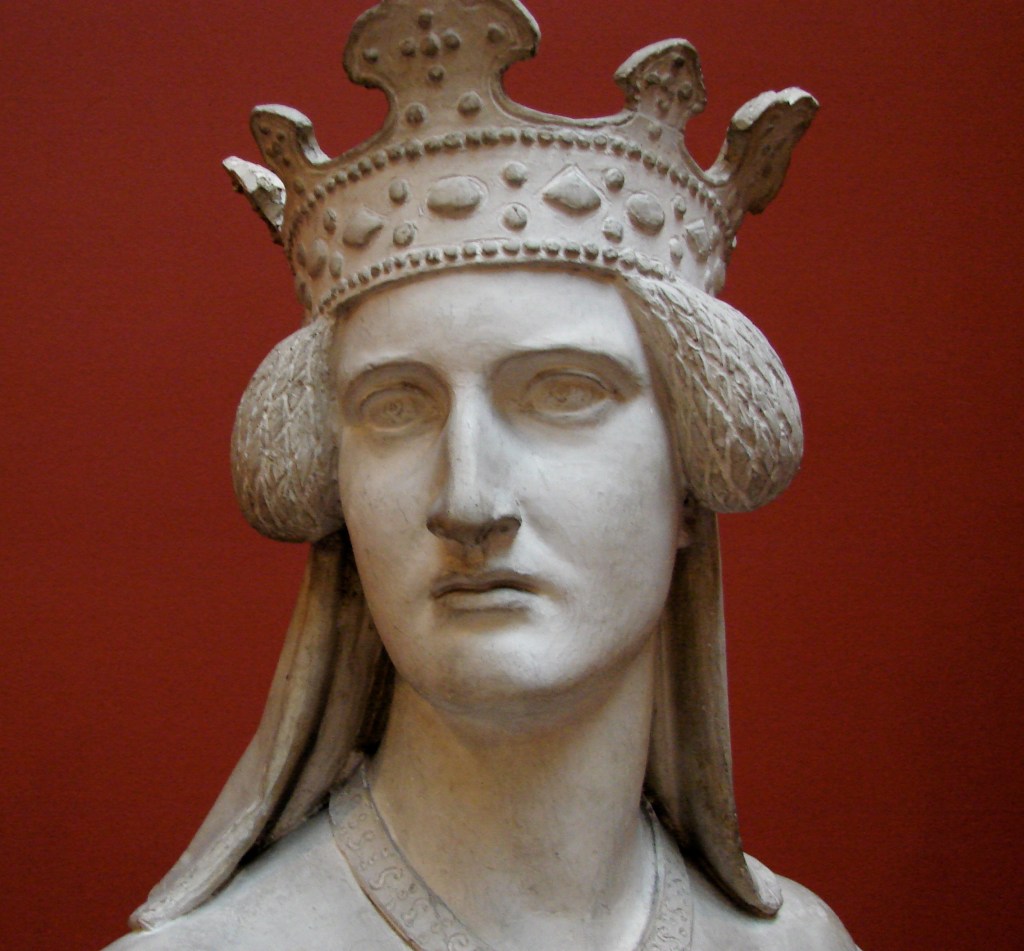
She is probably the most powerful queen in Swedish history, apart from Kristina, who actually ruled in her own name. But Filippa of England is also probably the most forgotten, even though she became queen not only of Sweden, but of the entire Nordic region.
When she was born in 1394, Philippa, as the name is spelt in her homeland, was not a Swedish princess. She was the daughter of Henry Bolingbroke of the House of Lancaster, a branch of the Plantagenet family, and Mary de Bohun. Six years after Philippa’s birth, Henry, who was the grandson of Edward III, was crowned Henry IV. This occurred through the overthrow of Richard II, who was also the grandson of Edward III, but through another son, Edward of Woodstock, also known as ”the Black Prince” in English historiography, possibly due to the colour of his armour, his temperament, or his ruthlessness on the battlefield. Today, no one is certain.
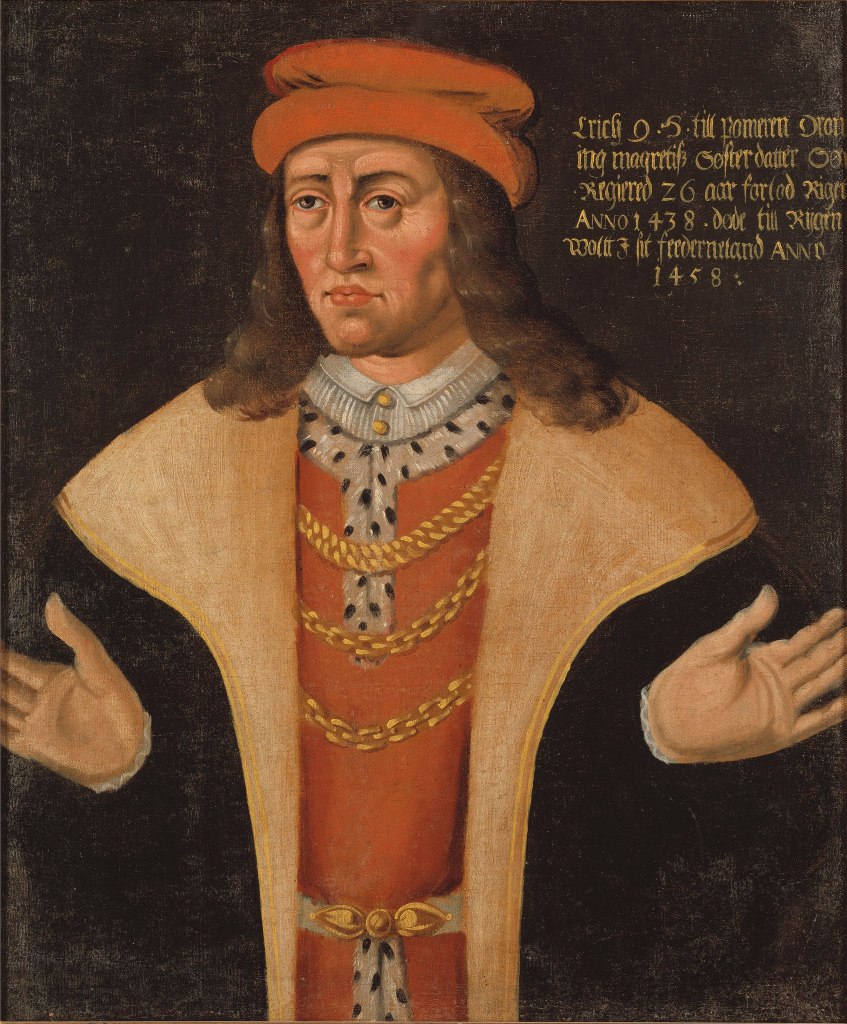
But how does an English princess become a Swedish queen? By marriage, of course, and in this specific case, marriage to Erik of Pomerania, the adopted son of the Kalmar Union’s Danish queen Margaret.
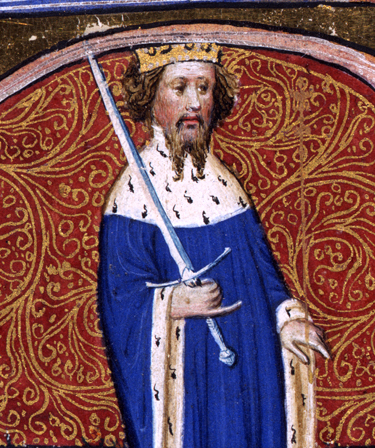
The fact that the marriage was even proposed was because Henry, as the new king and also one who had taken the throne from the rightful regent, wanted to strengthen his ties to other powerful European royal houses. The first time Henry contacted Margaret to propose a marriage between Philippa and Erik, Philippa was only seven years old. That time, however, Henry had demands that Margaret could not agree to: firstly, he wanted his son, Crown Prince Henry, the future Henry V, to marry Erik’s sister Catherine, whose child would become heir to the throne in the Nordic countries if Erik and Philippa did not have children of their own, and secondly, that the Kalmar Union would enter into an alliance with England that aimed its tip towards France. However, it is clear from English sources that they did not really have a clear idea of who the powerful Margaret was. She is alternately called Margaret, but in at least one other case, Isabella. At one point, she is even referred to as Queen of Portugal.
Margaret’s rejection of the demands meant that the wedding plans fell through, but only for a few years. Then, Ture Bengtsson Bielke had to travel to England with the mission of bringing the English princess to Denmark. When it was time for that trip, however, the North Sea was so troubled that it had to be cancelled. Instead, Philippa married a proxy in Westminster Abbey in November 1405, who was allowed to represent Erik. She was then 11 years old.
In August of the following year, 1406, the trip took place in Denmark, and another wedding took place on October 26, this time in the bishop’s castle in Lund. On the same occasion, Philippa was crowned queen of Denmark, Sweden, which at the time included Finland, and Norway.
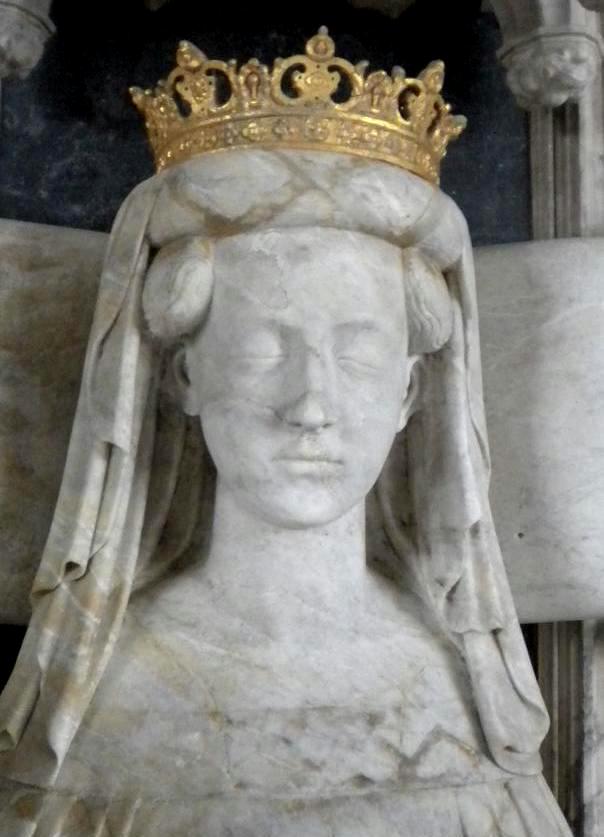
While Margaret was still alive, not much is heard of Philippa, but when the Nordic great queen dies in 1412, she steps out of the shadows. Filippa is then 18 years old, and her special domain within the Kalmar Union has become Sweden.
During the Middle Ages, the king and queen were almost constantly on the move, and Philippa and Erik typically travelled independently. After living together at Kalmar Castle for three years after the wedding, there are only six recorded occasions between 1406 and 1430 when they seem to have been in the same place at the same time. Philippa, as mentioned, travelled mainly in Sweden, but was also occasionally in Denmark.
Ten years after the wedding, no children had been born to the royal marriage, and Erik appointed his cousin Bogislav of Pomerania as heir apparent. In connection with this, he also appointed Philippa as regent if Bogislav was still a minor when Erik died. At the same time, he issued a letter of salvation in which he demanded allegiance to both Bogislav and Philippa in the event of his own death. Four years later, in 1420, this was formally confirmed, and in connection with this, Philippa’s life estate was also reorganised, that is, the lands that would provide her with income and thus support for life if Erik died before her.
From having been scattered throughout the Nordic countries, these were now concentrated in Sweden, and came to encompass Närke, including Örebro, where she had already received Örebro Castle as a morning gift in connection with the wedding, Arboga, Uppsala, Stockholm and Västerås with the associated counties and castles, and all of Zealand. In 1424, she was given the title ”plenipotentiary queen and regent of Sweden”. As a result, Philippa often acted as de facto regent in Sweden.
From at least 1422, she was responsible for handling government affairs in Sweden and travelled continuously around the kingdom. She also held council meetings in Vadstena, Stockholm and Nyköping. When Erik went on a pilgrimage to Jerusalem between 1423 and 1425, she acted as regent over all the kingdoms within the Kalmar Union. On his way down to the Holy Land, Erik visited the German Emperor Sigismund to get a ruling on the question of whether Schleswig should belong to the German Empire or the Nordic countries. The outcome was in favour of Erik and the North, something that was not appreciated by Count Henry of Holstein, who turned to the Pope to have the outcome annulled. This resulted in Erik, who was en route to Jerusalem, being summoned to a meeting regarding the matter.
But no messengers were sent for him, as one might think was customary. Instead, notices were posted on church doors in Rome, Lübeck and Schwerin, where Erik was basically asked to get in touch.
The message did not reach him, but it did reach Philippa, probably because she was then in the process of concluding treaties with several German cities, in which Swedish coins would be worth as much as German coins. This agreement gave Sweden at least the same starting point in trade between the kingdoms. Philippa reacted to the notices by writing a forward letter to the Pope with the message that Erik, after all, was the king, and did not believe that the Pope wanted to ”let the scythe go into someone else’s field”.
This was a more diplomatic way of saying that the Pope should not interfere in worldly affairs and urged that the outcome of the arbitration be allowed to stand. She also countered the notices that had invited Erik to appear at a meeting with notices that the emperor had decided that Schleswig was Nordic. The Pope possibly thought he had better things to do than lands in northern Europe and dropped the annulment case.
This did not go down well with Holstein, who went to war against the countries of the Kalmar Union, not for the first time, and this time with the Hanseatic League at his side.
Erik, who was now back from Jerusalem, called the aforementioned council meeting in Vadstena in 1426. However, it was Philippa who arrived at the meeting, not Erik.
What she said verbatim, we will never know, but she secured both archers and horsemen for the flaring-up war. Less than a year later, she was able to repeat the feat in Nyköping, where she managed to persuade the assembled power elite to release both ships and more soldiers. There is also uncertain information that Philippa may have personally led the defence of Denmark during a German attack.
There is no indication that Erik of Pomerania was in Sweden between 1421 and 1430, a period during which a two-year absence is explained by the pilgrimage mentioned above. In contrast, Philippa was in the country on at least eight occasions during the same period, often staying for several months.
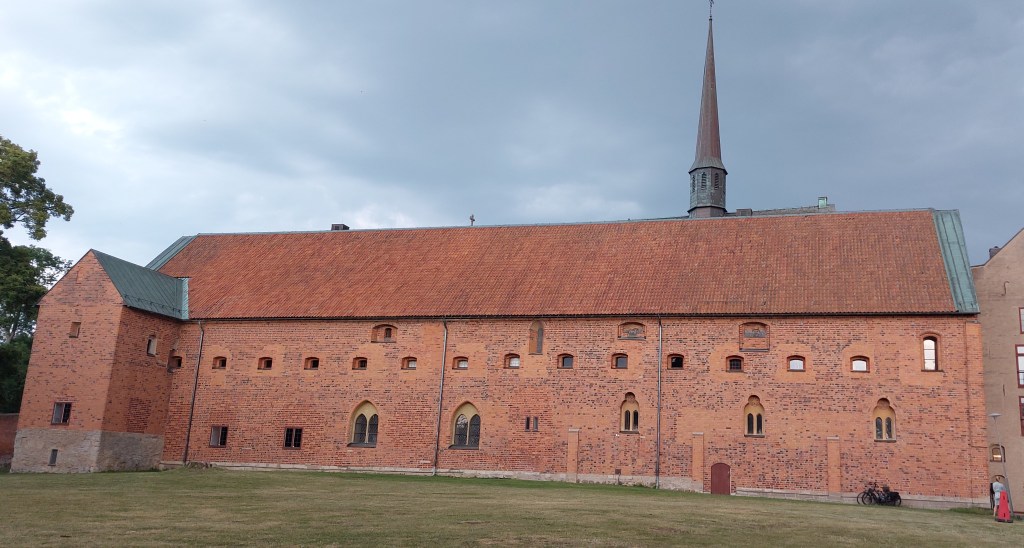
The recurring place of residence was Vadstena. Here in 1421, she also had a new chapel built, dedicated to St. Anna, and here one can possibly sense both desperation and sorrow. St. Anna was considered to have mercy on barren women, and there were never any children in the marriage between Filippa and Erik.
It was also in Vadstena that Filippa died suddenly on January 5, 1430, at just over 35 years old. Of what is not known, the fact that she was buried almost immediately has led to speculation that it could have been a contagious disease. She was buried in the chapel sha had built, a grave that unfortunately is since long gone.
Sources:
Svenska kvinnor historien glömde – Stefan Högberg (Swedish women history forgot)
Filippa – Gottfrid Carlsson/National Archive
Filippa, drottning – Charlotte Cederbom/Swedish biographical lexicon of women

 Scandinavian History
Lämna en kommentar