
On 7 October 1391, Birgitta Birgersdotter was canonised by Pope Boniface IX in Rome. She had been dead for 13 years at that time. Internationally, she’s mostly known as St Bridgid of Sweden, as in the headline, but will throughout this post be called Birgitta.

She was born in 1303, possibly on Finsta farm in Uppland, as the daughter of Uppland’s ”lawspeaker”, the Scandinavian equalent of a bailiff in, to Brigitta, contemporary England, Birger Persson, and his wife, Ingeborg Bengtsdotter, from the Bjälboätten family in Östergötland, which also housed, among others, Birger jarl.
Birgitta’s maternal grandfather’s father was also a cousin of Magnus Ladulås, which meant that she not only belonged to one of the real noble families of medieval Sweden on both her father’s and her mother’s side, but that she was also, albeit distantly, related to King Magnus Eriksson, whom she would eventually scourge in her apparitions.
When Birgitta was only 12 years old, her mother died, and Birgitta was sent away to her aunt to receive the upbringing that befitted a girl of her social class, and that her father did not feel he could give her on his own. Although it was practically a status marker at that time to send a daughter to a convent, and Birgitta, already as a child, claimed to have had visions, that kind of life was not within her reach at this young age. Instead, like many others, she became a pawn in a game to forge family alliances, and in 1316, at the tender age of 13, she was married off to Ulf Gudmarsson, who was five years her senior. At the same time, Birgitta’s sister, Katarina, was also married to Ulf’s brother, Magnus.

Ulf Gudmarsson came from a prominent family, the Ulvåsaätten, which had estates in both Väster- and Östergötland. Over time, he was appointed a knight and counsellor by Magnus Eriksson, and he was active as a lawspeaker in Närke, which led to Birgitta being sometimes referred to outside of Sweden as the Princess of Närke.
But first, the two teenagers settled on Ulf’s ancestral estate, Ulvåsa. Sometimes you can read that Birgitta persuaded her husband to live in abstinence in the first years. Then you connect it with her religiosity, and that she possibly wanted to become a nun instead. That may have been the case. But the fact is that there were unwritten rules about when the marriage could be ”consummated” if the bride was very young, that is, they waited so as not to expose what was de facto a child’s body to pregnancies and childbirths too early. But over time, Brigitta gave birth to eight children, including Katarina, who is also canonised.

Together with her husband Ulf, she also made several pilgrimages to Norway and the tomb of Olof the Saint in Trondheim. Many years later, her daughter, Katarina, during Birgitta’s canonisation process, would recount that the couple had walked from Östergötland to Trondheim and then back home. They also travelled to Santiago de Compostela in Spain. Getting from the Nordic countries down to Spain was by no means as straightforward in the 14th century as it is today, and the couple dedicated 1341 to 1343 to that journey.
On the way home, Ulf became seriously ill, and Birgitta believed she had seen Saint Dionysius, not to be confused with the Greek god of wine, festivities and ecstasy, but was a French bishop who was murdered in Paris in 262. Saint Dionysius is mainly invoked for headaches and rabies, so it is not without curiosity that one becomes curious about what Ulf Gudmarsson actually became ill with.
The French saint is said to have promised Birgitta that her husband would recover, and whatever it was that Ulf was suffering from, the saint kept his promise. However, Ulf still only had a few years left to live and died either in 1344 or 1346.
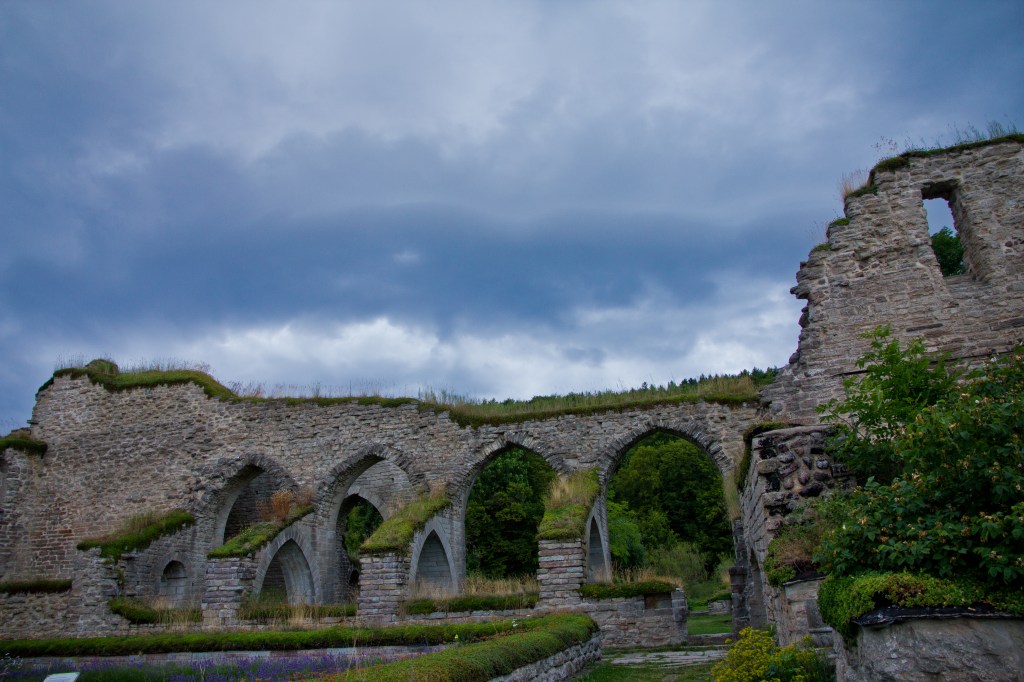
However, after returning to Sweden and before Ulf’s death, the couple moved to Alvastra. Birgitta, as a woman, was not allowed access to the monastery, but she is said to have lived in a house right next to it.
On his deathbed, Ulf gave Birgitta a ring that he asked her to wear and pray for him. But when he was buried, Birgitta is said to have put the ring in the grave, and when this was questioned, she is said to have replied that worldly love was now behind her. The ring would only remind her of the joys that marriage had given her and prevent her from dedicating her life to God.
And that’s what she did. But with Ulf gone, Birgitta had only one goal, and that was to build a convent in Vadstena.
Shortly after she became a widow, Birgitta received the most famous of her revelations, which consisted of a ”calling” from God in which she was appointed to be his bride and channel, that is, simply his mouthpiece.
Parallel to Birgitta’s life, another one was taking place, significantly higher up the social ladder, even though Birgitta herself came from the absolute pinnacle of society, and that was, of course, the king. Magnus Eriksson was only three years old when he became king in 1318, following the deaths of his father, Erik, and uncle, Valdemar, in captivity at Nyköpingshus. This occurred after his brother, King Birger, had imprisoned them. This resulted in a rebellion among Erik’s and Valdemar’s followers, which caused Birger to flee to Denmark. As mentioned, there was a three-year-old left to put on the throne.
Magnus Eriksson came of age in 1333, and when Birgitta’s plans for the monastery began to be formulated, he had been a full king for just over ten years. It had been a relatively successful reign until then, and Magnus could call himself king of Sweden, Norway, and Scania, the latter of which he had purchased from Denmark. He was married to Blanche of Namur, often referred to in Swedish historiography as Queen Blanka.

The lives of the king and queen would become intertwined in many ways. Birgitta was probably the queen’s housekeeper for a period. But the contact was often anything but pleasant for the king and queen, and historian Michael Nordberg has even expressed that it was Magnus’ misfortune to be contemporary with Birgitta. As Nordberg points out, Birgitta had a different opinion; according to her, the fact that they lived at the same time was a divine grace that had befallen Magnus Eriksson.
No less than twenty of the revelations she would have over the years were about Magnus Eriksson and his queen, and that the legacy that even exists about him – he is not the most remembered of our kings – is primarily negative, which is essentially Birgitta Birgersdotter’s merit, or fault, depending on how you look at it.
Birgitta’s revelations, which often urged Magnus to refrain from enacting laws that negatively affected salvation and her own social class, for example. Why Jesus, Mary or God himself would have any views on that, one might ask. Jesus did not make himself known for having much to spare for the rich and powerful. Those who did, however, have views were people in Birgitta’s worldly surroundings.
One should not make the mistake of thinking that Birgitta’s revelations were purely religious phenomena. The messages, especially those of the Virgin Mary, left through Birgitta had a strange ability to benefit Birgitta’s family and social class in one way or another.
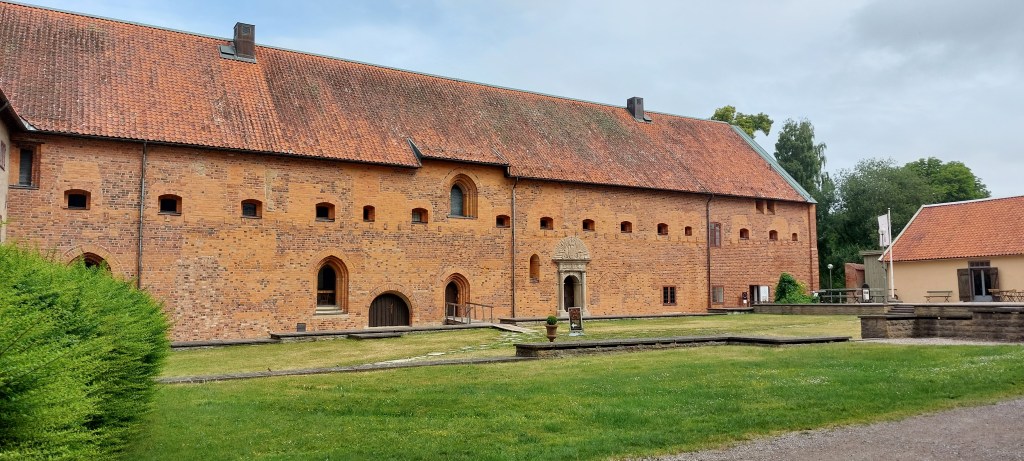
In time, through ”revelations”, she would come to accuse the king of being homosexual and the queen of having killed her own son. It was Magnus Eriksson who allowed Birgitta to found the monastery she so eagerly desired. On May 1, 1346, the king made a significant donation aimed at realising the monastery’s plans. It included the royal estate in Vadstena, as well as several estates in both Östergötland and Västergötland, the returns of which would finance both the construction and maintenance of the monastery.
This did not make Birgitta even marginally more benevolent; instead, the scheming, disguised as messages from the Virgin Mary, became increasingly spiteful over the years. One triggering factor is believed to have been that she was dissatisfied with the king’s crusade against Novgorod, which did not have the outcome Birgitta had hoped for.
Birgitta never saw her monastery completed. To establish a monastic order, it was not enough to receive property from the king; approval from the pope was also required. To achieve this, Birgitta went to Rome in 1349 to persuade the pope to grant her greatest wish. It took 20 years before it happened, and Birgitta Birgersdotter never returned to Sweden during her lifetime.

Between 1372 and 1373, Birgitta, then close to 70 years old, undertook a gruelling pilgrimage to Jerusalem. She was already sickly, and the journey took what strength she had left. After returning to Rome, she died at home on 23 July 1373.
Initially, her remains were interred in the church of San Lorenzo in Parnispena while waiting for her daughter Katarina and son Birger to come and bring her home to Sweden again. This last journey for Saint Bridget began on 2 December 1373, and just over six months later, on 4 July 1374, they finally reached Vadstena, where she was buried in the Vadstena convent church. However, it would not be until 1384 that the monastery was consecrated. Information can be found that Bridget still rests in the monastery church. However, this is not true; her remains disappeared in connection with the Reformation.
Today, there are 65 Birgittine monasteries worldwide, all of which are part of the order founded by Birgitta Birgersdotter.
Sources:
I Magnus Erikssons Tid – Michael Nordberg
Heliga Brigitta – Dick Harrison
Heliga Birgitta. Åttabarnsmor och profet – Birger Bergh
Birgitta Birgersdotter (Heliga Birgitta) – Kvinnohistoriskt Lexikon

 Scandinavian History
Lämna en kommentar