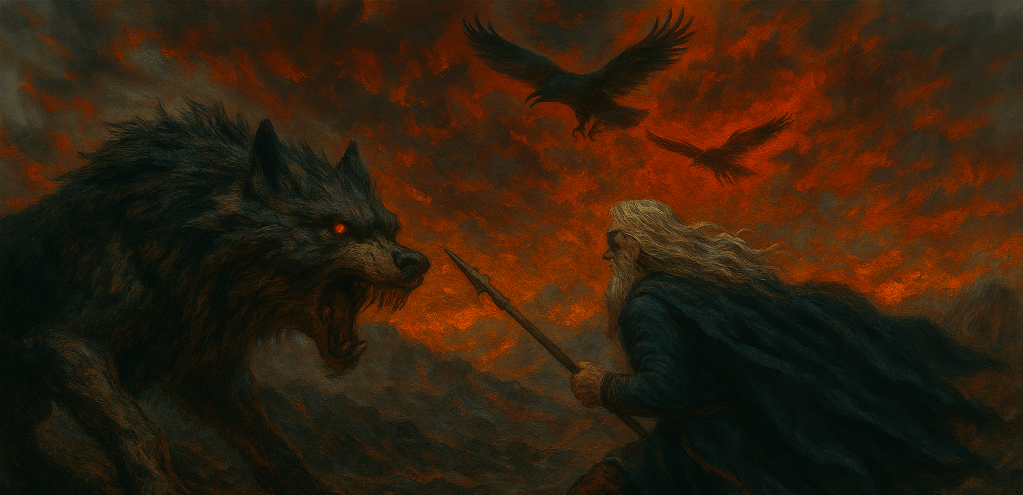
In troubled times, when threats seem to be looming from all directions, a dark thought may slip in and dwell on the possibility of doom. This is not unique to our times; in most cultures, the idea that everything can end is quite fundamental. So, in Norse mythology and today, we are heading straight into Ragnarök.

The word comes from the Norse ragnarǫk, which loosely means the fate of the gods.
But back to the actual ”event”
This catastrophic event is preceded by a three-year-long summer and a three-year-long winter, the so-called Fimbulwinter, or fimbulvetr, the great winter. Above all, this was supposed to signal that the end, in the form of Ragnarök, was approaching. During the Fimbulwinter, the earth freezes, and all life ceases. In recent years, researchers, archaeologists and climate historians have searched for the real Fimbulwinter, and possibly found it. Between the years 536 and 547, at least three massive volcanic eruptions occurred, the exact locations of which remain unclear, though Central America and Asia have been proposed as likely locations.
These ice cores show that such massive ash clouds were thrown into the atmosphere that the sun was, to varying degrees, eclipsed for decades. It has been shown that during this period, established settlements ceased to exist in what is now Sweden, and cultivated areas were abandoned, simply because the cold that developed made it impossible to grow anything in an already cold climate. The theories that have arisen from this are that the period following the volcanic eruptions was so traumatic that its memory lived on for generations and eventually gave rise to the myth of the Fimbul Winter and Ragnarök.
In the myth, the crop failure and famine that follow the Fimbul winter give rise to wars and conflicts, something that one does not have to go very far back in modern history to find equivalents. Professor of religious history, Gro Steinsland, believes that the downfall of the ancient Norse gods was already built into the creation story. The Æsir gods were never omniscient or invulnerable, and the world in which they operated was vulnerable and shaky from the moment it arose.
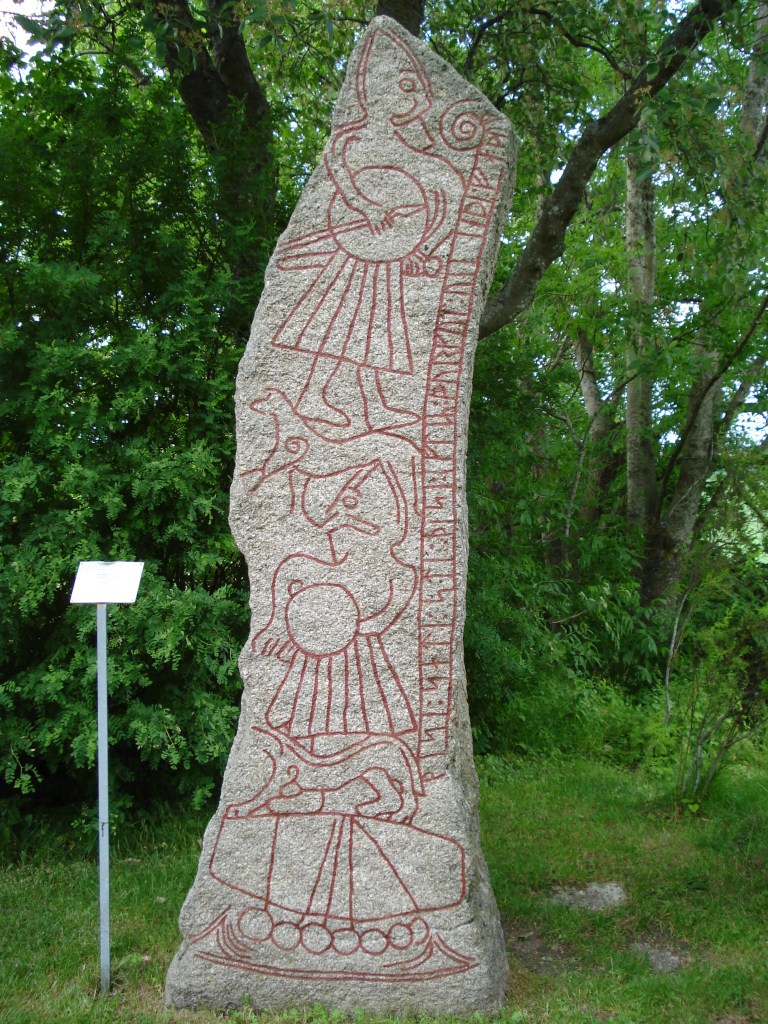
Ragnarök is not about human weakness or rebellion against the gods, but the contradictions between the forces were simply too great to be balanced for eternity. This is one reason why the god Odin constantly seeks knowledge. Above all, it is his role to hold together the existence of the gods and humans, and in the end, it is no longer possible. Steinsland calls the Viking Age worldview dramatic and tragic, and it’s difficult to not agree. While people struggled with everyday tasks, they lived with the knowledge that time was borrowed. There was no devil to blame here – a figure that church representatives would, in some cases, a few centuries later, equate with Odin himself – but it was simply about tensions that had been built in from the beginning and the gods’ own shortcomings.
A harbinger of what is about to happen is the murder of Balder, the good and friendly son of Odin and Frigg. Frigg had demanded a promise from all living things to protect him, all plants and creatures except the young mistletoe, which she considered too tender to pose a threat. This mistake reached the ears of Loki, the giant who was Odin’s blood brother, but who you never know which way he will swing. Many times, he puts the gods in dangerous or embarrassing situations, but he is often the one who solves them, either voluntarily or under duress. But this time, there is no mercy from Loki. During what should be a friendly, if somewhat dangerous game, Balder’s invulnerability is tested, and Loki persuades Balder’s blind brother Höder to shoot an arrow made of mistletoe at Balder. The arrow hits, and since the plant has not made any promise to protect Balder, the injury is fatal.
Thus, the powers have embarked on the path to destruction. Loki is, of course, punished there and then and is chained in a cave where a snake drips its poison on him. Despite Odin and Loki’s self-chosen brotherhood, there is no way back from what has happened. Loki’s son, the Fenris wolf, who has been chained in chains it cannot break free from, is freed after all, as a result of the mountains collapsing. The Midgard Serpent, also one of Loki’s children, despite its inherent evil, has helped hold the world together by coiling around it and biting its own tail, rising from the sea and creating floods. The dead leave Hel, and the Muspel Horde, the destroyer of the world, joins the giants, fire-gods and Loki.
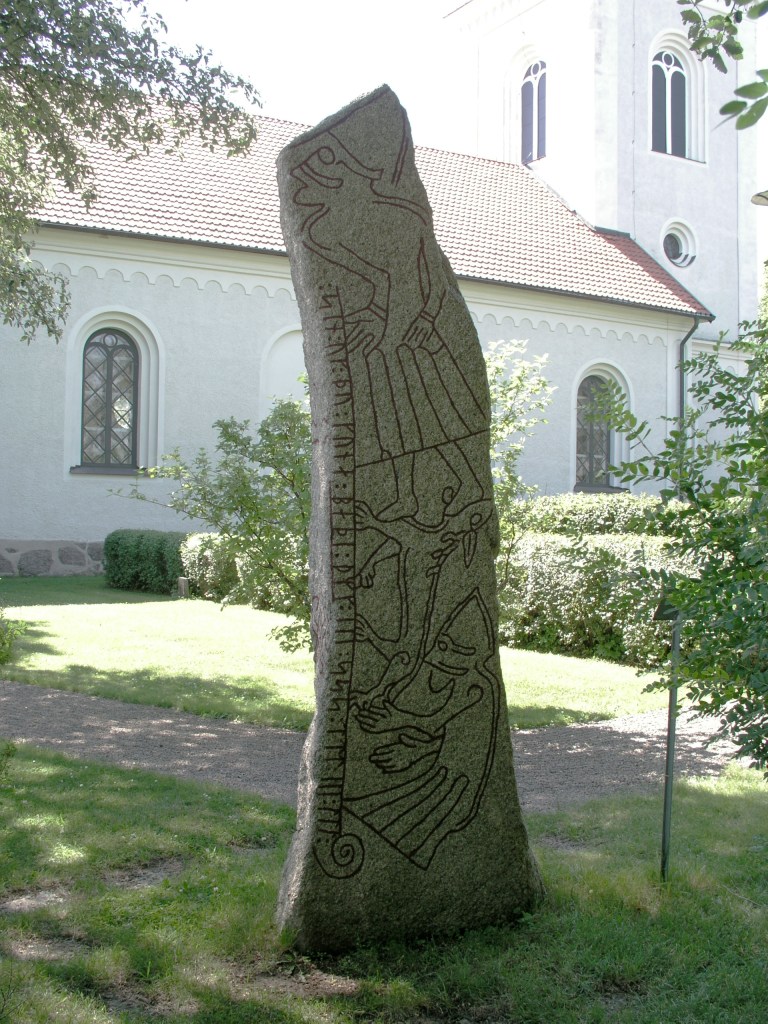
Led by Loki, the giant who became the brother of an Æsir god, Odin, they all turn against the gods,. After consulting with Mimer, in whose well Odin had long ago sacrificed his eye to attain all the knowledge of the world, Odin calls for a final council with the gods.
Then the gates of Odin’s Valhalla and Freya’s Folkvang are thrown open, and all the unicorns, the brave warriors who have fallen in battle, rush out.
The final battle takes place on Vigrid’s Thousand-Mile Plain. Here, the Fenris wolf devours Odin, and Odin’s son Vidar takes revenge by in turn killing the Fenris wolf. Thor kills the Midgard Serpent, but dies himself from the reptile’s poison. Frey has previously given away his sword and is left to drive his antler into Surt’s eye, the giant who controls the fire. It is of little use. Surt cleaves Frey with his sword and then sets the world on fire. The world sinks into the sea, and everything returns to Ginnungagap, the darkness that existed before creation. The gods are dead.
It could have ended here, but it doesn’t. Idavallen remains the most beautiful meadow in Asgard, and then we have Voluspá, the first poem in the Poetic Edda, compiled by Snorri Sturlason. Voluspá, or the Völvan’s Prophecy, is of unknown age, and here a new world is described: The hope that will come after Ragnarök. In stanzas 59-66, she predicts a new earth, new generations of gods and new people: ”Up she sees the earth coming out of the sea for the second time, green again; rapids fall, the eagle flies over it, he who fishes on the mountain seizes.”
The Völva tells of a world where the toil the people of the Viking Age were all too familiar with is over: the fields will sprout and grow without first being sown.
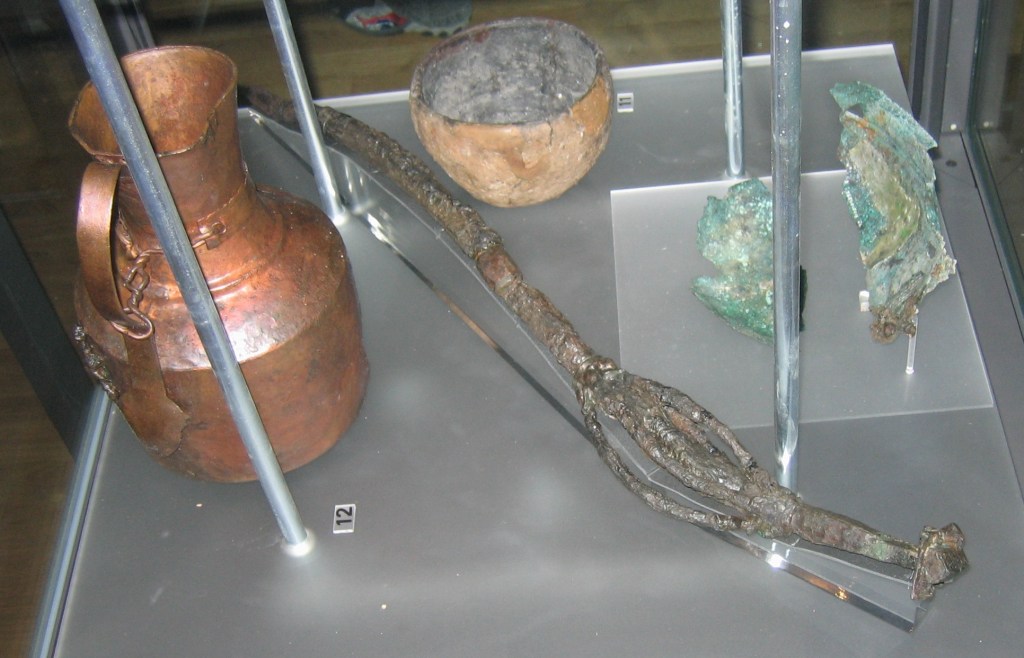
The Æsir will meet on Idavallen, and Balder will return from the dead and, together with his brother Höder, the one who took his life, rule over the new world. Höner, who, together with Odin, among others, created the old world, will also come and choose the new world tree.
The games with tiles, popular among both gods and humans, will be made of gold, and the hall where everyone will live will also be made of gold.
But there is one segment that has been discussed for centuries. Someone else will come. This person is never mentioned by name, but only that he is the highest. The reason why this has raised questions is that the mention of this highest is not included in the manuscript that forms the basis of the Poetic Edda, the so-called Codex Regius, but appears in the 14th-century manuscript Hauksbók. This has led historians to wonder whether someone has let a Christian interpretation of the new world slip in, and this unnamed one is simply the Christ figure of Christianity.
In the Middle Ages, it was not entirely straightforward to recount the ancient world’s gods; a fine line had to be walked to avoid being accused of heresy. Today, it is believed that this is behind the claims of earlier centuries that the gods were ancient chieftains from a distant land who, for unknown reasons, had made their way to our northern latitudes. Ancient rulers were acceptable to write about; they could serve as alleged ancestors of the early Middle Ages’ monarchs. Ancient gods were less popular, especially with the Catholic Church, which was becoming increasingly influential at the time.
At the same time, some believe that there’s no logic in interpreting this figure as a Christ figure. Nowhere else in the text is there any support for a Christian worldview. Instead, it has been suggested that Heimdall, the most mysterious god in Norse mythology, may be returning.
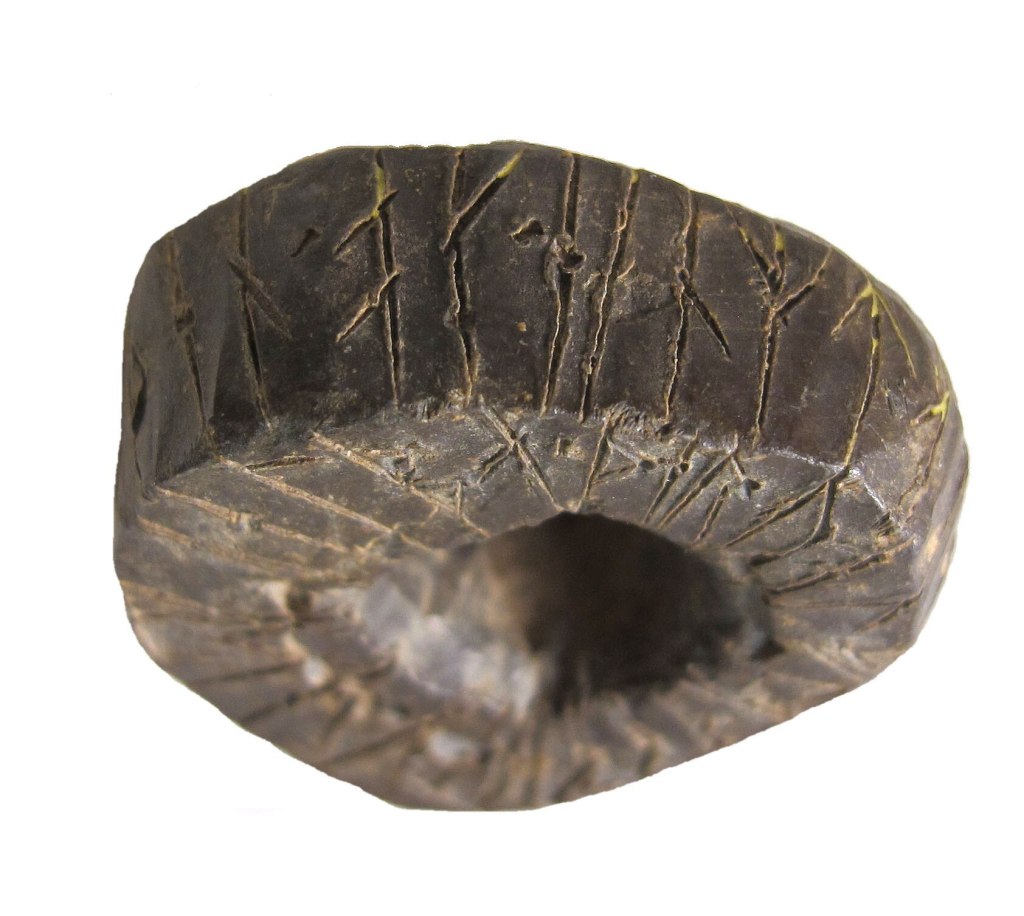
He is born of nine giantesses and is the only god in mythology actually associated with the sky. There are theories that he is a very old god who predates what we call Asatru, but was revitalised during the Viking Age. Unlike Odin, Thor, Freyja, and Frey, his name is not found in any place names, but a spindle whorl found in 2010 in Lincolnshire, England, mentions his name alongside Odin and Tjalve. Lincolnshire was part of the so-called Danelaw, which was ruled and inhabited by Norsemen, primarily Danes, between 876 and 954, and the text is written in Old Norse.
In mythology, Heimdall is connected to Yggdrasil and is also the guardian of Bifrost, the sky bridge that connects Asgard to other worlds. He is also the one who, by blowing a horn, lets the other gods know that Ragnarök is here. So. Is this unknown god Heimdall, Jesus, or is it perhaps Odin who reappears? There is no one to ask, and that could be just as well. But the moral of the story, which can be taken from the myth of Ragnarök in our own dark times, is that there is something else, on the other side
Sources
The Poetic Edda – Snorre Sturlasson
Fornnordisk Religion – Gro Steinsland
The Children of Ash and Elm; A history of the Vikings – Neil Price
Prolonged Echoes, Old Norse Myths in Medieval Northern Society – Margaret Clunies Ross

 Scandinavian History
Lämna en kommentar