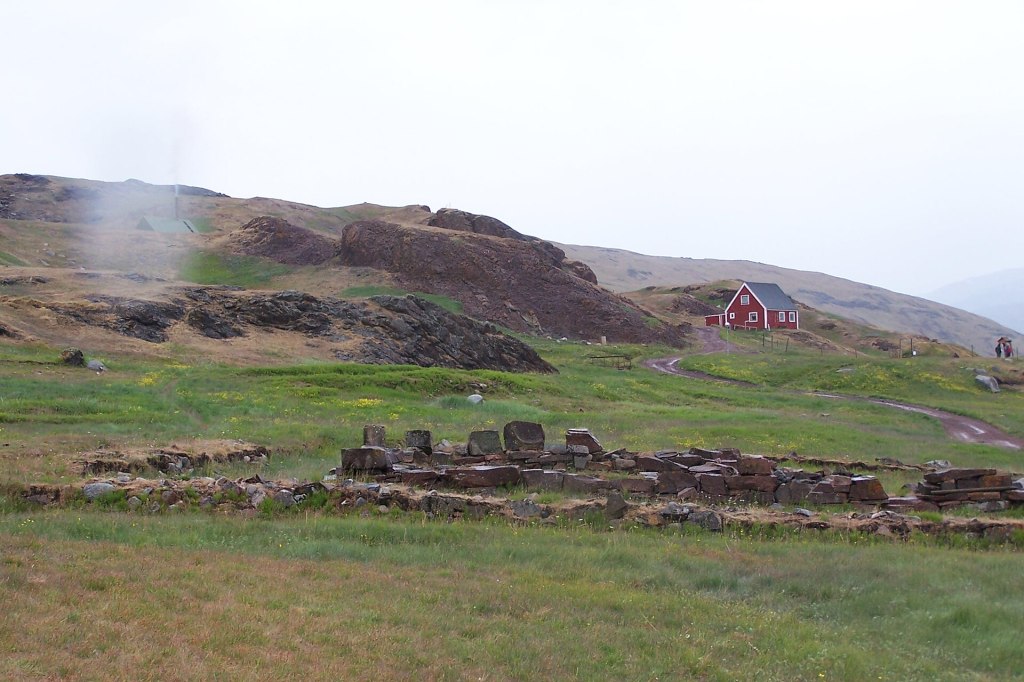
It cannot have escaped anyone that Greenland is high on the agenda right now, as certain forces imagine that it is only a matter of demanding that a country and its population can be taken over without anyone actually having to oppose it.
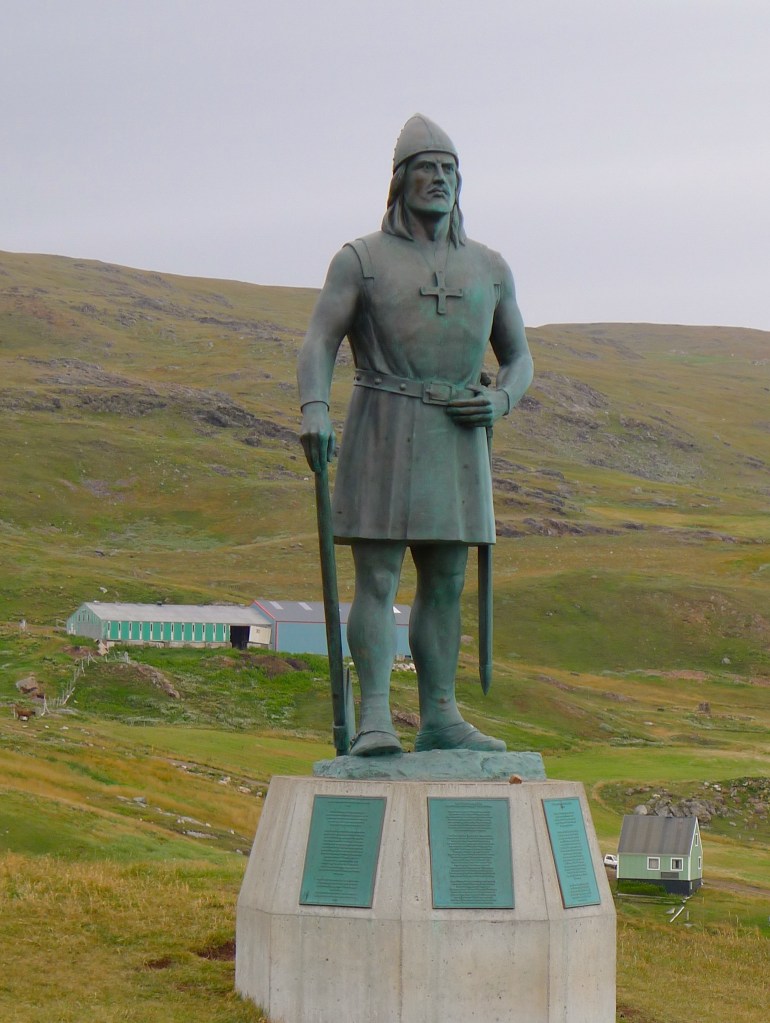
Here is Greenland’s ancient Norse history. It is possible to argue that the island is originally Norwegian-Icelandic. Still, when asked what Denmark’s claim to it is, it can be stated that the Scandinavian/Norse connection goes back more than 1000 years.
It seems that Erik the Red came from a violent family. One can certainly argue that he lived in a violent time, but it is clear that his father crossed the line of what was considered acceptable even in the 10th century.
Erik was born in Norway sometime around 940 but went with his father Torvald Åsvaldson to Iceland when he was exiled from Norway after committing at least one murder. Things seem to have gone well for Erik initially; he married and, using his wife’s dowry as a foundation, built his own farm where four children were born, including Leif Eriksson, who, as an adult, would ”discover” Newfoundland, among other places.
But the eventual peace would not last. Some of Erik’s thralls caused a landslide on a neighbour’s farm, whereupon a relative of the farm’s owner, Eylof Dung, killed the thralls. One cannot help but wonder whether the name came in reference to body odour. A thrall usually had a hard time, and killing one of them often did not result in any punishment to speak of. It is possible that the owner had to compensate for its value. But Erik seems to have taken a nasty turn, and killed Eylof Dung and, perhaps out of sheer impatience, another man named Holmganga-Hrafn.
Once again, it would turn out that even at this time, one could not do as one pleased, and relatives of Eylof dragged Erik before the Thing to have his fate decided there. This time, it was no worse than being banished from Hauka valley, and he had to take his family with him and start over in another part of Iceland.
It was the South island that became the family’s new home, after Erik had subdued Öxnö and Brökö. However, it would not be long before Erik again found himself in conflict; he had lent out seat logs, the richly decorated wooden posts that supported the master’s seat in a Viking-era longhouse, and which were considered to have mystical power and were linked to family happiness, protection and ancestral heritage, and now wanted them back.
The one who had borrowed them, a man named Torgest, pursued Erik and his men back to Erik’s farm, and another clash broke out. Two of Torgest’s sons and some of his men died, leaving Erik and several of his men declared outlaws.
After hiding for a while, Erik decided to go to the land that Gunnbjörn Ulfsson, also known as Gunnbjörn Ulf-Kraukason, had discovered. Erik the Red did not find Greenland entirely on his own. A few years earlier, Gunnbjörn had lost his way during a journey between Norway and Iceland and ended up in Greenland.
He gave his name to Gunnbjørnsker, part of the Greenlandic archipelago. He was later also given his name to Greenland’s highest mountain, Gunnbjørn Fjeld, which rises to 3,700 meters above sea level and is the highest point north of the Arctic Circle.
What Erik did that Gunnbjørn never did was explore the Greenlandic coast. At this time, Greenland was uninhabited, except for Inuit groups who periodically migrated from Canada to the island’s northern regions to hunt. This was during a period of a warmer climate than Greenland would have just a few centuries later, and than it is today. This is a result of the medieval warm period, which is said to have begun around 800, with information around 950, and lasted until the 13th century, followed by the Little Ice Age, which lasted until the late 19th century.
The absence of Inuit settlements in Greenland in the 9th century may therefore be linked to the fact that their culture and lifestyle are specifically adapted to colder climates. But it meant that when Erik the Red and his followers reached the fjords of the southwest coast, they found a landscape consisting of meadows and low-growing birch forests.
After his three years as an outlaw, Erik returned to Iceland and, according to some sources, in the mid-980s, managed to attract the first wave of colonisers to the country he had named Greenland, making it appear more attractive.
There was not much green in Greenland. Even in Erik the Red’s time, there were only two ice-free areas on the west coast of Greenland that offered enough space for settlers to live and keep animals, and both to engage in agriculture. Despite this, in the following decades, more and more Icelanders would leave their homeland to join Erik’s colony.
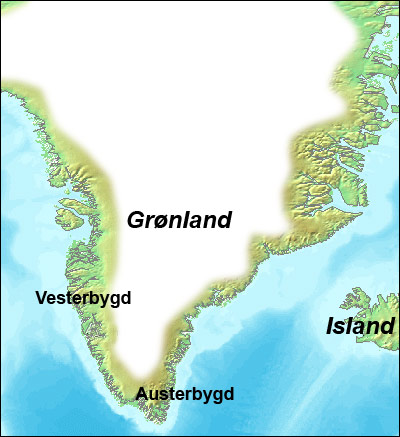
The largest settlement, Eastern settlement, was founded in the far south, while the smaller Western settlement was located further north. The warmest areas, and thus the richest vegetation, were located furthest into the fjords, and here the settlers created communities – according to the Old Norse model with single farms dotted in the landscape – similar to the one they had left behind in Iceland.
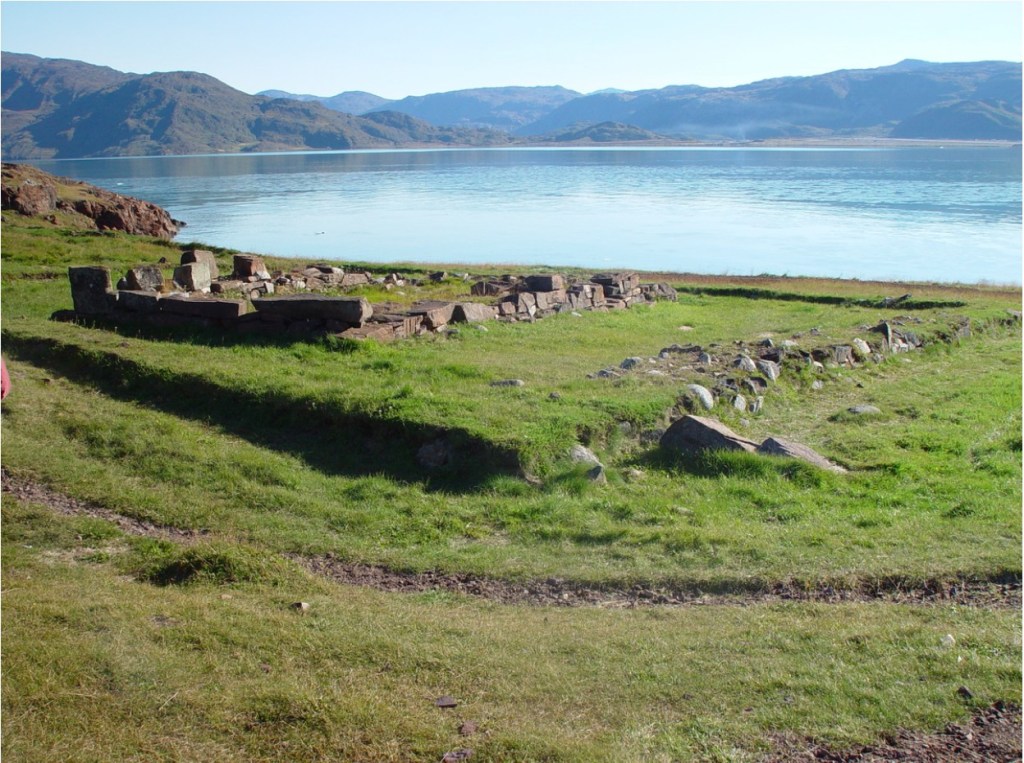
Erik himself founded the farm Brattahlið, a name meaning steep slope, or what is today called Qassiarsuk, in southern Greenland.
During an archaeological excavation in 1932, the remains of the first church in Greenland were found, according to Erik the Red’s saga, built on the initiative of Erik’s wife, Tjodhild, after she converted to Christianity.
The excavation also found the remains of a longhouse, the so-called Brattahliðshuset, which was relatively well preserved with a hearth in what had been the centre of the house. Among various loose finds, a spindle whorl was also found that had a small Thor’s Hammer carved into it. It can perhaps be assumed that it did not belong to Tjodhild.
But back to the first decades and centuries of the colony. The inhabitants of Western settlement had to struggle harder than those in Eastern settlement. The same type of economy had been introduced in Greenland as in Iceland, namely the breeding of cattle, sheep, goats, and horses, supplemented by hunting and fishing.
But the colonisers were also farmers, and during the warm period, they also cultivated grain to a limited extent. In Western settlement, all this was more difficult: there were fewer pastures, and the growing season was up to a month and a half shorter than in Eastern settlement. Therefore, hunting and fishing became more dominant there.
Erik the Red died in 1003, but the colony he founded continued to grow. In the 1200s, the colony’s third century, the Nordic population numbered between 3,000 and 5,000 people. Life was essentially the same as in the rest of Europe. The church dominated social life, and by the 1120s, Greenland had become its own diocese with its own bishop and cathedral. The island also had two monasteries, one for monks and one for nuns.
Having mainly been independent until then, the people of Greenland recognised the King of Norway as their overlord in 1261. The following year, Iceland followed suit. With that came administration and taxation, and thus the Norwegian bailiffs, part of being subject to a monarch.
It seems that for the majority of the population, it was not associated with any advantages whatsoever. The Greenlanders had to ensure that the basic necessities were available to them. Due to the geographical distance from the rest of Europe and only sporadic trade contacts with Norway, only goods of higher value were imported.
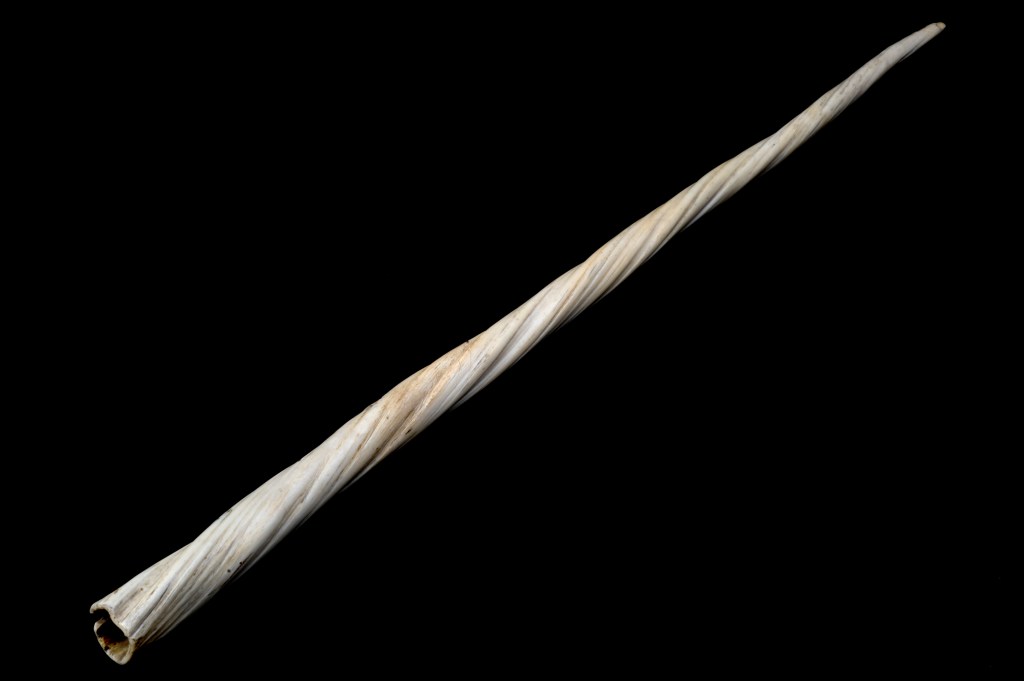
This naturally benefited the most powerful and wealthy of Greenland’s farmers. They exported walrus tusks and hides, as well as narwhal horns, polar bear skins, and live white falcons. In return, they were able to import iron, alcoholic beverages, textiles, and flour, among many other things.
In 1380, 119 years after the Greenlanders recognised the Norwegian king, Norway entered into a personal union with Denmark. A little over a decade later, the Kalmar Union was a fact, and the island thus became subject to the Danish crown.
However, this did not save the colony from gradual decline. Not entirely unexpectedly, it was the Western settlement that collapsed first, as they had worse conditions than the Eastern settlement from the start.
Preserved documents written by a bishop’s aide show that the Eastern settlement was aware of the Western settlers’ crisis in the 1350s. But when a rescue expedition was sent out, the Western settlement was found deserted. No one was left, and centuries later, archaeological research would reveal a deeply tragic story. Skeleton parts of hunting dogs that had been slaughtered and eaten were found, bone pipes that had been almost pulverised to get at the last drops of marrow, and the remains of birds that were so small that they had barely been more than feathers, but which had nevertheless been caught and eaten. All signs of severe starvation and desperation.
At this time, the climate also began to grow colder, making life more difficult, even in the previously more fertile Eastern settlement.
As the cold increased, the Inuit began to settle in Greenland during the 13th and 14th centuries, and to improve their food supply, the Nordic population soon began to hunt seals to the same extent as the Inuit. However, the Inuit had an advantage; unlike the farmers, they were not settled and could therefore follow the seal colonies, something that was not possible when they also had a farm to take care of.
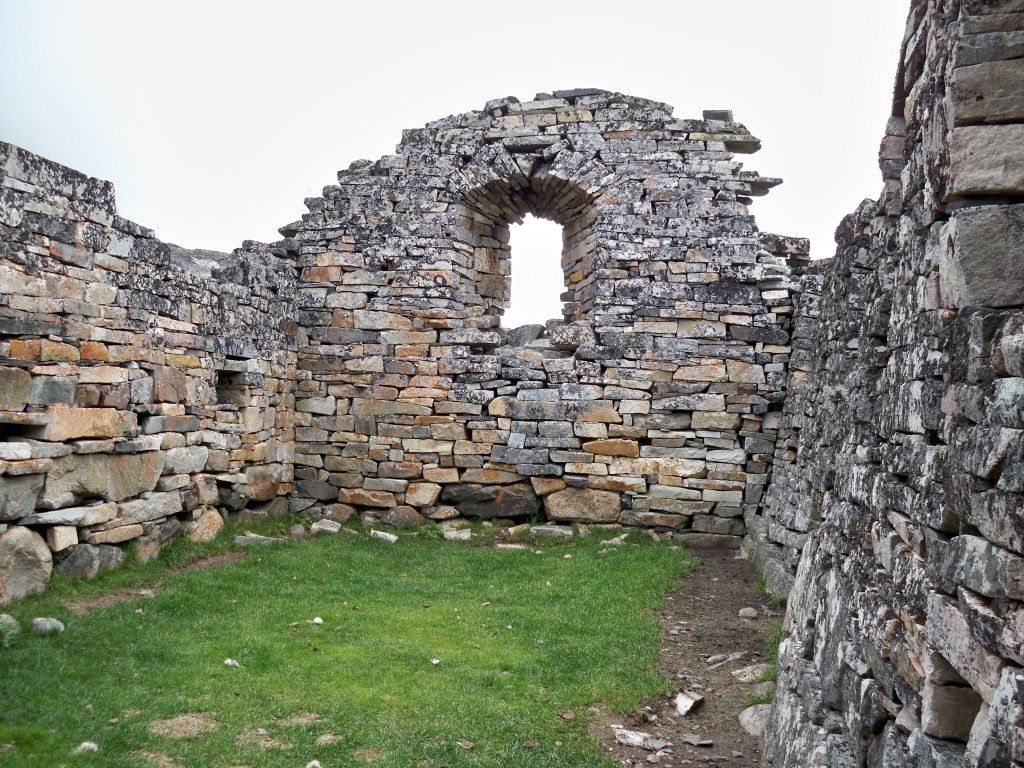
The very last documented event among the Norse population in Greenland was a wedding. In September 1408, Þorsteinn Ólafsson and Sigriður Bjørnsdottir were married in Hvalsey Church in the Eastern settlement. After that, there was silence from the Norse people in Greenland.
What actually happened to the descendants of the settlers is not known for sure, but theories abound. It has been suggested that they starved to death, returned to Iceland, or perhaps merged with the Inuit population.
The Norsemen obviously left their mark, and Greenland has numerous ruins, the best-preserved of which is the Hvalsey Church, reminiscent of the island’s Old Norse period. Research has also shown that around 5% of the fauna in Greenland are plants with a clear Nordic origin.
Denmark continued to undertake expeditions to Greenland in the following centuries. In 1721, new attempts were made to establish a colony on the island, but that is a story of its own.
Sources:
Saga of Erik the Red
Den långa medeltiden – Fredrik Charpentier-Ljungqvist
Children of Ash and Elm – Neil Price
Images without credit: Creative Commons

 Scandinavian History
Lämna en kommentar