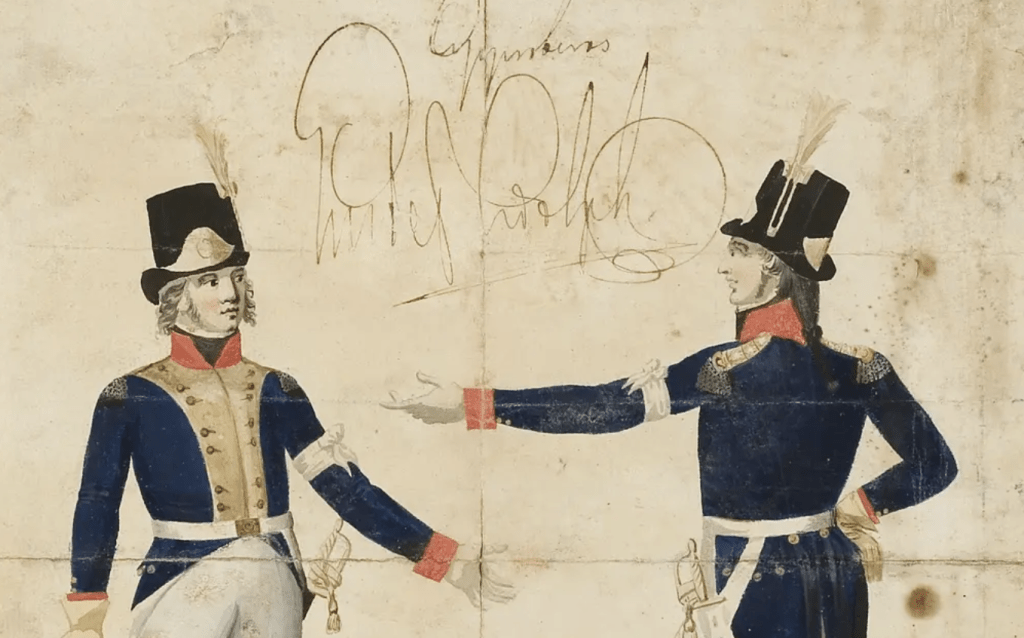
Not feeling at home as the person one was born with is by no means new. There have been those throughout history who have chosen to live as the opposite sex, and one of these was Ulrika Eleonora Stålhammar.
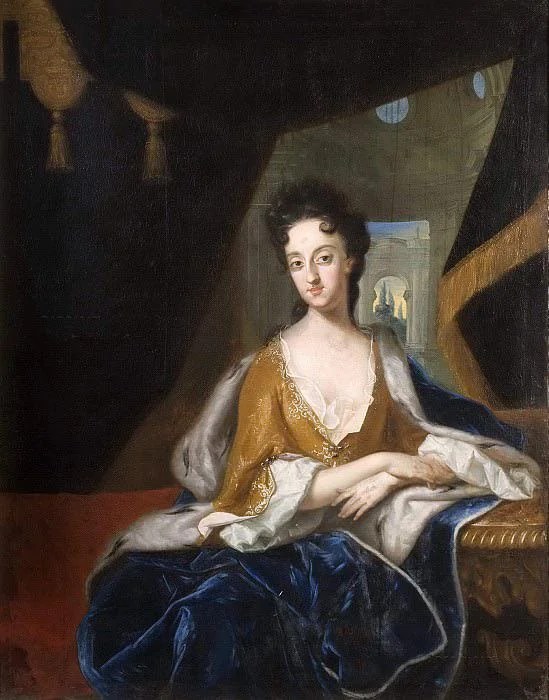
She was born in 1688 or possibly 1689 into a family marked by military life; her grandfather was a soldier, her father and her brothers were soldiers, and the female members of the family were, in turn, married to soldiers.
Ulrika Eleonora wanted to be different from her sisters and previous women in the family, even though the upbringing she had at Stensjö manor probably corresponded to what she dreamed of in terms of the love she showed for horses, hunting, and weapons. She may have been seen as a bit boyish, not least in a time when there were strict codes for who should behave how and when.
The relatively uncomplicated upbringing ended when it turned out that Ulrika Eleonora’s father, Lieutenant Colonel Johan Stålhammar, died heavily in debt. When he died in 1711, the Great Northern War had raged for 11 years, and it had been nine years since he himself had left the army. The financial ruin their father had caused meant that Ulrika Eleonora’s sisters could not get quite as advantageous marriages as they might otherwise have expected, but they all married military men, although not of any higher rank. The brothers, on the other hand, had completely different circumstances, and it is not unlikely that Ulrika Eleonora, who did not marry at all, at least not on this occasion, saw this and drew her own conclusions.
On March 20, 1713, she left the farm where her sister lived with the army trumpeter she had married. In some unclear way, Ulrika Eleonora had managed to convince her family that it was a good idea to let her go to Stockholm on her own to seek a livelihood there.
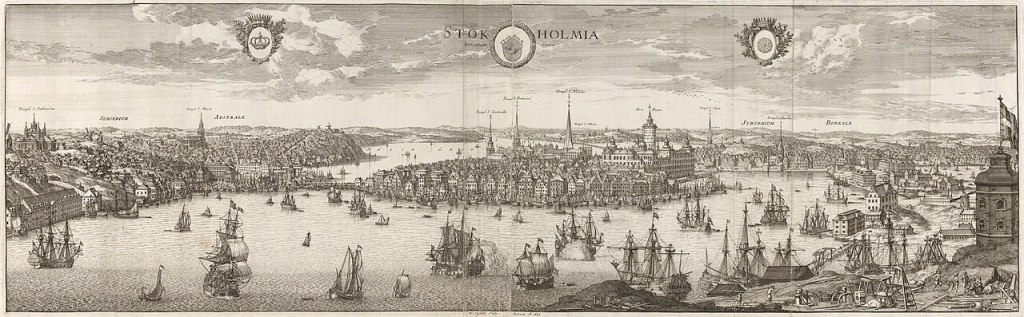
Somewhere between Åkarehult and Stockholm, Ulrika Eleonora Stålhammar ceases to exist. Instead, Wilhelm Edstedt enters the inn where she was to spend the night on her journey to Stockholm.
Exactly why Ulrika Eleonora became Wilhelm is not entirely clear. Perhaps the intention all along was to do what he, as he will be referred to as long as it is relevant, simply did when he arrived in Stockholm: to try to enlist. Added to this is the fact that it was undoubtedly easier to live in 18th-century Stockholm as a single man than as a single woman.
However, Wilhelm failed in enlisting, which makes one wonder how much he really tried in those first days. Charles XII was at war with almost everything and everyone at this time, and soldiers were needed. It was undoubtedly more challenging to get around in Stockholm than he was used to, and he later said he could go days without eating.
It finally turned around, partly because she got a job as a table-setter with the Mannerburg family. A table-setter is undoubtedly a position you don’t find in the job bank today, but was a person in upper-class families who made sure the table was set correctly with the right plates and cutlery for the dishes to be served. I’m stuck here because the post should have been ready several weeks ago.
The problem I had is that some claim Wilhelm accompanied the Mannerburg family to Turku, where Mr Mannerburg is said to have served as the county governor. However, there is no county governor in Turku with that name at this time, or at any other time, so I lost track.
So we’ll drop the Mannerburgs from now on, and content ourselves with stating that the family was on hand when Wilhelm needed them.
Through his service with the widow Eva Margareta Ulfvenklou, Wilhelm finally got in touch with Captain Maas at the Kalmar regiment and thus came closer to his goal of enlisting. In 1715, with letters of recommendation from his previous employment attesting to his virtue and honesty, Wilhelm managed to be accepted into the artillery in Kalmar as a handyman, which meant that he carried ammunition.
It was also in Kalmar that Wilhelm met his future wife in 1716. Maria Löhnman was a maid, and like so many other maids, she had never learned to read. Therefore, it became a bit complicated when Wilhelm, who would later say that he had fallen deeply in love with Maria, proposed to her.
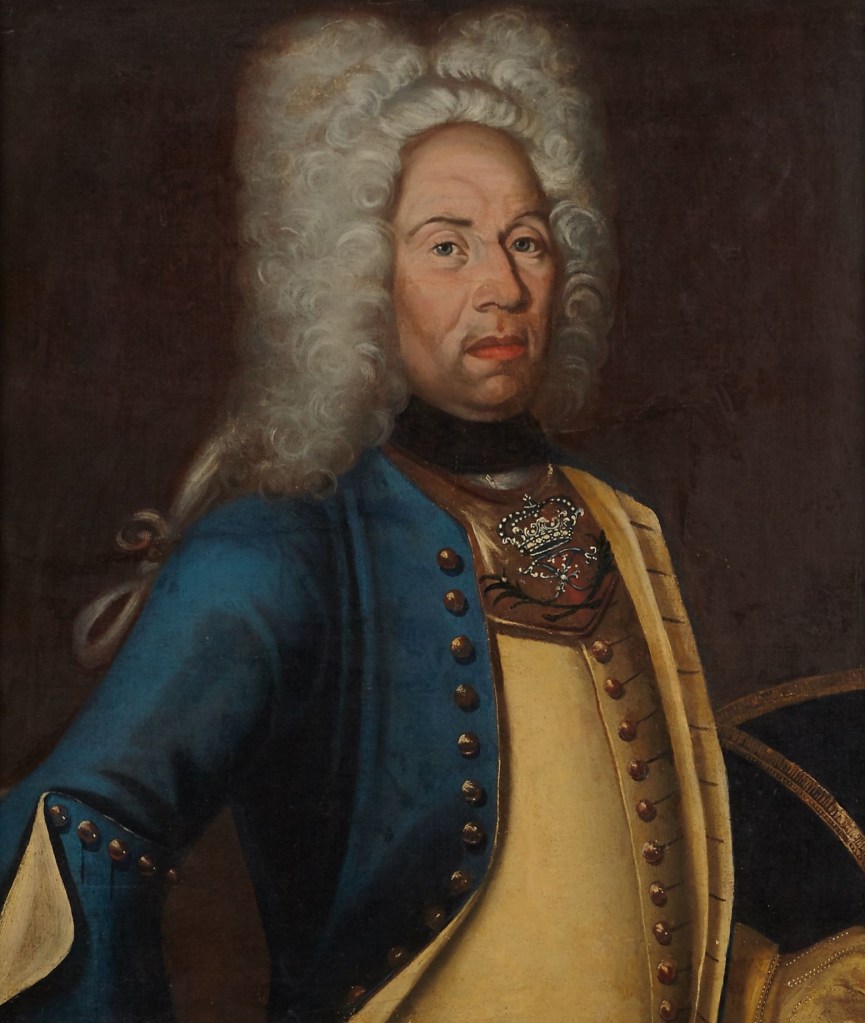
The first attempt was by letter, and when Maria could not interpret it, she took it to the priest and had him read it aloud. We do not know how Maria reacted when she heard what it said; neither she nor the priest passed it on to posterity. But perhaps it was a shock, maybe the priest said something that made her refuse, but this first proposal was rejected by Wilhelm.
Now, it is perhaps not surprising that someone who has completely changed their identity to live their own life would not be easily dismissed. So Wilhelm proposed again, but not until they had spent more time together and gotten to know each other better, and Maria apparently came to think that it would not be so foolish to spend the rest of her life with Wilhelm as her husband. The wedding took place at the home of Maria’s uncle, who was the castle bell ringer.
Here, you might think that Maria would soon discover that Wilhelm was not who he claimed to be, but that was something she would later deny. Perhaps she knew all along that Wilhelm was actually a woman, but that this was the option they had to choose if they wanted to live together. There were only two people who could answer that, and they are long gone.
However, according to Maria’s later account, when her life depended on what she said, it would have taken her two weeks to begin to wonder what was going on. Wilhelm is said to have tearfully confessed that he was not a real man. Later, Maria said she understood it as him being a hermaphrodite, forgave him, and loved him even more.
A year after the wedding, according to what she later told the court, it was revealed to Maria that Wilhelm was not a hermaphrodite at all, but was simply two women in the household. A version of this was also presented to the court a few years later, but the fact was that five years later, Wilhelm and Maria were still married.
It was at this time that Wilhelm’s, or Ulrika Eleoneora’s, sister Katarina began to wonder what had happened to the sister she had seen leave her and her husband’s home to seek a future on her own in Stockholm.
While it is not entirely clear how, she is said to have found Wilhelm in Kalmar in 1721 and was, at the very least, somewhat surprised. In a letter, she emphasised that Ulrika Eleonora had committed a crime against both God and Mary, and that this must stop immediately. It would still be another three years before Wilhelm left the army, and the whole story began to unravel. It had been 11 years since he had left both the Åkarehult farm and Ulrika Eleonora behind. He was approaching 40, and it is possible, even probable, that he was sickly, because he did not have a full ten years left to live.
However, it was not until 1726 that the army found a permanent replacement for Wilhelm Edstedt, and he was finally free. The question was what would happen now. Finding a livelihood for former soldiers was not easy, and only a few received a pension from the so-called war veterans’ fund, especially those who had been in combat, which Wilhelm had not been.
It should be noted here that, while Ulrika Eleonora is not alone in history for having chosen to live as a man, this was not taken into account. It was punishable by death, and to have been married to another woman could cause any court to blow a gasket. It was therefore not a question of just pretending it was raining and returning to life as a noblewoman.
Considering the condemnation at the time, it is interesting that her family stood by her side.
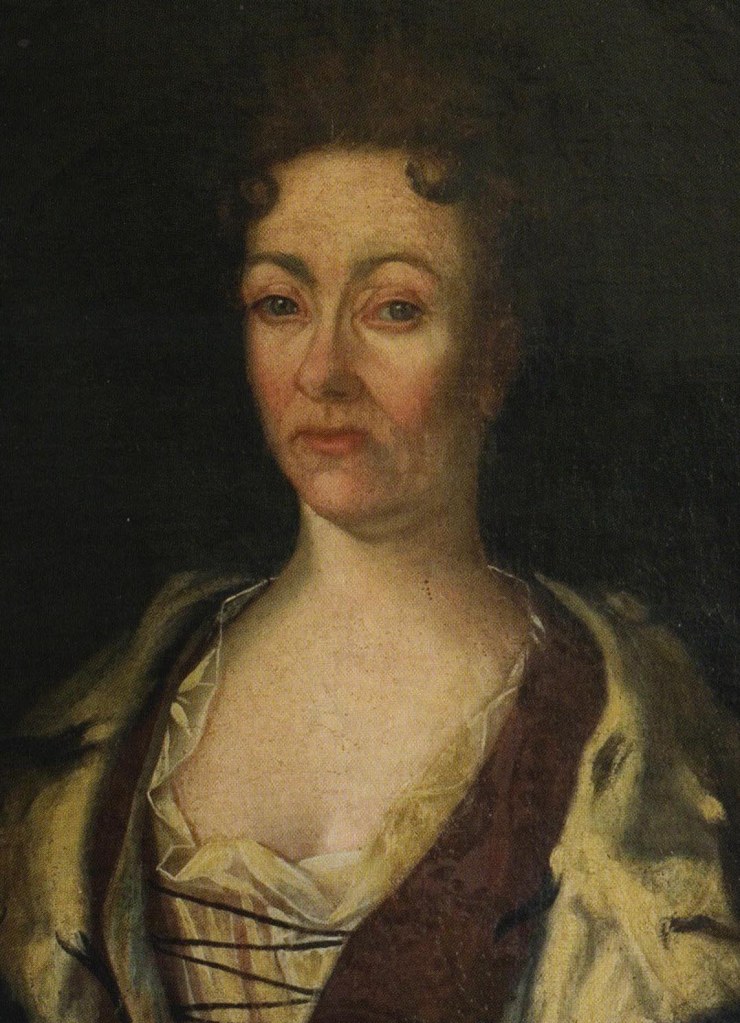
To get help solving the problem, Wilhelm contacted the widow of his uncle, Mrs Sofia Drake at Salshult, a woman who, during the Northern War, ran her husband’s business and continued with it when he died.
Maria found refuge with Sofia and would work in the household until her death. At the same time, Wilhelm went to visit relatives in Värmland, and there became Ulrika Eleonora Stålhammar again.
When she again felt somewhat at home in the role of a woman, sometime in 1728, she returned to her sister Katarina at Åkerhult, and there the next steps were planned.
Ulrika Eleonora travelled to Denmark, at a safe distance from the Swedish legal system, wrote a letter to the relevant authorities and told the whole story.
One can imagine that it was not without a sense of terror. If things really went badly, both Ulrika Eleonora and Maria could lose their lives. The letter and the case passed through both the Kalmar City Court and the Göta Court of Appeal, where neither instance found anything in the law books that really addressed the perceived problem in Ulrika Eleonora’s and Maria’s story. In the end, they simply had to turn to Deuteronomy (the fifth book of Moses). During the interrogations, Maria insisted that she had never slept with Ulrika Eleonora while the latter lived as Wilhelm. However, one should keep in mind that this does not really mean anything, because if one’s life depends on it, then anyone would probably say what needs to be said.
Ulrika Eleonora’s transgender life and the marriage of the two women were naturally condemned by the court, but they both got away with a much lighter sentence than could have been the case.
Ulrika Eleonora was sentenced to one month in prison and banishment from Kalmar, while Maria was sentenced to eight days in jail on bread and water. She returned to Ulrika Eleonora’s aunt, where, as previously mentioned, she remained for the rest of her life. Maria Löhnman died in 1761, 28 years after Ulrika Eleonora Stålhammar, who died in 1733 at age 44.
Sources:
Ulrika Eleonora Stålhammar/ Svenska kvinnor historien glömde – Stefan Högberg
Ulrika Eleonora Stålhammar – Kvinnobiografiskt Lexikon
Ulrika Eleonora Stålhammar – Kalmar Läns Museum
Karolinska Kvinnoöden – Alf Åberg

 Scandinavian History
Lämna en kommentar