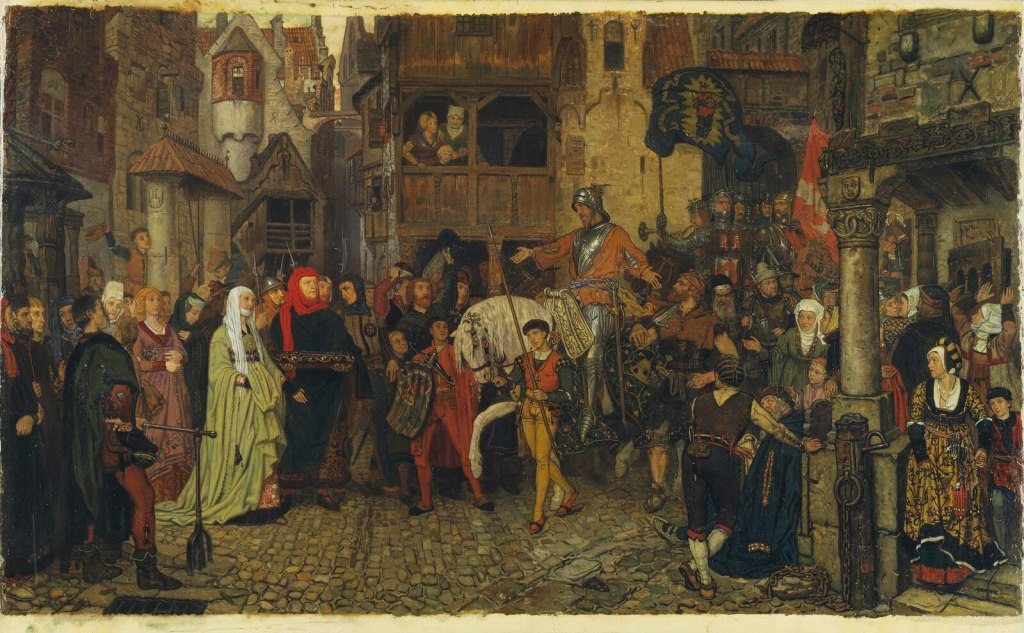
When you walk along Norrmalm in central Stockholm today, you usually don’t think that you are walking on a former battlefield. But it was here that Sten Sture the Elder and King Kristian I’s forces clashed on October 10, 1471. Roughly, the Battle of Brunkeberg took place between the then Klara Monastery and Käpplingeholmen, where Kristian’s ship was anchored.
To give a little more geographical context, Käpplingeholmen is now called Blasieholmen, where the Nordic Museum is located, among other things. Sancta Clara Monastery has been replaced at the same location, today Klara Östra Kyrkogata, by the church of St. Klara.
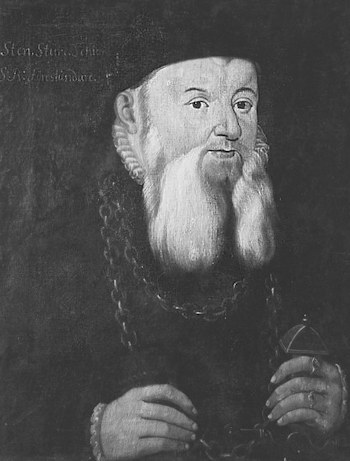
Since it was a Swedish regent, Sten Sture, who led one army and the Danish king Kristian I the other, it is easy to get the impression that this was a war, or at least a battle, between Sweden and Denmark. That was not the case; despite King Christian’s presence, this was a Swedish settlement, between those who were for and those who were against the Kalmar Union.
However, it was in Sten Sture’s interest to make it appear as a war of liberation from Denmark, not least because he was relatively new to the role of regent and wanted to present himself as a protector and liberator. King Karl Knutsson, who was the half-brother of Sten Sture’s mother, had just before his death in 1470 handed over all the castles and towns under the king’s administration to Sten Sture. But despite this, Sture also depended on being elected as the king’s replacement for the crown prince when he grew up. Therefore, a victory in a so-called war of liberation would allow him to sit securely in the saddle.
Over the years, Sweden had been uncertain about which stance to take regarding the Kalmar Union, and Karl Knutsson Bonde had been deposed and restored no fewer than three times as a result of this union-related anxiety.
Now it was time to decide the issue once and for all, both Sten Sture and Christian I probably thought.
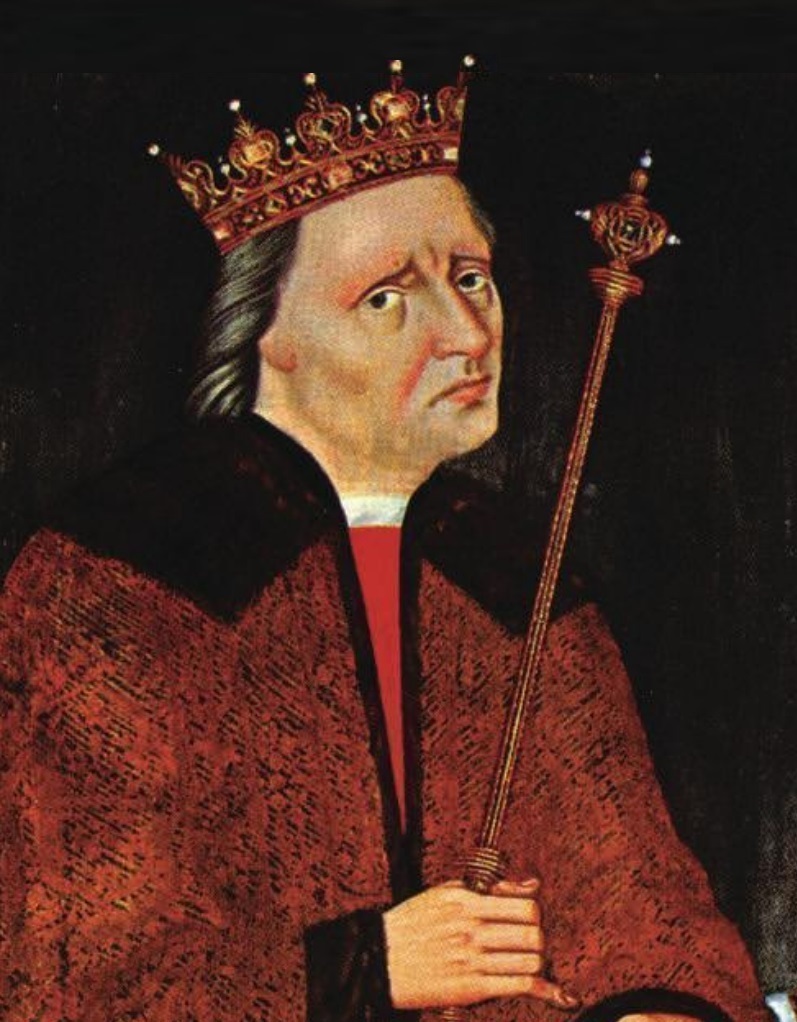
The Danish king had besieged Stockholm with his fleet and an army consisting of a mixed crowd of Danes, Germans and Swedes. The latter consisted mainly of members of the Swedish nobility and peasants from Uppland.
Negotiations for a peaceful settlement were ongoing, but Sten Sture sought to disrupt them, not unlikely, as he considered himself more likely to win in a military clash. When it came to the size of the armed forces, Sten Sture had an advantage.
The Sture loyalists, who consisted of an army believed to number around 9,000 individuals. Approximately 1,000 fighters belonged to the free estate, and the other 8,000 consisted of a peasant army from most of central Sweden and regular soldiers.
King Christian, on the other hand, had a total of 6,000 men with him, of whom 3,000 were believed to be Swedish and Danish regular soldiers, and the other 3,000 were German mercenaries.
It is said to have been around 11:00 am on October 10 when Sten Sture and Nils Bosson Sture, together with their forces, arrived at what is today Hötorget and its surroundings.
The plan was to capture Kristian’s supporters, and thus also the supporters of the union, through a three-front attack, where the idea was that Sten Sture himself would attack from the west, and Nils from the east. In contrast, the royal council and the squire Knut Jönsson Posse would attack from Stadsholmen, which we today call the Old Town, but which in 1471 was in practice ”the city”.
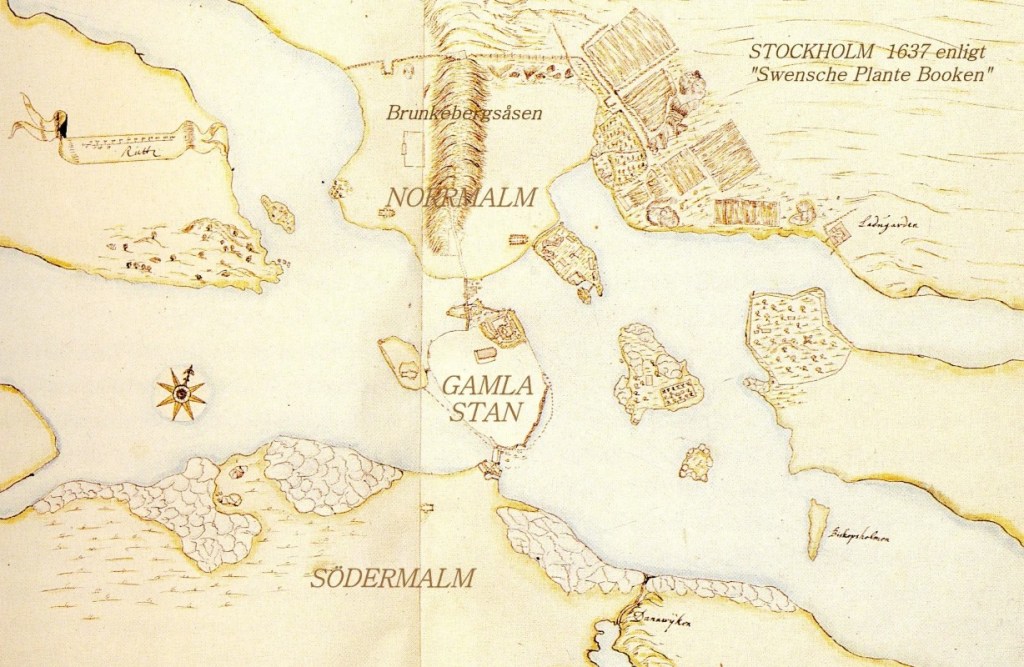
You don’t notice much of it today when you walk around Norrmalm, but when the battle took place, it took place on hilly ground. This is most noticeable today because it is steep at Johannes Church. But on this day, King Kristian’s forces had divided themselves between the top of Brunkeberg ridge, where the main force was located, Sancta Klara Monastery and down at Norrström.
Norrström itself was no unfamiliar place for clashes for King Kristian. In the early 1460s, he had Archbishop Jöns Bengtsson Oxenstierna arrested, even though Oxenstierna was actually one of Kristian’s followers. The reason was that Oxenstierna opposed the high taxation of Uppland’s peasants and sometimes forgave it.
The common people laid siege to Stockholm to demand the return of their bishop, and in 1463, Christian sent ships up the Norrström. There, they took over the Sandbron, a wooden bridge, to prevent the various peasant groups from helping one another. The result was on August 21, one of Stockholm’s least known bloodbaths, the massacre on Helgeandsholmen, where over 60 peasants were killed outright and 21 were taken prisoner, nine of whom were executed.
Now, in October 1471, it is said that the city’s population stood on the city walls to watch the clash, and that the largest churches had sent representatives to document the proceedings. It could be one of those clear, sunny October days we can get.
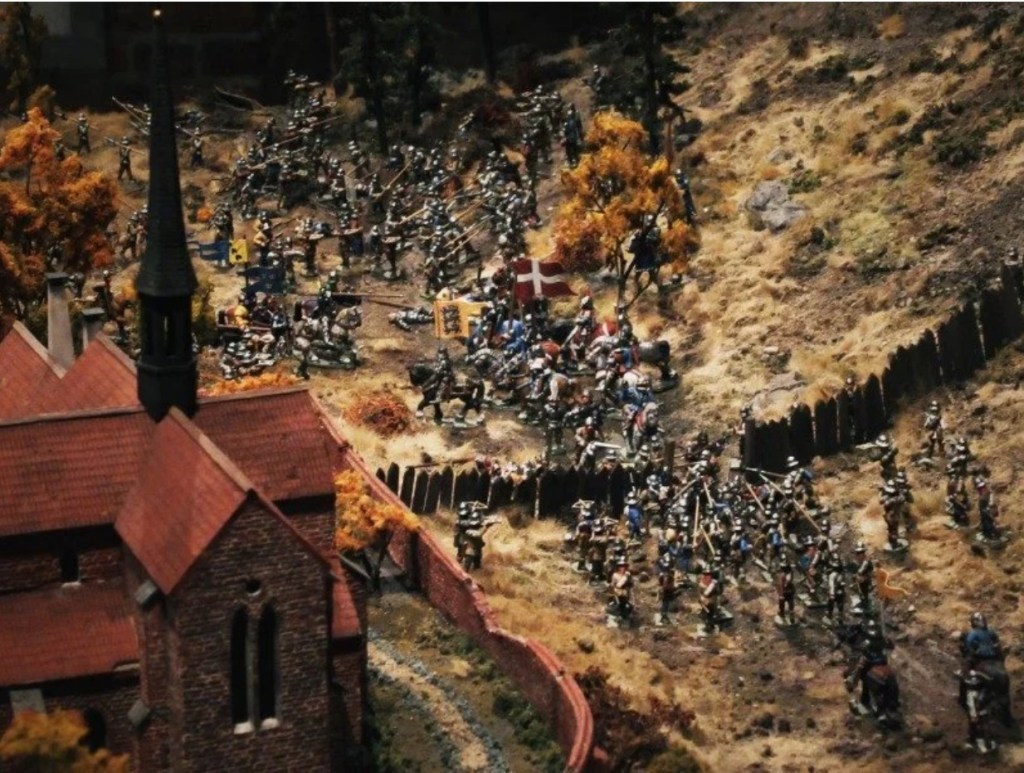
Christian again had forces by the waterway and had certainly intended to emerge victorious from this confrontation as well, even though this time the opponents were both more numerous and better armed.
Among Sten Sture’s forces, there was a large proportion of miners interested in continuing the copper trade with the Hanseatic League – the Kalmar Union had been concluded, among other things, to reduce German merchants’ influence and power over Swedish trade. While they represented their own interests to the greatest extent in the battle, the miners were also attractive allies for the king. They could gather large groups of men under their command and procure weapons.
When Sten Sture arrives from the west, the ambition is to take the ridge where Kristian is, but he is repulsed, not just once, but twice, by the unionists for whom the difference in altitude is an advantage.
After this second attempt by the unionists, someone, perhaps King Kristian himself, makes a fateful decision. The forces he has with him on the ridge go on the offensive and leave the height, which has been relatively safe. The fighting, which until now has literally been carried out uphill by Sture’s men, is getting closer and closer to Sankta Klara, where Kristian’s soldiers have built a redoubt. At the same time, Knut Jönsson Posse arrives with his force and manages to set fire to the redoubt. Shortly afterwards, he is hit by several arrows and receives an axe blow to the head, and falls to the ground.
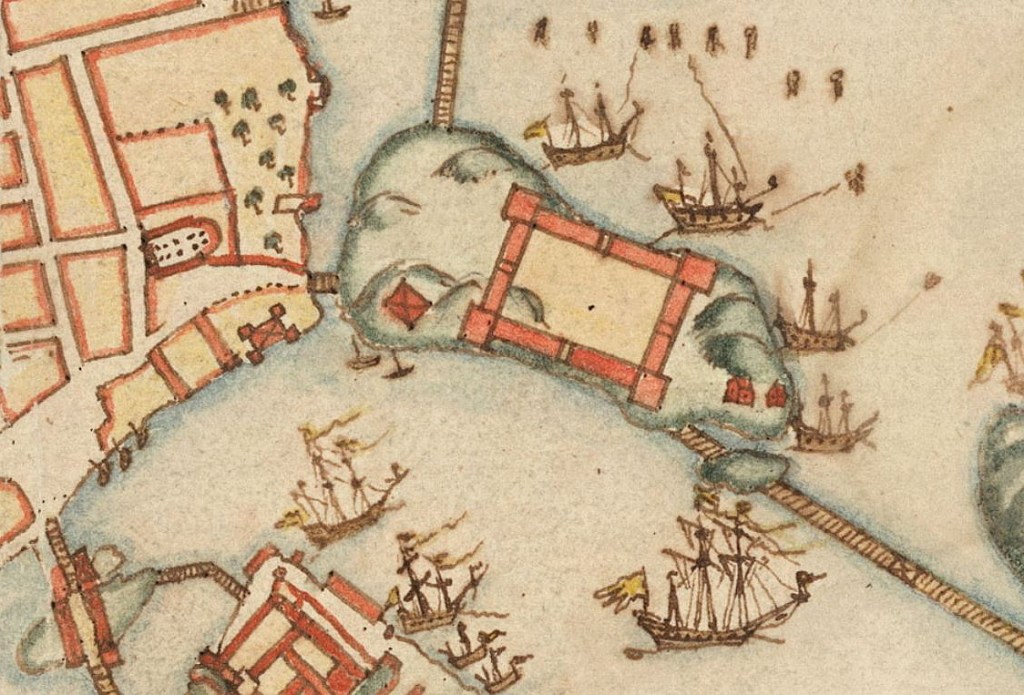
Not long afterwards, it is Kristian who is injured. In the heat of the battle, he is hit by a bullet in the mouth, an injury that one would think was fatal. However, he is said to have lost only three front teeth and was taken to his ship at Käpplingeholmen to be cared for.
It is now, perhaps a little late, that Sten Sture’s relative Nils Bosson Sture arrives on the battlefield, leading most of the previously mentioned mountain men. The soldiers who had fought for Kristian and were still alive now thought that enough was enough. In panic, they fled towards the ships on Käpplingeholmen, only to discover that the bridge they were going to cross had fallen. Further, large numbers of soldiers fell there.
You would think that the victory should have been enough, but it turned out to be followed by what was then seen as a miracle. Despite his extensive injuries, Knut Jönsson Posse was not dead. He would live for another almost 30 years and died in 1500.
When the battle was over, it was time to pay tribute to the one who deserved it: himself. In Storkyrkan, next to the Royal Palace, the result of that tribute still stands today, a sculpture of St. George and the dragon. Now the legend has slowly faded, but during the Middle Ages, these two were the height of fashion in church decorations across Europe. What St. George protects against the dragon varies: sometimes it is a town or village, other times a virgin. What the dragon represents also changes from depiction to depiction.
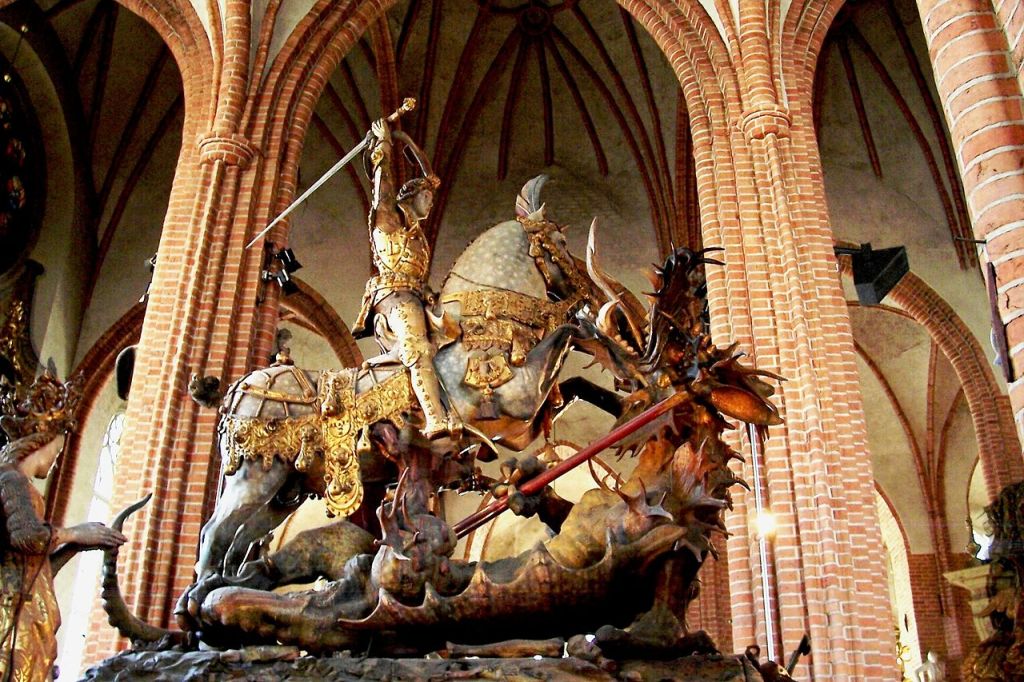
When the statue was created for Storkyrkan, however, there was no doubt about how it should be interpreted: the dragon was Denmark, the virgin was Sweden, and St. George was Sten Sture himself. The last is also not just an interpretation; the dragon slayer wears a depiction of Sture’s own armour.
The victory at Brunkeberg also assured Sten Sture the Elder of a continuation in the role of regent, a position that he would hold for the next 25 years. These years were, compared to Karl Knutsson Bonde’s reign, peaceful years. When Uppsala University was founded in 1477 on the initiative of Archbishop Jakob Ulvsson, it was under the supervision of Sten Sture. Although the Kalmar Union, which Sten Sture opposed, was founded as a counterweight to the German Hanseatic League, Sten Sture’s victory and position did not mean that German merchants had free rein in Sweden. Quite the opposite.
At a time when Germans had dominated urban life in Stockholm for several years and held most of the higher offices. Sten Sture now broke this trend and decided that all offices would be held by Swedes.
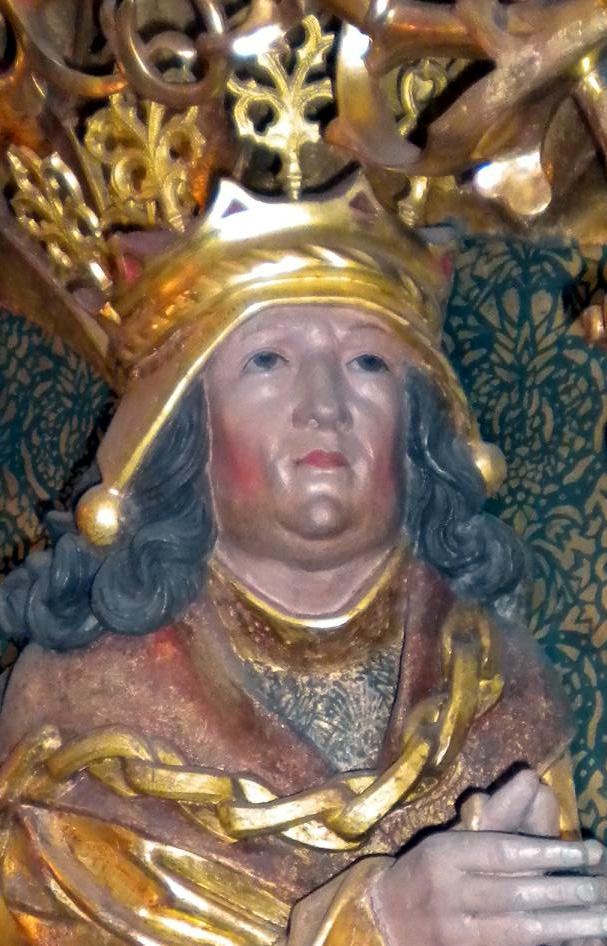
But if Sten Sture and those who fought by his side had thought that the question of whether Sweden should be part of the Kalmar Union was settled, they were disappointed. Sten Sture primarily appealed to the lower classes of 15th-century Sweden, and in the end, the council aristocracy had had enough. At the Kalmar Recess in 1483, it was decided to depose Sture and instead place the Danish King Hans, son of the now deceased Christian I, on the throne of Sweden.
Sten Sture fought back to the very end and managed to hold out until 1497, when Sweden again became, in practice, a Danish vassal kingdom. But shame on the one who gives up. In 1501, Sture was back in power, but this time it lasted only two years, because he died in 1503, just over 60 years old.
The Kalmar Union remained a factor until 1523, when Gustav Eriksson Vasa entered the scene.
Sources:
Sveriges Medeltid – Dick Harrison
Boken om Sveriges Historia – Hans Albin Larsson
Sverige och dess regenter under 1000 år – Lars O. Lagerqvist

 Scandinavian History
Lämna en kommentar