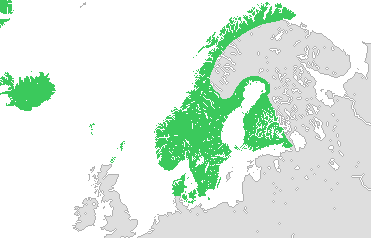
The Swedish Middle Ages, not unlike those in other countries, had their power players who were often unscrupulous and, therefore, at least many centuries later, are more exciting than those with more ethical concerns. Not infrequently, these unscrupulous power players were also churchmen who ran both their own and various noblemen and kings’ errands.
One of these was Hemming Gadh from Hossmo in Blekinge. The first time he appears in the sources is the same year as the Battle of Brunkeberg, when Sten Sture the Elder defeated Christian I in what can be described as the last minute.
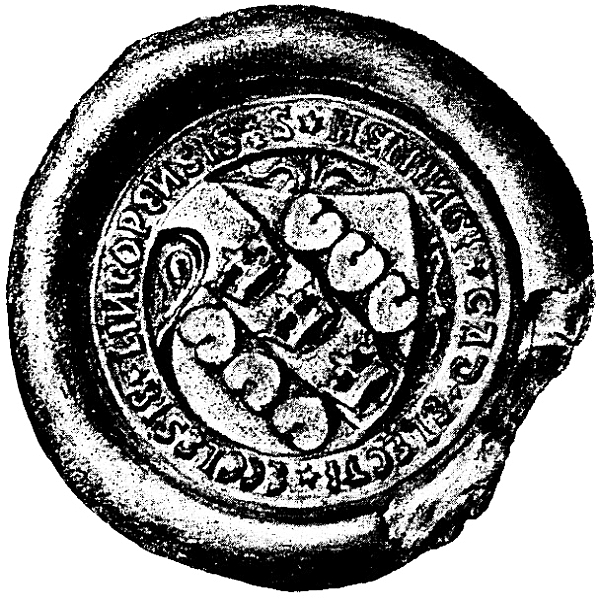
At that time, Hemming and Sten Sture had nothing to do with each other, because the source Hemming Gadh states that in 1471, he enrolled at the University of Rostock to study canon law.
Although they may not have known each other at this time, Hemming Gadh and Sten Sture would play important roles in each other’s lives.
This began after Hemming Gadh returned to Sweden in the mid-1470s, became chancellor to the bishop of Linköping, Henrik Tidemansson, and later stepped out in public for the first time at a meeting in Strängnäs in 1477.
Here, it was decided whether Saint Bridget’s daughter, Catherine, was also worthy of being declared a saint, and one of those who testified to the miracles for which Catherine was responsible was Hemming Gadh. After a severe earache that had not only kept him awake at night but also caused him to lose hearing in the affected ear, he had prayed to Catherine. He had finally fallen asleep, and in his dream, a woman in white appeared and urged him to go to Catherine’s grave in Vadstena. When he woke up in the morning, he was cured of his earache.
Another Swedish saint would have benefited the regent Sten Sture both internationally and in the fight against the Kalmar Union and the Danish king. At this time, religion and its manifestations were closely connected with politics, and Hemming Gadh said exactly what Sten Sture wanted him to say. A reward awaited Hemming Gadh, which could also benefit Sten Sture.
The result of the Swedish victory, as it looked then, was far from united in its view of the union and Denmark. Not only did Christian I lose power; his queen, Dorothea, had also lost her income from Närke and Värmland.
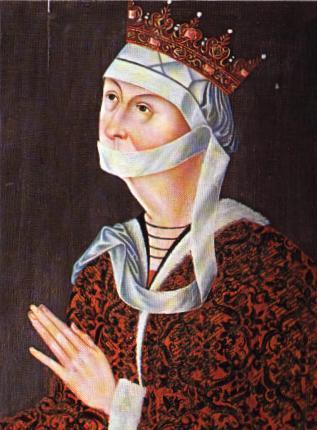
This was something she did not intend to quietly accept, and her campaign to have Sten Sture excommunicated by the Catholic Church began. If the excommunication was successful, she would get her income back, and her husband would get Sweden back.
We occasionally hear about the lobbyists in Brussels, those who fight with sharp elbows to get politicians to support demands from both countries and companies. At this time, Rome was the place where lobbyists, or diplomatic envoys as they were called, gathered to influence not politicians but the Catholic Church in making decisions that benefited both countries, rulers, or wealthy families.
Sten Sture was, in practice, a rebel who rose up against a king anointed by God, and his status in Rome was undoubtedly weaker than Queen Dorotea’s. Therefore, he needed a special envoy to Rome, and that was Hemming Gadh.
There are no sources that describe what Hemming Gadh from Hossmo thought of Rome. He certainly had experience of the Hanseatic city of Rostock, but it must still have been a different experience compared to what he was used to.
Here, church representatives from across Europe gathered to promote their church and homeland. But he began his work as soon as he was housed in the headquarters of the Bridgettine Order at Piazza Farnese, and it would turn out that he coped with his task very well. During his years in Rome, he also earned a doctorate in canon law.
Queen Dorothea was not to be trifled with, and in Rome, she had a whole staff of bishops who supported the union, but Gadh dealt with this by quickly making a name for himself in the circles around the Vatican.
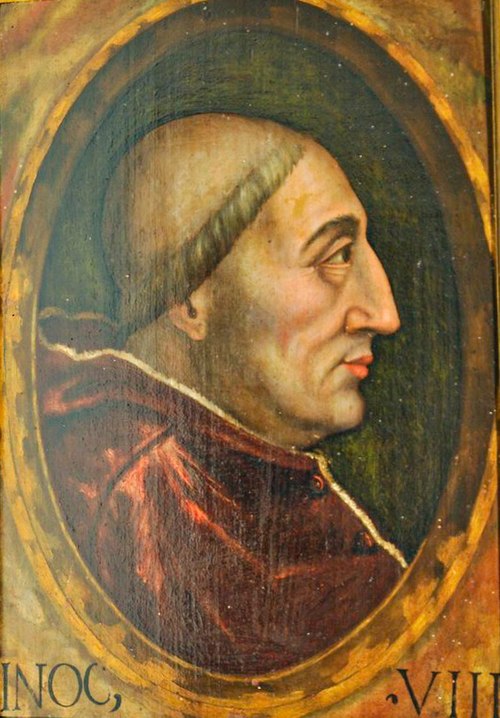
When Hemming Gadh arrived in Rome, Innocent VIII was Pope, a man whose reign was marred by widespread simony, that is, the sale of church offices. He also became personally known for being the Pope who issued the bull Summis desiderantes affectibus, which was the starting point for widespread persecution of imaginary witches in Germany. He was also the one who, in 1487, appointed Tomas de Torquemada as Grand Inquisitor of Spain, and he was a warm supporter of the Spanish Inquisition. As a curiosity, it can be mentioned that about 200 years after the Swedish clergy received a promotion from William of Sabina at the Skänninge Synod because they had both women and children, this Pope himself had several children, two of which were recognised by their father.
But Hemming Gadh was a man with a mission, and regardless of whether he shared the Pope’s views on witchcraft persecution, he was in Rome to prevent Sten Sture from being excommunicated, and for that, what can only be called bribes were required. Gadh had six white horses sent for to give as a gift to the Pope. What factors caused this delay are difficult to say; perhaps it was just the distance of transport. But when they arrived in Rome in 1493, three years after they were promised, Innocent was dead.
The successor is almost legendary: Alexander VI, born Rodrigo Borgia, and belonging to the family that both inspired Machiavelli to write ”The Prince” and served as the model for the Corleone mafia family in Mario Puzo’s ”The Godfather”.
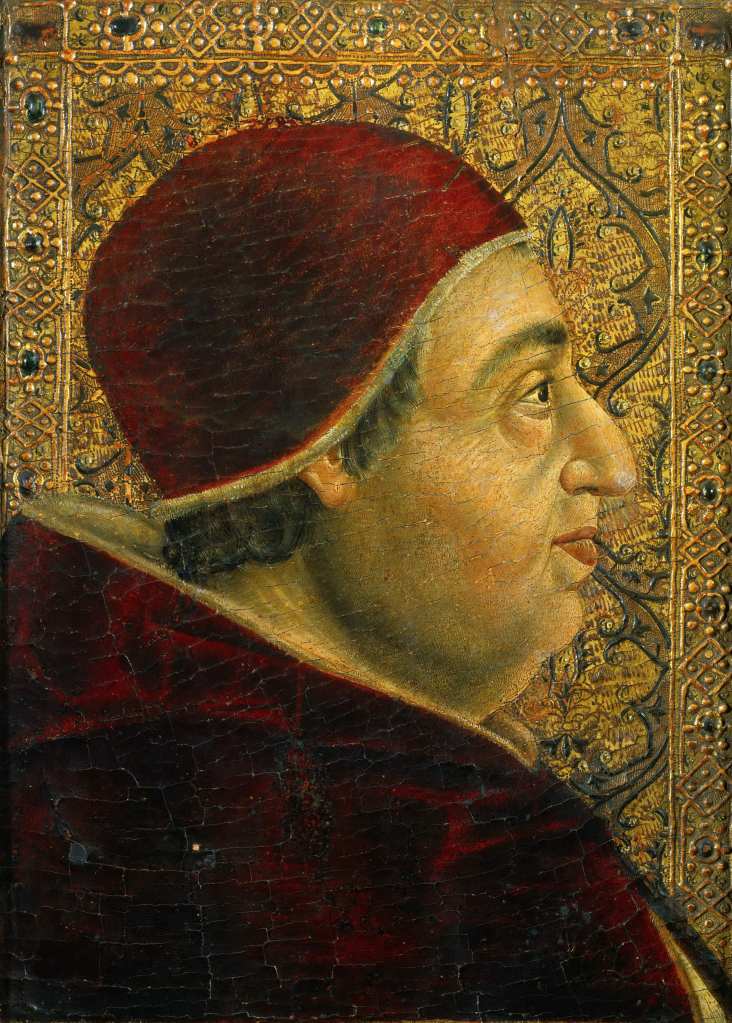
Hemming Gadh became close to the new Pope, and soon became his chamberlain, a position with which came power. When the German merchant Otto Brakel tried to sue Sten Sture in Rome, Hemming Gadh, with the Pope’s permission, had him arrested and thrown into prison for a couple of months.
The only problem was that while he was in Rome, he was still dependent on financial compensation from Sweden. When Sten Sture could no longer afford to pay his envoy’s salary, Hemming Gadh had no choice but to leave Rome, and in 1500, he was back in Sweden.
He came home to a country where the relative calm that had come after the Battle of Brunkeberg had been blown away. He could not easily turn his back on Sten Sture, even though positions were often like the wind blowing at this time, and he joined the struggle against the union.
In 1497, Sten Sture had, albeit reluctantly, handed over power to King Hans and resigned himself to this fate, above all because of extensive rewards, including all of Finland, the house of Nyköping, and a position at court. Two years later, however, Sture’s fiefdoms had diminished, and he once again joined the growing dissatisfaction with the Danish monarch. By 1500, organised resistance among the nobles was a fact.
This led to Gadh being the commander of the siege of royalist Stockholm just a year after his return, a siege that lasted about a year. In the meantime, he had also, with the help of pressure from Sten Sture, been elected bishop of Linköping.
Whether it was confusion during this turbulent time or just pure arrogance, it is difficult to say, but Gadh failed to have his appointment as bishop confirmed by Rome. The result was that, having been in Rome to prevent Sten Sture from being excommunicated, he was excommunicated himself. The fact that he reacted by stating that a little gold would solve the problem suggests that it was actually arrogance, as well as an insight into how things worked in Rome.
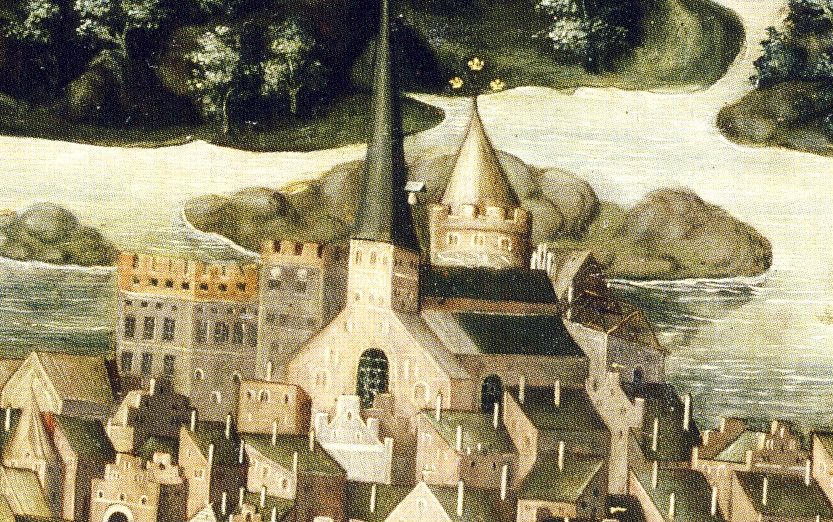
The siege of Stockholm lasted a year. In the spring of 1502, Hemming Gadh’s forces managed to capture the Tre Kronor castle, where the Danish queen was among others. Sten Sture became regent again and thus gained power over Sweden, as far as Öland and Kalmar.
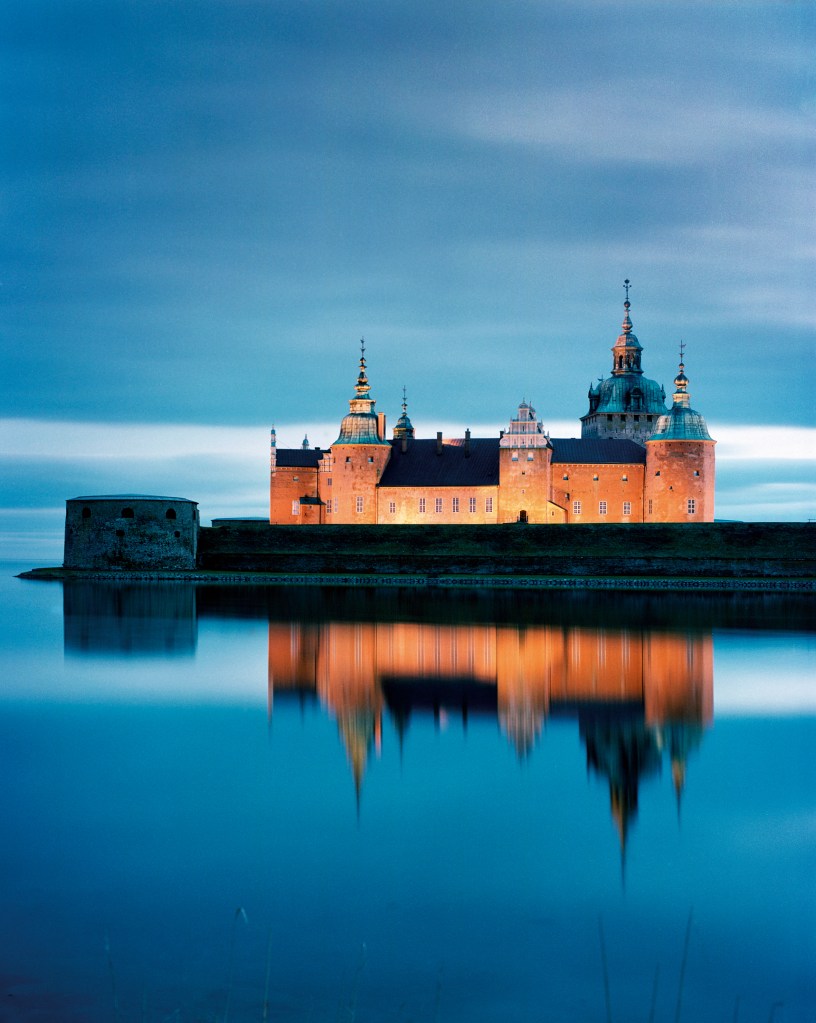
On March 12, 1503, Hemming Gadh also began a siege of Kalmar. Barely two months later, the city capitulated, but it would be another seven years before the castle did the same. At that time, Hemming Gadh had requested to be relieved of his post as commander the year before. In the autumn of 1503, the Danish queen was to be returned to Denmark and was escorted by, among others, Sten Sture. On the return journey to Stockholm, on December 14, the ageing regent died in Jönköping with Hemming Gadh at his deathbed.
Hemming Gadh was given a task that was both logical and strange: to conceal the fact that Sten Sture was dead. Above all, this was about preventing King Hans from seizing the opportunity to once again seize power in Sweden. Another reason was that Sten Sture’s intended successor, Svante Nilsson Sture, was viewed poorly by some of Sten Sture’s relatives and friends. Not least, resistance was expected from Mrs Ingeborg, Sten Sture’s widow.
But Hemming Gadh was resourceful: he hid the dead Sten Sture under furs and transported him to Stockholm in a merchant’s sleigh, at the same time as he had a servant dress up as Sten Sture, but with his face bandaged, with the claim that ”Mr Sten” was once again suffering from his recurring eye problems.
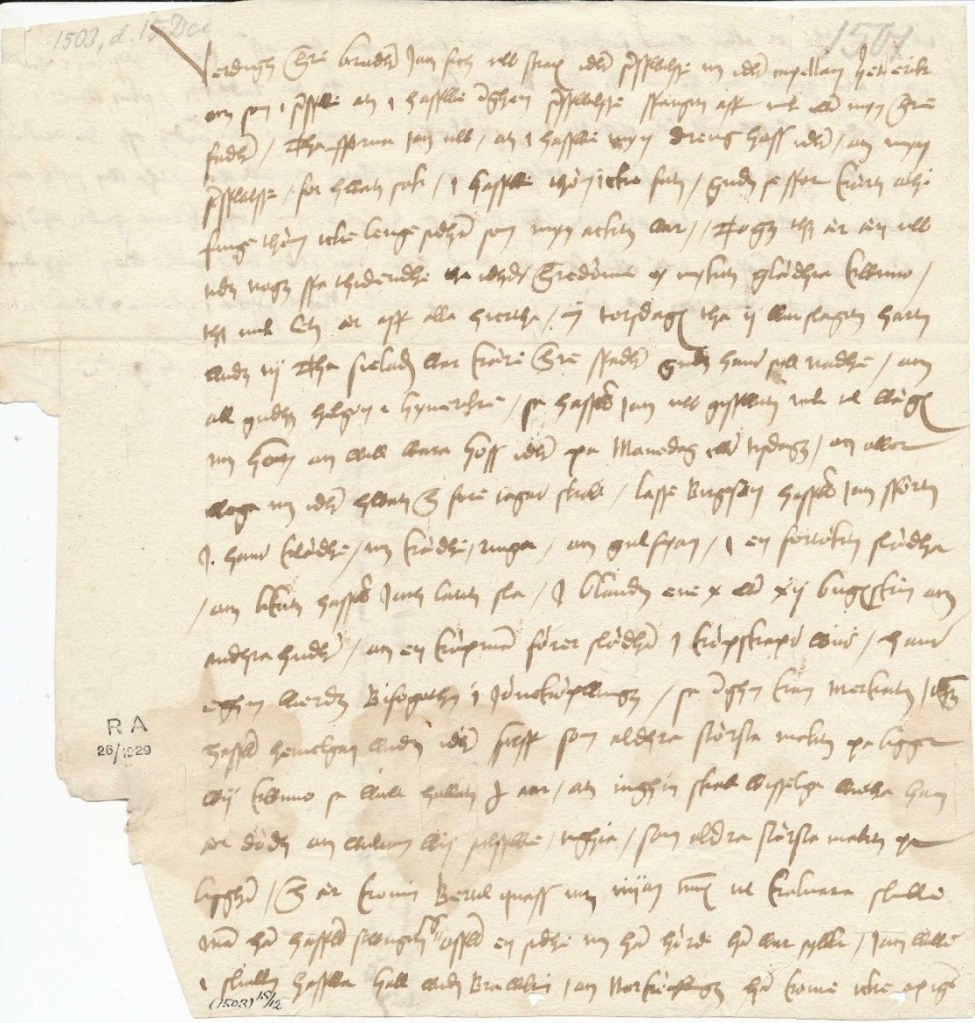
The plot succeeded. Svante Nilsson served as regent until 1511, when his son, Sten Sture the Younger, took over.
Hemming Gadh continued to stand on the side of the opponents of the union, first under Svante Nilsson’s leadership and, after his death, as an ally of Sten Sture the Younger. But his own reputation was in decline. His deeds as bishop of Linköping were in question: he incurred debts he never repaid, he visited brothels, and he swore. Nor did he manage to become as indispensable to Sten Sture the Younger as he had been to the two previous regents. On a diplomatic mission to Lübeck to secure support for the opponents of the union, he failed completely. In 1512, he lost his bishopric to Hans Brask, but Sten Sture continued. In 1517, he was involved in the deposition of the Danish-friendly Archbishop Gustav Trolle and the total destruction of the archbishop’s castle Almare-Stäket.
When King Christian II and Sten Sture the Younger were to meet in 1518, the hostages were developed as an assurance that the negotiations would take place under civilised conditions. The Swedish hostages included Hemming Gadh and a certain young saviour named Gustav Eriksson, later king and the one who ultimately crumbled the Kalmar Union.
Everything indicates that he was on the side of the opponents of the union until the death of Sten Sture the Younger as a result of the Battle on the Ice of Åsund, but after his captivity in Denmark, Sture’s trust had diminished. It was probably mostly a matter of self-preservation, but Hemming Gadh then went over to the unionists’ side. After his captivity, during which he allegedly communicated with Christian II, Sten Sture the Younger no longer trusted the now-seeless bishop who had fought the union for most of his life.
He was appointed as Christian’s envoy to Finland, but this assignment did not last long.
On December 16, 1520, just over a month after the Stockholm Bloodbath, Hemming Gadh was executed on the orders of Christian II at Raseborg Castle.
Sources:
Hemming Gadh: en statsman och prelat från sturetiden – Gottfrid Carlsson
Hemming Gadh i Svenskt Biografiskt Lexikon – Sten Carlsson
Hemming Gadh: Vasatidens Gudfader – David Lindén

 Scandinavian History
Lämna en kommentar