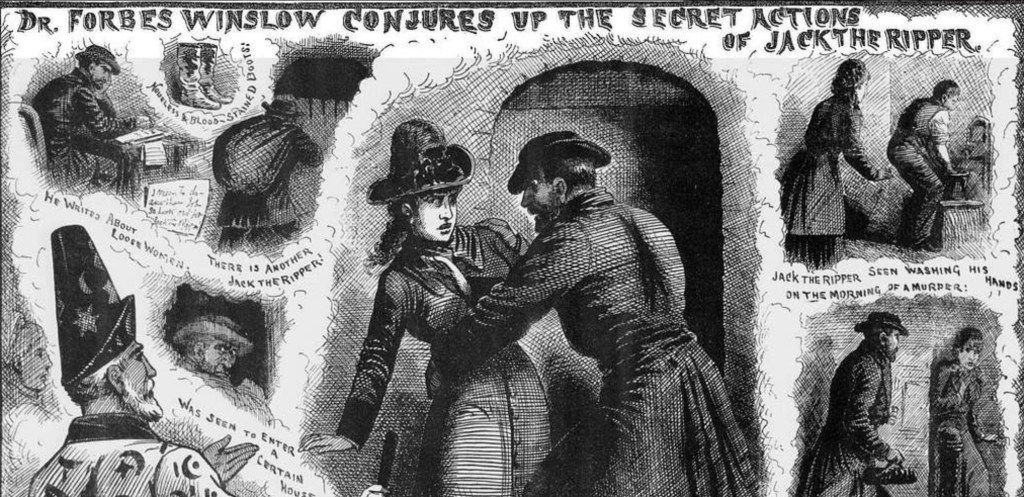
When Elisabeth Gustavsdotter was born on November 27, 1843, in Torslanda, it is highly unlikely that anyone would have looked at the little child and thought that she would become a person whose fate would be debated over a hundred years later. Nor does she herself seem to have thought that she would go down in history as Elizabeth Stride, the supposed third victim of Jack the Ripper, the serial killer who terrorised London in the late 1880s.
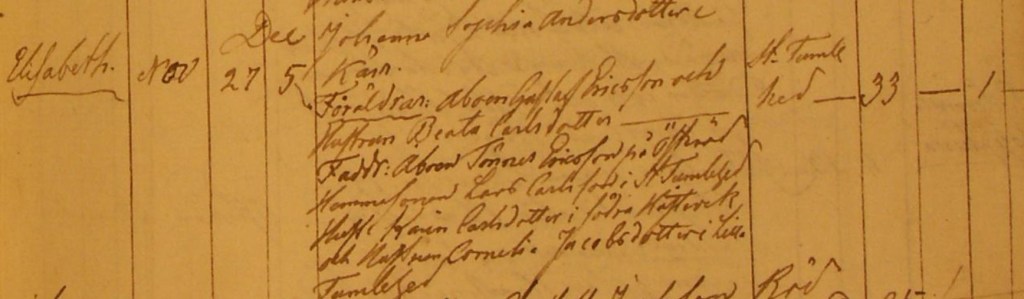
Elisabeth was the daughter of small farmers Gustav Eriksson and Beata Carlsdotter, who rented their land, and she seems to have done relatively well on the small farm. In addition to arable land where the family grew grain, flax and potatoes, the family also had several cows, a horse, a few pigs and chickens. In 1860, Elisabeth followed her older sister, Anna Christina, and left her childhood home, never to return. Serving as a maid for a few years was seen by many farmers’ daughters as training in managing their own households and families. In Anna Christina’s case, the home where she worked as a maid became her own. After seven years of employment, she married the shoemaker who had employed her. But for Elisabeth, things would be different.
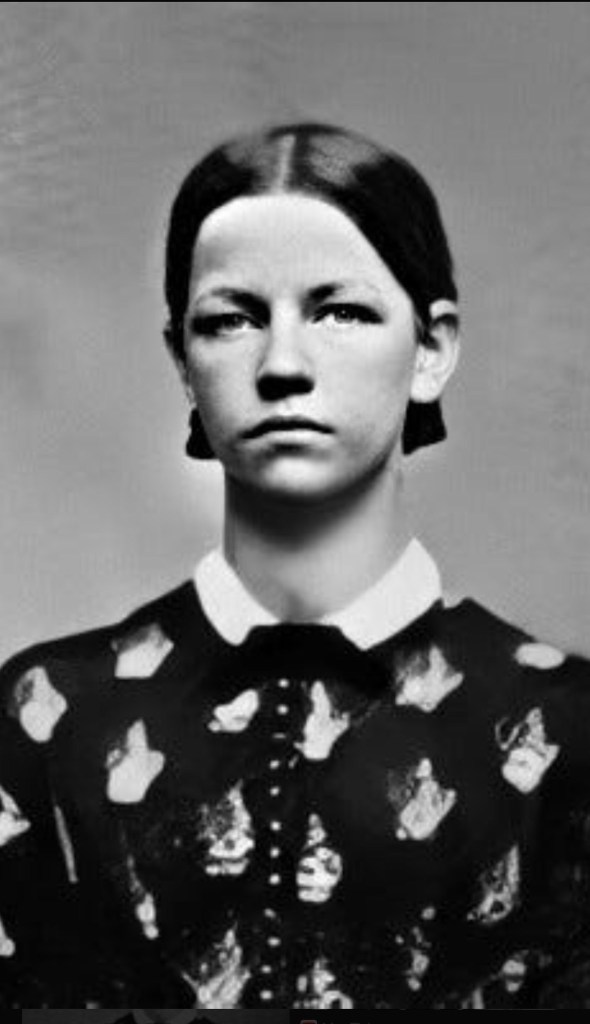
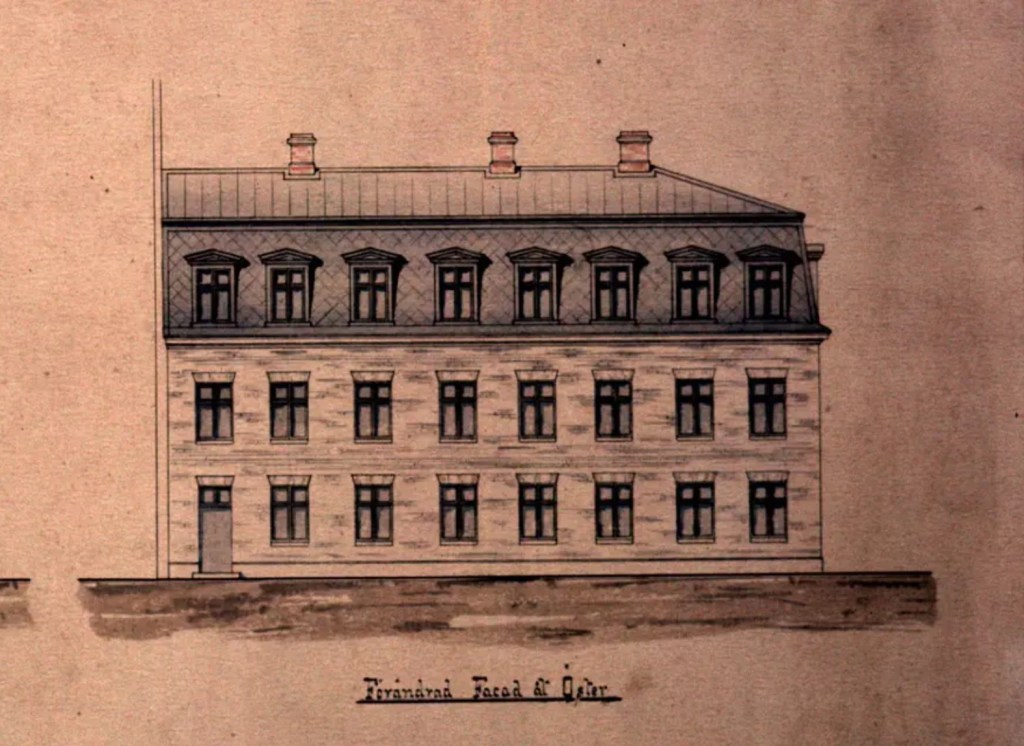
In October 1860, Elisabeth had an address in Majorna, and here she worked for Lars Fredrik Olsson and his family. He himself seems to have been a property manager, since it was not only the upper class who kept servants, but also the middle class, which was the salvation for many young women, as at that time it was simply the law to have employment. Then one can, of course, wonder whether a small family in a rented property actually needed two maids, as was the case with the Olsson family.
Four years later, in 1864, her employment ended for unknown reasons, and she moved on. Although Elisabeth is listed as a housekeeper in the house survey registers, there is no sign that she was employed anywhere.
There are theories that she may have lived with a man or been housed elsewhere as a married man’s mistress. Whatever the case, three things happen within a short period. Elisabeth becomes pregnant, is registered as a prostitute by the Reglementeringsbyrån and is infected with syphilis. The Reglementeringsbyrån was a system established in Sweden in 1847, and its equivalent existed in most European countries. This meant that the police registered the prostitutes they came into contact with. In return for being regularly checked for sexually transmitted diseases, they were allowed to continue their activities.
In the late 19th century, however, the system was met with growing opposition from the burgeoning women’s movement, which believed that it supported sexual double standards, where women were registered and controlled. At the same time, their male potential flew under the radar, so to speak, and that it gave rise to harassment and abuse against women. The regulation was also called a health inspection. In Elisabeth’s case, these examinations would not turn out as she wanted, as it turned out that she was not healthy. Whether the man who infected her was the same one who also made her pregnant and with whom she had possibly lived together is impossible to know. His name is nowhere to be found.
When the health inspection discovered the sores and warts that signalled syphilis in Elisabeth, she was taken with a police escort to the so-called Kurhuset, a health facility with a reputation for treating its patients like prisoners. At this time, syphilis was treated with one of two methods: either mercury was administered to the patient to be consumed, or it was applied to the wounds and warts that arose. The other was the use of other metals, such as gold, silver, copper, as well as bromine, iodine and nitric acid, that is, substances that are actually hardly suitable for consumption.
Elisabeth Gustavsdotter was treated with mercury, and whether it was the illness or the treatment for it that was behind what happened, no one knows. Still, when she was in her seventh month, labour began. She gave birth to a stillborn daughter.
Elisabeth was discharged from Kurhuset in May 1864. Although she may not have been a prostitute before, that is what was available to her now. Getting a job was virtually impossible for a woman registered with the Reglementeringsbyrån, and she still had to support herself. She also no longer seems to have contact with her family; her mother died while Elisabeth was at Kurhuset, and there is no indication that she has contact with her newly married sister. Possibly Anna Christina had decided that the shame of having a sister who was in practice registered as a prostitute was too great.
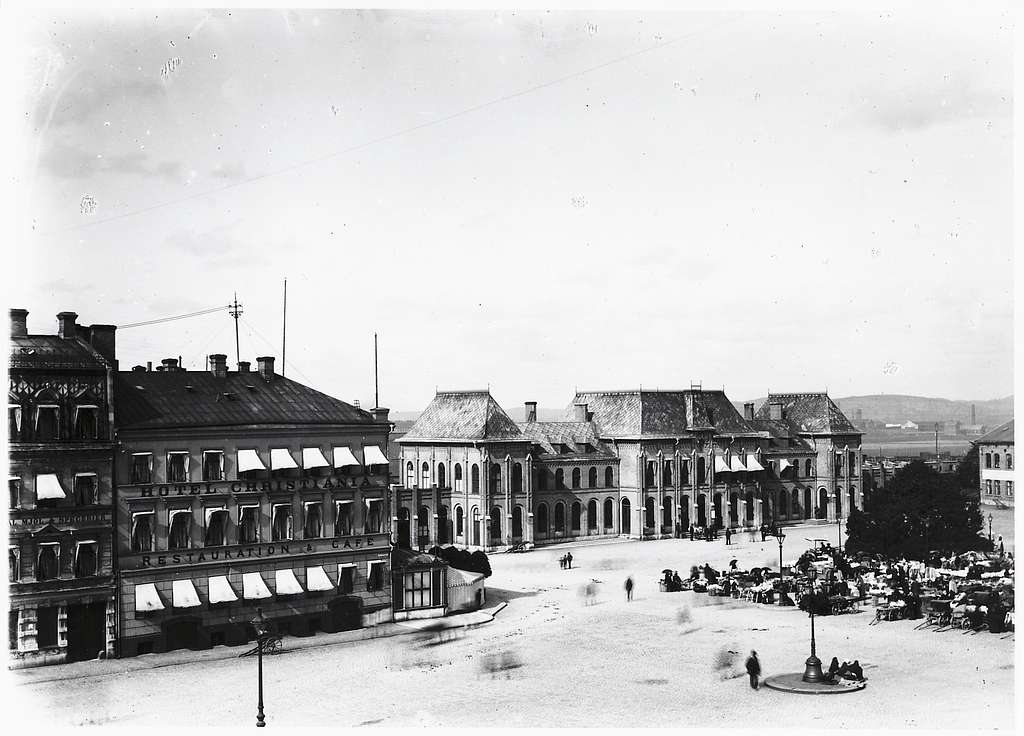
There is no information at this time about where Elisabeth lived, but things should change for her at least temporarily. Some saw it as their task to save ”fallen” women, and Elisabeth gets a job in November. It is Maria Ingrid Wiesner who decides to open her home to Elisabeth. She herself is married to a German musician employed at the Nya Teatern in Gothenburg.
The couple didn’t have large assets, but when you employed a woman who, so to speak, had fallen off the narrow path, you didn’t have to give her a salary. The compensation Elisabeth and other women in her situation received was food and shelter.
It is possible that Elisabeth’s new home was full of music and other cultural expressions, and this is likely where the contacts were formed that would take her on the next phase of her life. Perhaps it was through Carl Wiesner’s friend, Joseph Czapak, organist at the English congregation in Gothenburg, that the Wiesner and Elisabeth family learned that a British family who were going home again were happy to take a Swedish housekeeper with them.
It is not at all unlikely that Elisabeth and her maternal grandmother discussed Elisabeth’s future prospects in Gothenburg. She had been removed from the police rolls as a prostitute, but out on the streets of Gothenburg, there were still those who knew how she had had to support herself for a period. On February 7 1866, Elisabeth boarded a ship that would take her to England.
The passenger list states that she was travelling without family, but the family she was to work for was most likely on the same ship.
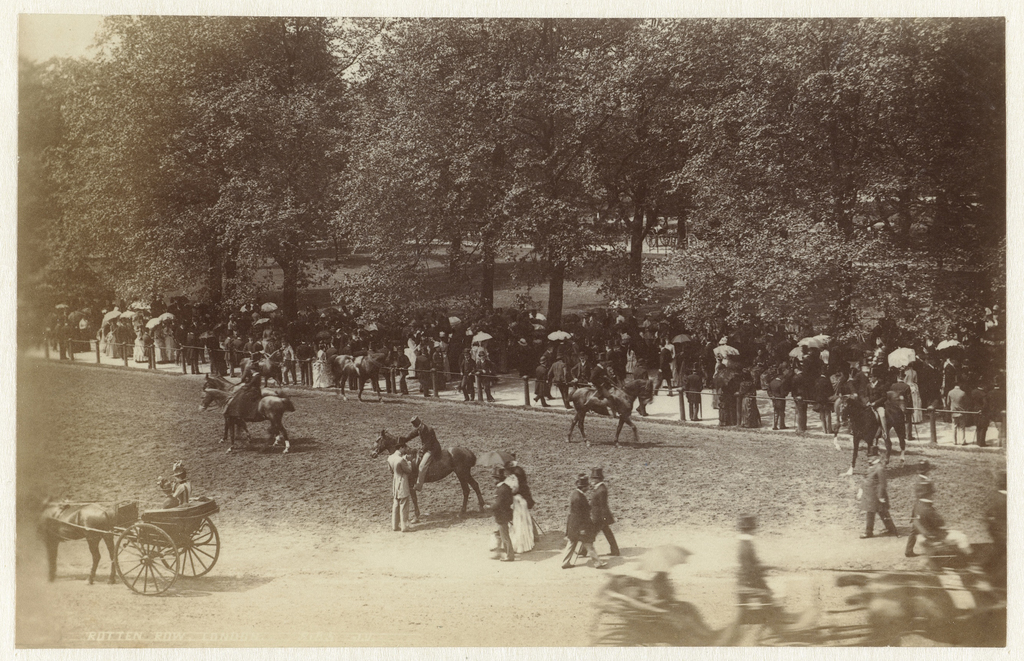
Elisabeth Gustavsdotter ended up in a high-class house at Hyde Park and was now part of a whole staff of servants. It must have been difficult for her to find her way in this hierarchy and, at the same time, learn a foreign language. The fact that she applied for permanent residence and registered with the Church of Sweden as a permanent resident shows that she had no thoughts of returning to Sweden.
At one point, however, she applied for a change of residence: her employer was to move to Brest in France, at least for a period. It is not known whether Elisabeth actually came with her, as a line is drawn through her name in the family’s application. What this line means is uncertain. It may have been done after her return to England.
Then her employment with the family at Hyde Park was terminated. It is not known, but it has been suggested that a scandal occurred, possibly involving her employer’s brother. Whatever the case, a note with the brother’s address was left 20 years later, when the police conducted an inspection of Elizabeth’s life.
In any case, Elizabeth got a new job. In 1869, she worked for the widow Elizabeth Bond, who ran a boarding house renting furnished rooms.
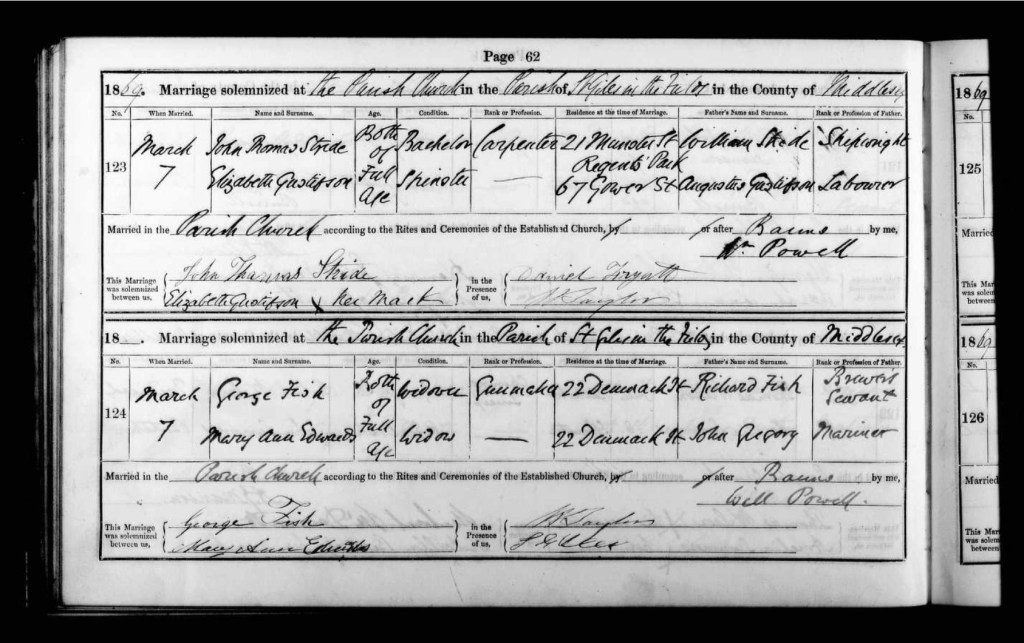
Sometime during this period, she met the carpenter John Stride, who had moved to London from Kent. They married and began work on establishing a coffee house, something John had wanted to do ever since he came to London.
In addition to coffee, the coffee houses served light lunches and dinners to the workers in the area. What they did not serve, however, was alcohol, which set them apart from the pubs they often competed with.
John’s father had had money, and he probably expected an inheritance when his father passed away, around 90 years old. It probably came as a shock that, unlike his siblings, he was not even mentioned in the will, and that was also the end of the dream of a coffeehouse. The Strides could no longer afford to keep it, and with their own business, the marriage went up in smoke as well. After eight years, it seems that Elisabeth left John in 1877. Soon, however, she was forced to return: she had nowhere to live, and after only a few weeks she was arrested by the police for vagrancy.
Life in London had begun to resemble the one she had in Gothenburg. She returned to John, but the marriage became increasingly stormy. When he then fell ill and no longer received any income, the situation became desperate. Elisabeth turned to the Church of Sweden for help, and she also appears in the workhouse registers, where the note ”destitute” is after her name.
In November 1880, Elisabeth and John separated for the last time. After that, things seem to have gone downhill for Elisabeth. She is just under 40 years old, and the only jobs she gets are as ”help” to servants in various families. In other words, she is absolutely at the bottom of the pecking order, and probably earns accordingly.
Elisabeth also begins to change. She is often arrested for drunkenness, and after having previously been described by those who knew her as kind and helpful, police reports now describe her as aggressive and violent, as well as foul-mouthed. The most likely explanation is that the syphilis she had contracted over ten years earlier had now entered its final phase and begun to attack her brain.
During this period, she lived mainly in Whitechapel and seems to have supported herself through fraud and swindling. Among other things, her English was now good enough that she seemed to have deceived a woman with impaired vision into believing that she was her sister, with whom she had lost contact for many years. For five years, Mary Malcolm contributed to Elisabeth’s support, while Elisabeth also seems to have supported herself as a prostitute again.
In October 1884, John Stride died, and although they no longer lived together, he still seems to have been an anchor for Elisabeth. After his death, things only went downhill; she is arrested more often, drinks more and continues to make money through fraud. For a time, she is with a man, Michael Kidney, who is later questioned about both Elisabeth’s life and death.
The last time she was seen alive, she was involved in an argument with an unknown man, who threw her to the ground. This is known because several witnesses in the area around Dutfield’s Yard later told what they had seen.
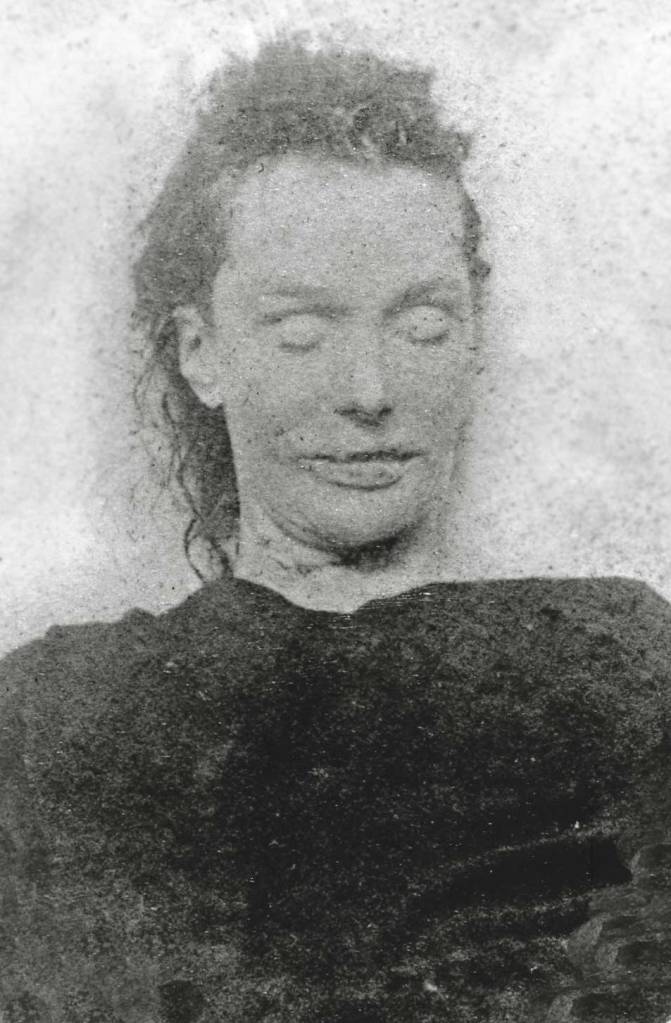
Whether the man who attacked Elisabeth was her murderer, and if so, whether he was the one who called himself Jack the Ripper, has been much debated. When Elisabeth is found dead at Dutfield’s Yard in Whitechapel on September 30 1888, her throat is cut. But otherwise, she is not mutilated like the other victims of the serial killer who ravaged Whitechapel for a period.
This has led some to question whether Elisabeth Stride was really murdered by Jack the Ripper, but this has been met with the fact that there were at least three witnesses in the vicinity – none of whom saw the murderer – and that he was probably disturbed before he had finished his usual ritual.
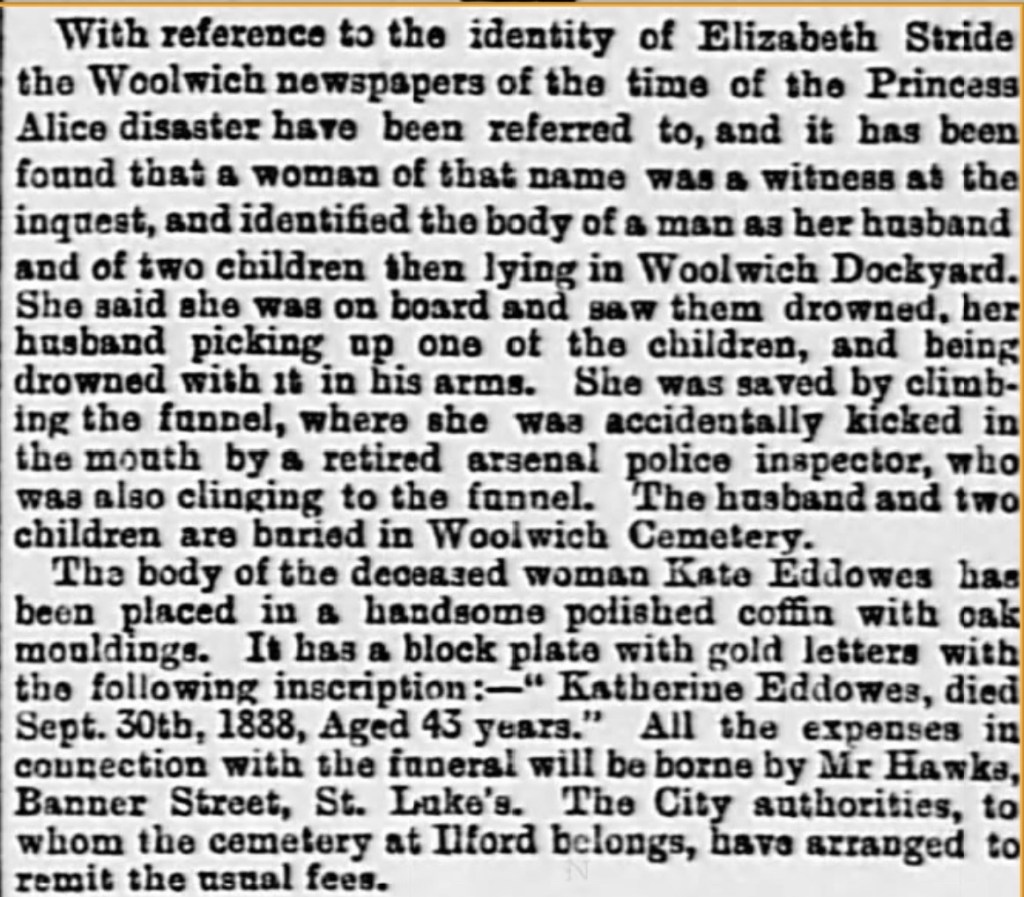
That it was Jack the Ripper who took Elizabeth’s life can be said to be confirmed by the fact that less than an hour later, his fourth victim, Cathrine Eddowes, was murdered, just a short walk from where Elizabeth was found. In Cathrine’s case, all the grotesque details have come to characterise these murders. This was the only night that Jack the Ripper murdered two women.
Elizabeth Stride was buried with her husband’s surname in the East London pauper’s cemetery. The only person present was a priest from the Church of Sweden. Jack the Ripper’s identity has never been revealed.
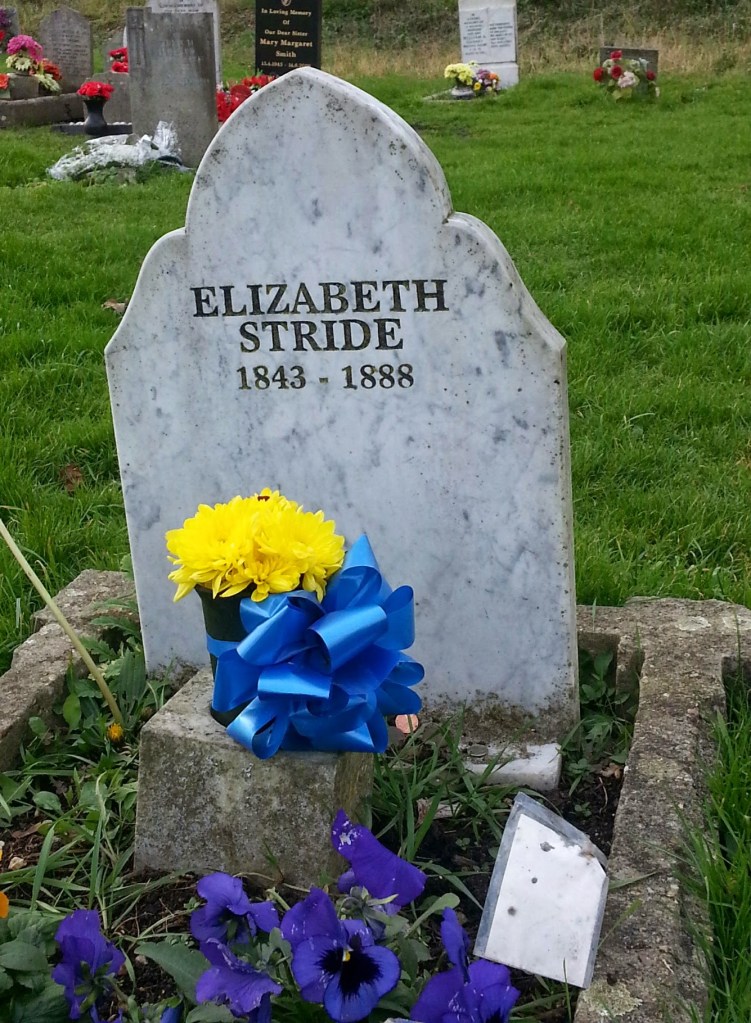
The five canonical victims of Jack the Ripper:
Mary Ann Nichols, discovered in Buck’s Row, Aug 31, 1888
Annie Chapman, found in the backyard of 29 Hanbury Street, Sept 8, 1888
Elizabeth Stride, murdered in Dutfield’s Yard, Sept 30, 1888
Cathrine Eddowes, found in Mitre Square, Sept 30, 1888
Mary Jane Kelly, found in her room at 13 Miller’s Court, Nov 9, 1888
Theories exist about additional victims
Sources:
The Five: The Untold Lives of the Women Killed by Jack the Ripper – Hallie Rubenhold
Jack Uppskäraren: kriminalfall och legend – Glenn Lauritz
Jack the Rippers tredje offer – Birgitta Leufstadius
Church records from Torslanda and St. Giles

 Scandinavian History
Lämna en kommentar