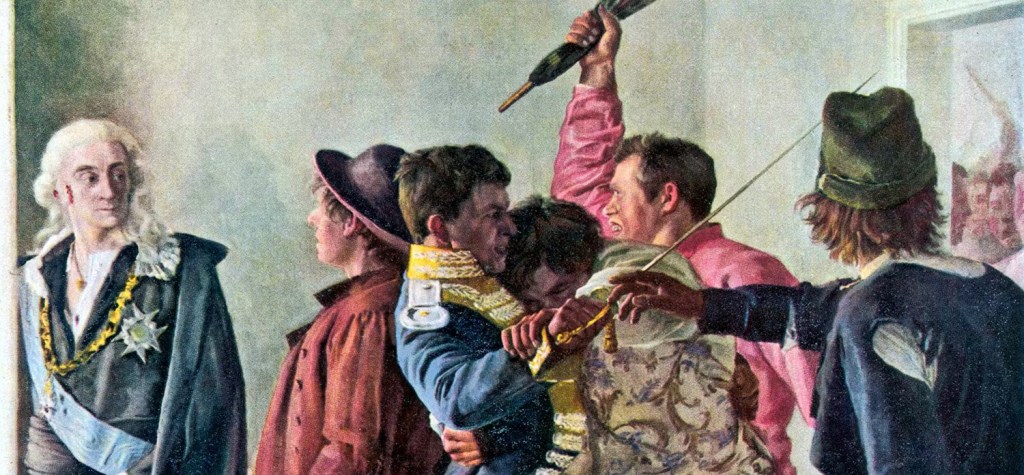
Axel von Fersen’s life began in the secure world of the Swedish nobility, but he would be thrust into some of the most transformative events of the 18th century. He moved between the court of Gustav III, the battlefields of the American struggle for independence, and the increasingly dangerous centre of the French Revolution. There, his close relationship with Marie Antoinette became part of his legacy. But the story of von Fersen does not end in a splendid European court, but on the streets of Stockholm in 1810, where rumours, political unrest, and an angry mob turned one of the kingdom’s foremost aristocrats into a victim of his time.
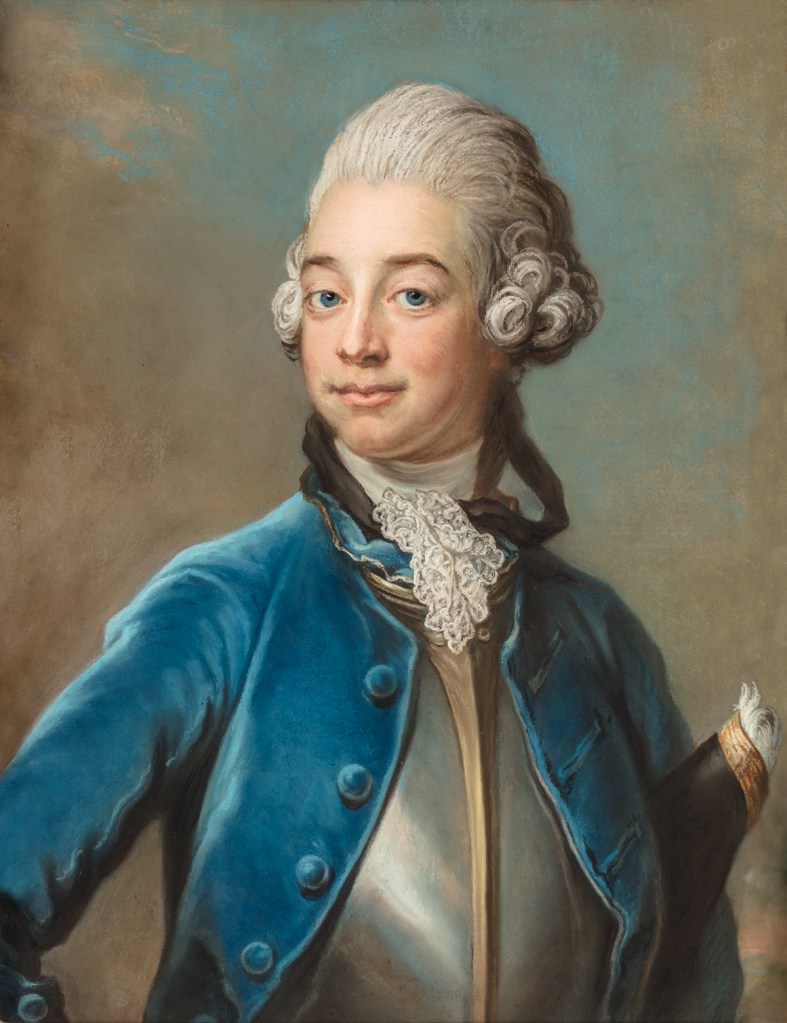
Axel von Fersen was born on September 4, 1755, in Stockholm, into a world where name, birth and connections could shape an entire life. His father, Axel von Fersen the Elder, was a prominent politician and field marshal, and his mother, Hedvig Catharina De la Gardie, was a member of one of the country’s most powerful noble families.
As a young man, he was sent to Europe to be educated, tested and shaped into a man for court, politics and war. The journey took him first to Braunschweig, where he completed the education he had begun in Sweden, and then to the war academy in Turin. He studied languages, visited courts and learned early on to move with ease in international environments.
Von Fersen did not only become a man of salons, diplomacy and court life. He was also drawn to the military path and participated on the American side in the Revolutionary War between 1775 and 1783. There, he had to act, among other things, as an interpreter between George Washington and the leader of the French expedition, Count de Rochambeau, since neither spoke the other’s language. Von Fersen, who was fluent in both English and French, could move between the worlds.
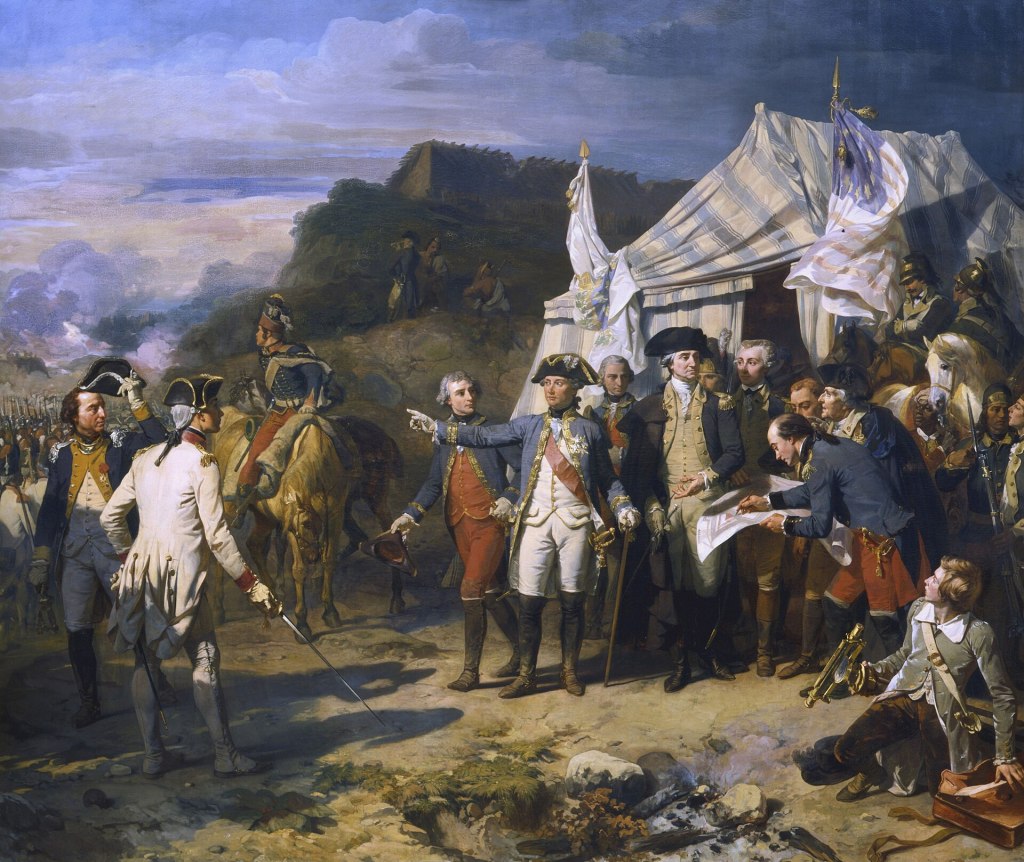
He also took part in active combat during the decisive Battle of Yorktown in 1781, when the combined American and French forces led by George Washington and de Rochambeau defeated the British troops under Charles Cornwallis.
For his efforts in the war, von Fersen was decorated with the Order of Cincinnatus.
When he returned to Sweden in 1783, his stay at home was short. That same autumn, he set off for Europe again, this time together with Gustav III and the king’s entourage on a trip to Italy. The trip was primarily intended as a pleasure trip, but it also contained elements of war planning. Back home in Sweden, it attracted criticism, as the country was simultaneously plagued by crop failures and a looming famine. During the trip, von Fersen had the opportunity to visit France, and he remained there until 1791, except in 1788, when he participated in Gustav III’s Russian war.
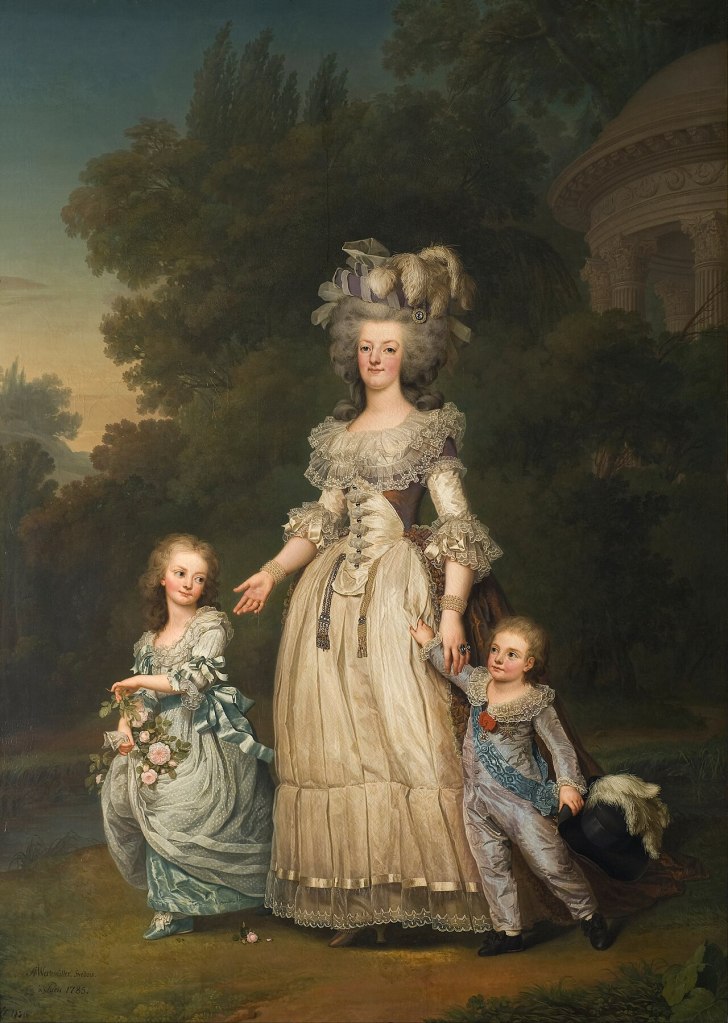
It is, above all, the relationship with Marie Antoinette that has made Axel von Fersen such a controversial figure. The preserved letters from the queen to him have a strong emotional tone and have often been interpreted as love letters. At the same time, Marie Antoinette lived under constant surveillance at court, where every glance and every meeting could have significance. Therefore, it is difficult to say for sure what form the relationship took. The most common interpretation is that it was probably platonic, but also unusually close.
When the French Revolution broke out, von Fersen was drawn ever closer to the fate of the queen. He wanted to help her and her family leave Paris and reach safety. The flight to Varennes took place on the night of 20–21 June 1791 and became one of the most fateful moments of the revolution. The plan was for the royal family and their entourage to travel from Paris to Montmédy, where the king hoped to regain political freedom after the family had been under house arrest since 1789. There were also forces within the French army, led by General François Claude Amour, Marquis de Bouillé, who were still loyal to the royal family. What would happen next is not entirely clear. Still, a document left in the Tuileries shows that the king was prepared to meet several of the revolutionaries’ demands of 1789, including the abolition of feudalism and increased rights for the population.
Von Fersen had envisioned a quicker and more discreet escape. In his original plan, the king and queen would travel in a smaller carriage, almost as if they were travelling in a crowd. Such carriages could travel faster and probably drew less attention.
This did not happen. The king and queen refused to be separated from each other and their entourage, as they had promised to stick together no matter what. Instead, the entire party travelled in a large carriage drawn by six horses. It was heavy, slow, and far from discreet. What should have been a quick escape instead became a journey that almost seemed to invite discovery.
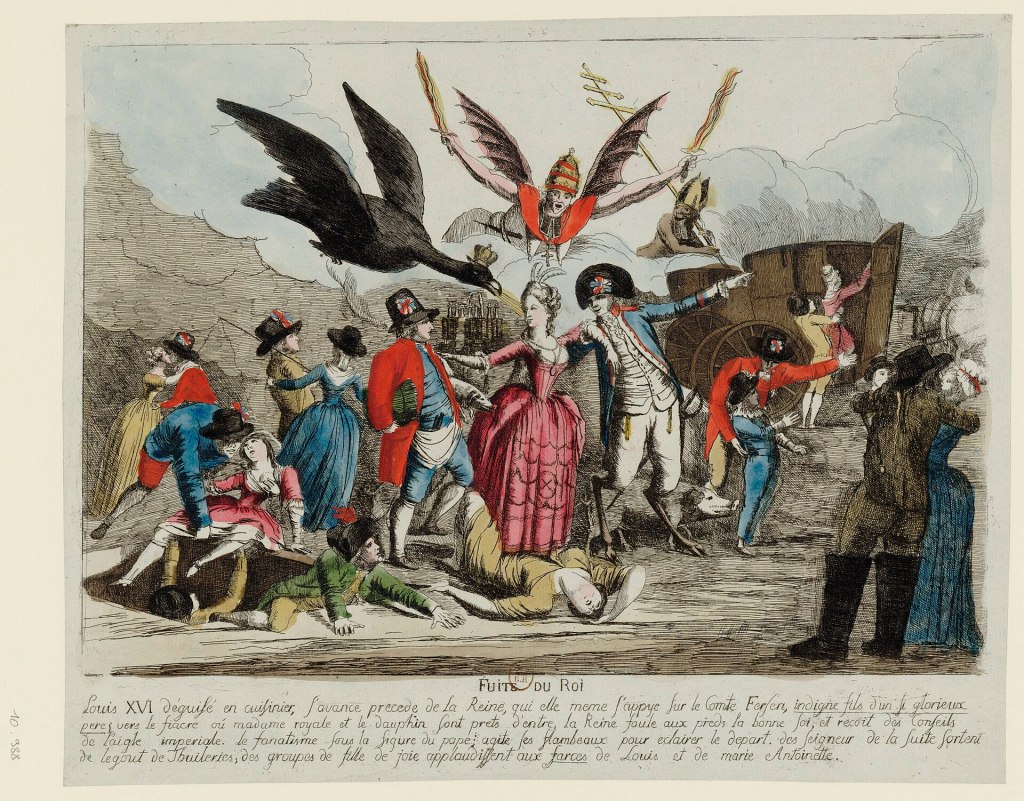
When the carriage later had to stop for repairs, Louis XVI moved openly among people who probably recognised him. Marie Antoinette also gave silver plates to an official in Chantrix. By the time the party reached Châlons, the rumour had already preceded them, and people lined the streets, cheering and applauding. The escape was turning into a public procession. One person who did not applaud, however, was Jean-Baptiste Drouet, postmaster of Sainte-Menehould. He reported the royal family’s whereabouts, and they were arrested just five miles from their final destination.
Axel von Fersen himself was not present in Varennes. He had taken a different route to confuse any pursuers. When he later learned what had happened, it was clear that the escape had not only failed, but had also made the royal family’s situation even worse. The family was now completely discredited and returned to the Tuileries under tighter guard. Von Fersen managed to cross the border into Belgium, where he stayed until 1794 before being recalled to Sweden. Nevertheless, he remained loyal to the royal family, and especially to Marie Antoinette, right up until their executions.
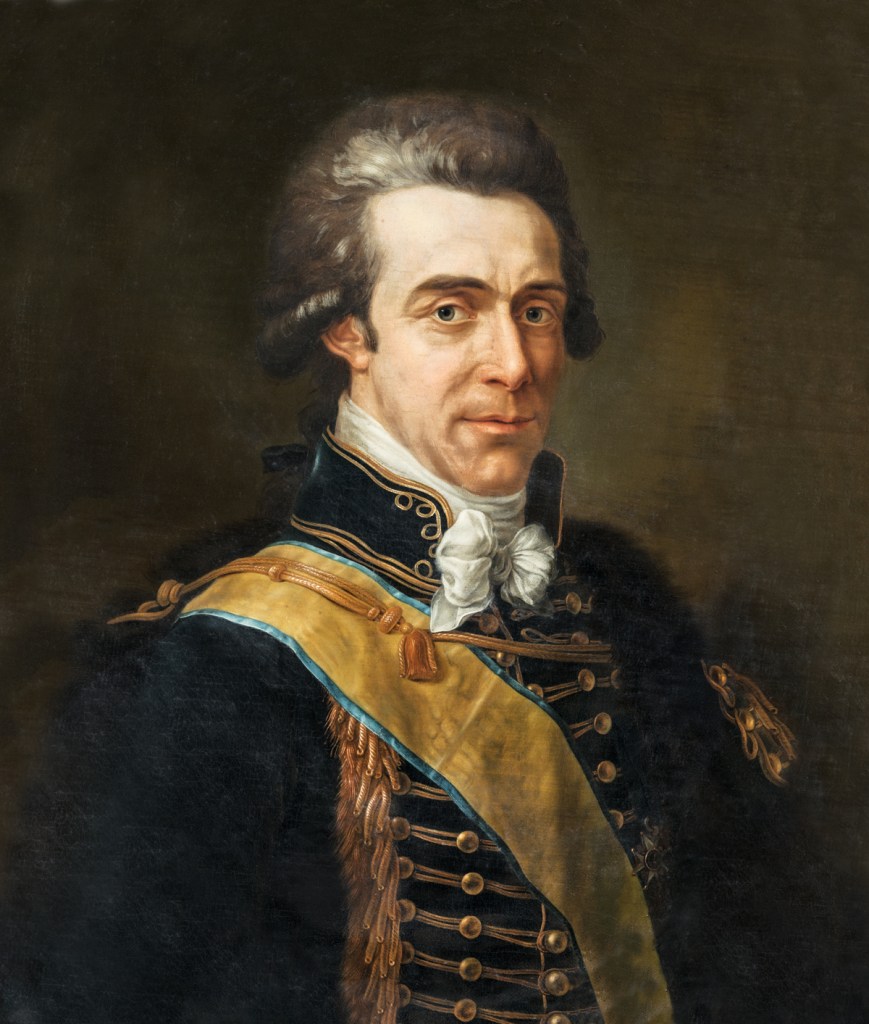
Later, von Fersen managed to visit the royal family incognito, but time was running out. Shortly thereafter, the political situation in Sweden also changed. About a month after he visited Paris, Gustav III was shot at a masquerade ball in Stockholm and died two weeks later. Between 1792 and 1796, Sweden was ruled by a guardian government, as Gustav III’s son, Gustav IV Adolf, was not yet of age. During this period, von Fersen gradually assumed a more prominent role in Swedish politics and was able to use the diplomatic experience he had gained in Europe.
During the reign of Gustav IV Adolf, von Fersen remained close to the centre of power. In 1799 he became one of the lords of the realm and chancellor of Uppsala University, and in 1801 he was appointed marshal of the realm. His position was based on long experience, international contacts and a clear anchoring in Gustavian Sweden. But the world that had shaped him was changing.
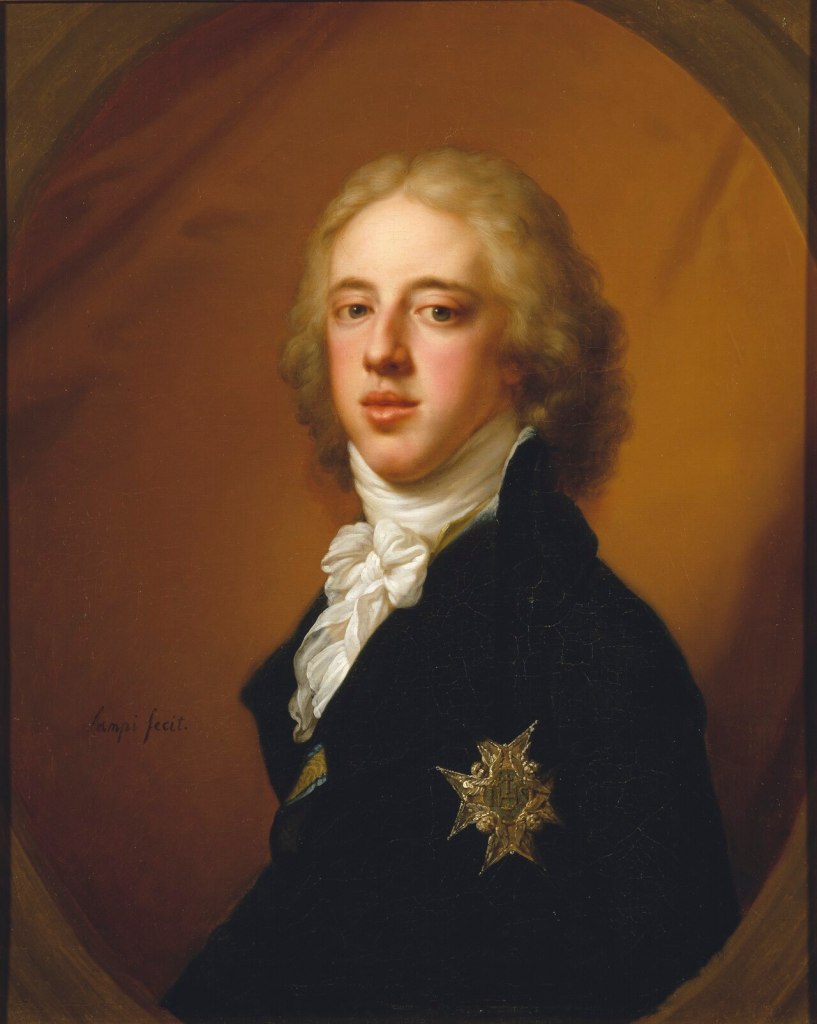
After the 1809 coup d’état, Sweden looked different. Gustav IV Adolf was deposed, the country had lost Finland, and a new constitution limited the monarchy’s power.
Von Fersen clung to the older Gustavian order, although he did not openly rebel against the new regime under Charles XIII. His loyalty placed him increasingly clearly on the wrong side of the new times.
In the spring of 1810, the situation became even more tense. The new heir to the throne, Karl August, died suddenly during a military exercise in Scania, and soon rumours began to spread that he had been poisoned. Suspicions were directed, among others, at Axel von Fersen and his sister Sophie Piper, despite the lack of evidence and the autopsy indicating natural causes. In a time of unrest, suspicion and political bitterness, the rumours quickly gained traction.
On June 20, 1810, Karl August’s funeral procession was carried through Stockholm. As Reichsmarschall, von Fersen had an official role in the ceremony, despite warnings that the city’s atmosphere was threatening. When the procession reached central Stockholm, the suspicion turned into open violence. An angry crowd attacked him, and although soldiers were on site, they did not intervene sufficiently to protect him.
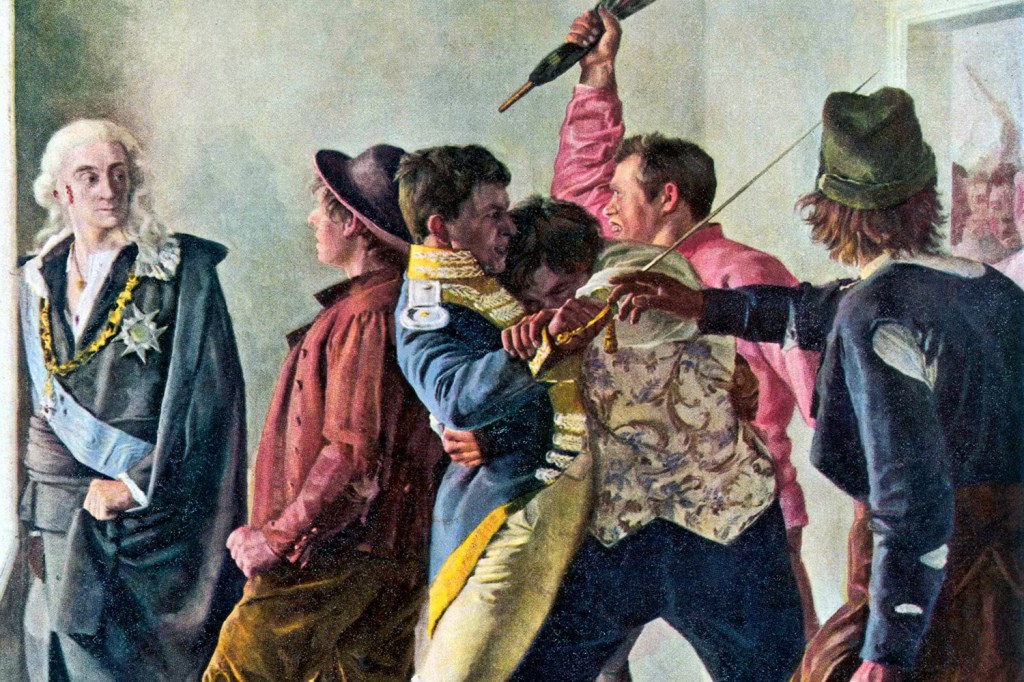
Von Fersen was dragged from his carriage, severely beaten and killed outside the Bondeska Palace. The incident later became known as the Fersen Murder and is considered one of the most shocking incidents of political violence in Swedish history. In retrospect, both he and his sister were cleared of suspicions of involvement in Karl August’s death, but by then the damage was already irreversible.
Axel von Fersen’s life, therefore, came to reflect a period of unrest and change. He moved between the world of the aristocracy, the chaos of the revolution, the crises of the monarchy and the growing power of public opinion. From the courts and battlefields of Europe to a violent death on the streets of Stockholm, his life story became a story of honour, loyalty and how quickly history can turn against those who were once close to power.
Sources:
Count Hans Axel von Fersen: aristocrat in an age of revolution – Arnold H. Barton
”Fersenska mordet”. Den svenska historien 11, Finland förloras. Karl Johan och freden – Gunvor Grenholm, Jerker Rosén, Sten Carlsson, Jan Cornell, red
Förbindelsen: Marie-Antoinette och Axel von Fersen – Kristina Ekero Eriksson

 Scandinavian History
Lämna en kommentar