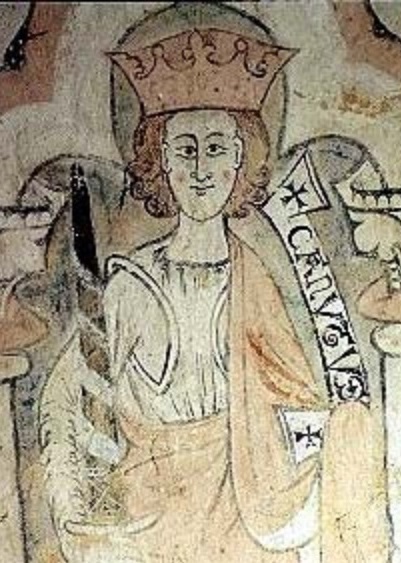
But returning to Knut: his reign was relatively peaceful, largely because those who had opposed his kingship—believing themselves better suited to rule the realm—were either dead or in exile. During his reign, he resumed the minting of coins that had originally begun in Sigtuna under Olof Skötkonung but had ceased a few years after the latter died in the 1020s.
Together with Jarl Birger Brosa, Knut also concluded a trade agreement with Henry the Lion, Duke of Bavaria and Saxony—the first known agreement of its kind in Swedish history. Knut Eriksson also formed an alliance with the Norwegian king Sverre Sigurdsson.
According to historian Dick Harrison, the calm that seems to have prevailed during the reign of Knut Eriksson was likely due to Jarl Birger Brosa—a name that simply meant ”Birger the Smiling.” One cannot help but wonder whether he was truly a smiling person or if, conversely, the name was meant sarcastically, implying that the very absence of a smiling personality might offer at least a partial explanation for the peace in the realm.
Knut died in 1196 after ruling the kingdom for nearly thirty years; unlike many others of his time, he passed away in his own bed at the Eriksberg royal estate in Västergötland.
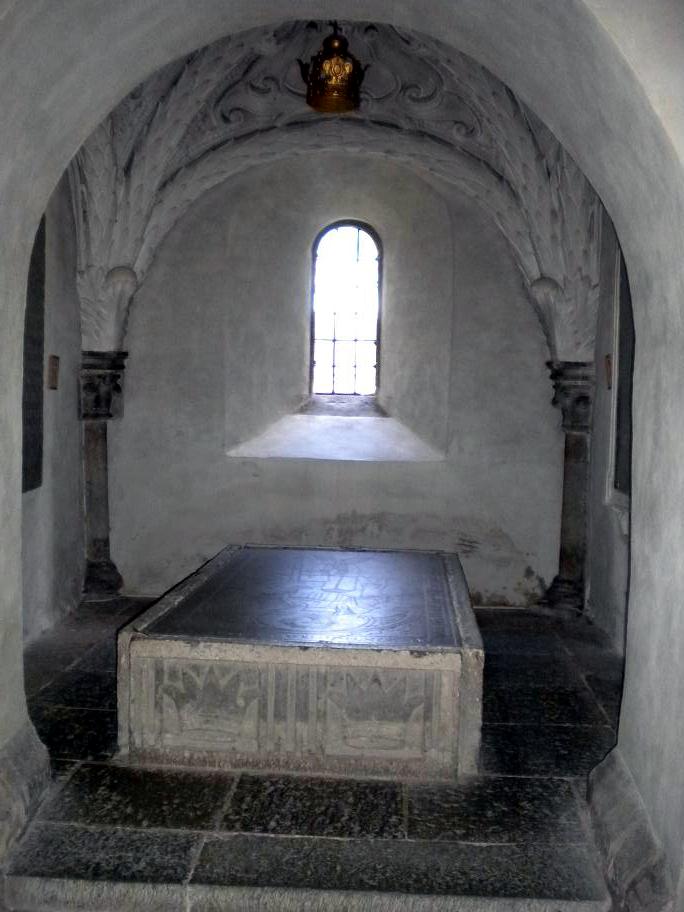
Like his later kinsman of the same name—Birger jarl—Birger Brosa belonged to the Bjälbo dynasty of Östergötland and ensured he remained in the immediate orbit of power. After Knut’s death, Karl Sverkersson’s son, Sverker Karlsson, returned to Sweden after growing up in Denmark, and Birger Brosa soon married off his daughter Ingegerd to the man now laying claim to the throne.
Birger Brosa’s dampening effect on simmering conflicts is confirmed by their resurgence upon his death in 1202. Older historical accounts suggest an agreement between the Houses of Sverker and Erik to ”take turns” ruling the country. Yet, modern historical research has failed to uncover any contemporary sources to substantiate it. That said, Sweden’s National Archives burned down—along with large parts of the Tre Kronor castle—in the late 17th century, so one cannot be absolutely certain what did or did not exist. Nevertheless, no such agreement can be confirmed today.
Once again, it was arguably the presence of Birger Brosa near the throne that ensured the transition from Knut Eriksson to Sverker Karlsson proceeded relatively smoothly. However, this proved to be only a brief respite. But one thing at a time. While a king may accomplish many things that are immediately apparent to his subjects, it is primarily the major events that endure in the historical record; in Sverker Karlsson’s case, this is above all the fact that he issued a charter of donation and privilege to Uppsala Cathedral in the year 1200—the oldest known general ecclesiastical privilege issued in Sweden.
It should be noted here that the church known as Uppsala Cathedral during Sverker Karlsson’s lifetime is not the same structure we envision today; rather, it was the church located in Gamla Uppsala. That site served as the seat of the archbishop before the see was moved to present-day Uppsala—then known as East Aros—where construction of the current cathedral began more than seventy years after the charter was issued.
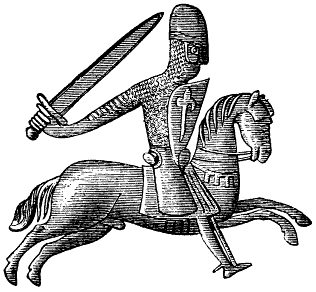
The charter established several provisions, including the right of clergy to be tried in their own courts and the exemption of church buildings and lands from royal levies—implying not only tax exemption but also freedom from contributing to the various exactions the monarch might otherwise demand from the secular population. This charter is regarded as a first step toward the emergence of an ecclesiastical estate exempt from secular obligations.
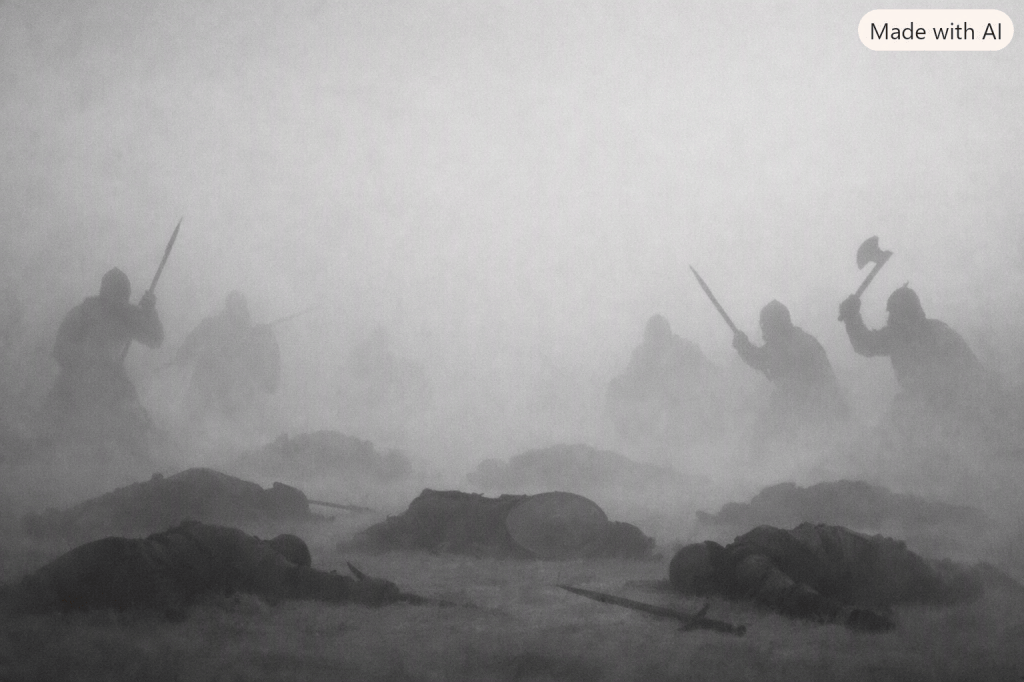
Fuel was added to the smouldering fire when Sverker appointed his one-year-old son, Johan, as jarl, thereby keeping the office within his own family. The surviving kin and supporters of the late Knut Eriksson viewed this as a threat, and the situation finally exploded. After sporadic violence over the following years, a critical confrontation occurred on November 14, 1205, when Sverker Karlsson and his troops faced off against the sons of Knut Eriksson at the royal estate of Älgarås in Tiveden, Västergötland.
According to a papal letter, Knut Eriksson’s sons had resided at Sverker’s court; however, it is impossible to determine whether this reflected the common custom of having the sons of magnates—or, in this case, kings—raised in the household or court of another nobleman, or if they had simply been held as hostages since the death of Knut Eriksson.
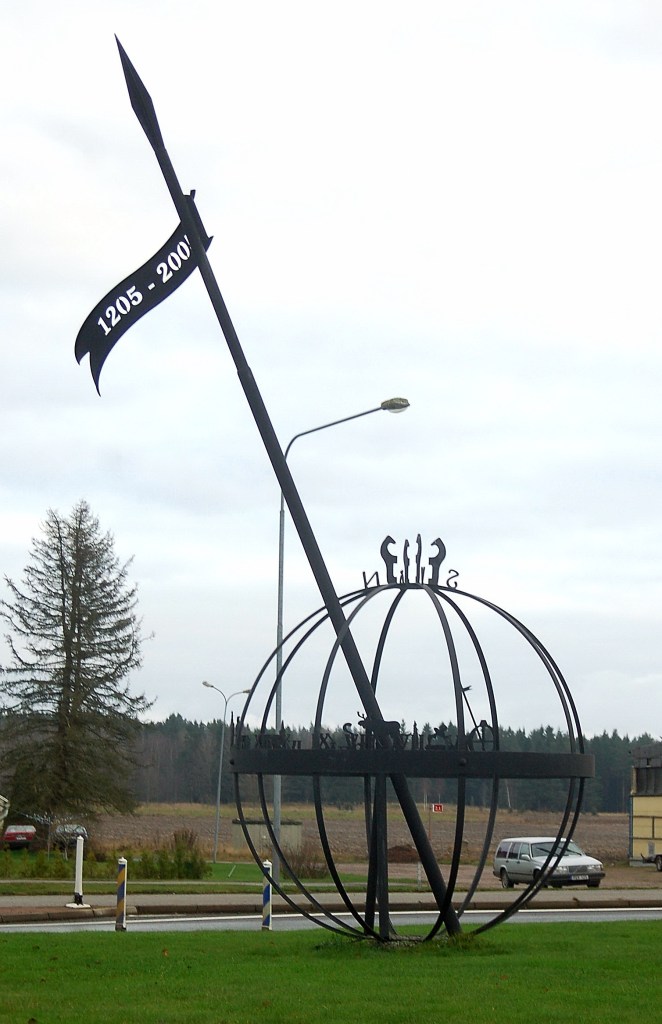
Details regarding the Battle of Älgarås are scarce and should be treated with scepticism; the first mention of the event appears in the ”Chronologia Vetus”, written more than sixty years later. However, Sverker Karlsson certainly emerged victorious, as he retained the throne for some time thereafter. In contrast, three of Knut’s sons were reportedly killed and a fourth, Erik Knutsson, fled to Norway.
A year later, Sverker himself fled to Denmark—for reasons that remain unclear—but returned in the winter of 1207–1208 with forces funded by the Danish king. Sverker Karlsson and Erik Knutsson clashed at Lena (also known as Kungslena) in what has become the single largest confrontation of this turbulent era. Sverker Karlsson is said to have commanded an army of 18,000 men—a figure likely vastly exaggerated—while Erik Knutsson had significantly fewer troops. Even if the figures for Sverker’s army were accurate, it made no difference; Erik Knutsson’s troops virtually annihilated his forces.
After fleeing to Denmark once more, Sverker returned again to fight for what he considered his right—this time in 1210 at Gestrilen, a location that remains unidentified to this day—where he fell in battle, bringing his personal story to an end.
In November 1210, the first historically documented coronation in Sweden took place, marking the moment Erik finally became king. Erik reconciled with Sverker Karlsson’s Danish protector, Valdemar Sejr; this also led to Erik marrying Valdemar’s sister, Rikissa.
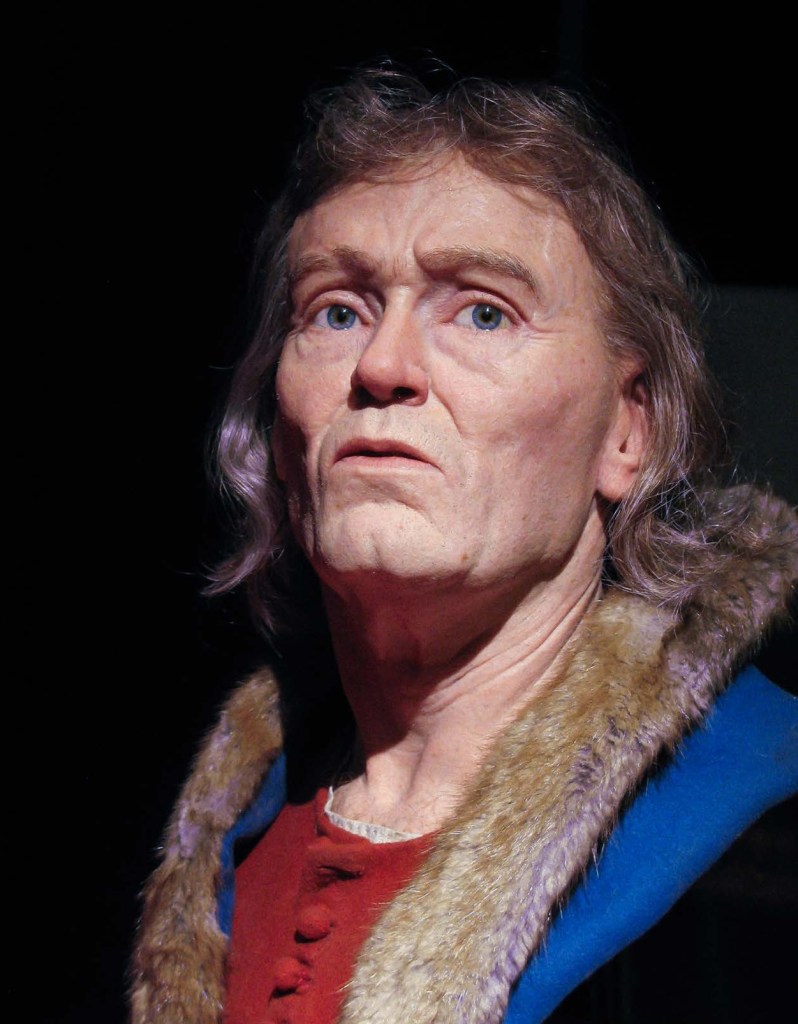
In April 1216—six years after the coronation—the Pope (by then Innocent III) confirmed that Sweden was Erik’s realm, though the letter conveying this news never reached him. That same month, Erik succumbed to a sudden fever at the royal residence on Visingsö and was later buried at Varnhem Abbey. Shortly thereafter, his and Rikissa’s son, also named Erik, was born. Being too young to succeed his father, Erik was denied the crown; instead, Sverker Karlsson’s son Johan was elected king and crowned in 1219. Neither Erik Knutsson’s brother-in-law Valdemar Sejr nor his supporters were willing to accept this passively, and the conflict flared up once more. This time, the Catholic Church spearheaded the push for reconciliation, with a multitude of papal letters about the situation in Sweden written between 1220 and 1221. The matter was quickly resolved, however; in 1222, Johan died—also at Näs Castle on Visingsö—thereby bringing the House of Sverker to an end.
The underage Erik Eriksson—known after his death as Erik the Lisp and Lame—reigned under a regency until 1229, when he was deposed following the Battle of Olustra (the final conflict in this narrative) and fought against the councillor Knut Holmgersson. However, Erik, the Lisp and Lame, returned to the throne in 1234 and ruled until he died in 1250, when the House of Erik also died out.
Erik’s nephew, Valdemar Birgersson, became king instead, but true power lay just behind the throne in the hands of his father—the man who would lay the foundations for Sweden’s future: Birger jarl.
Sources:
Sveriges Medeltid – Dick Harrison
Svenskt Diplomatariums Huvudkartotek
Den äldre Västgötalagens Kungalängd
Sverker den äldre – Svenskt Biografiskt Lexikon/Roger Axelsson
Erik den Helige – Svenskt Biografiskt Lexikon/Sture Bolin och Bengt Hildebrand
Magnus Henriksson – Svenskt Biografiskt Lexikon/Hans Gillingstam
Knut Eriksson – Svenskt Biografiskt Lexikon/Hans Gillingstam
Sverker den yngre – Svenskt Biografiskt Lexikon/Roger Axelsson

 Scandinavian History
Lämna en kommentar