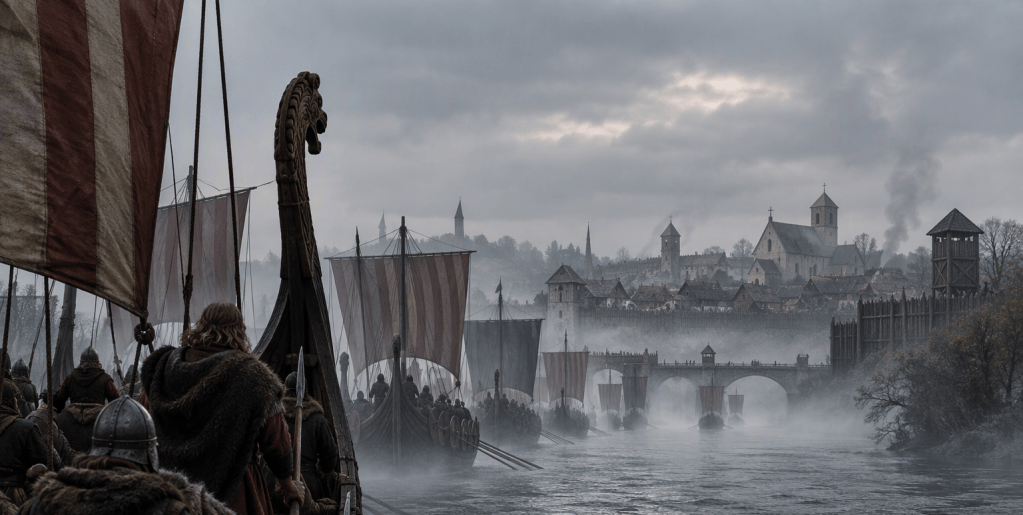
Few characters in television history have had as much impact as Ragnar Lothbrok from the series Vikings, which premiered in 2013. Just as in the 13th-century Saga of Ragnar Lothbrok — written roughly 400 years after Ragnar himself is said to have lived—he meets his end in a pit of snakes following a life of battle and conquest.
During the series’ run—and even afterwards, as it remains available on various streaming platforms—global interest in Scandinavian Viking Age history exploded; the focus shifted from the agrarian masses to those who ventured across the seas. That interest endures, and Ragnar’s ”descendants” keep growing on social media. But did Ragnar Lothbrok actually exist? That is what we shall examine more closely.
In fact, Ragnar Lodbrok—or Ragnarr loðbrók- in Old Norse—is best described as a legendary Norse king: a heroic royal figure whose story belongs to the saga tradition, yet may contain echoes of real people and events from the 9th century. Only a single contemporary source even mentions a ”Ragnar Lodbrok,” and beyond that, neither he nor his lineage, kingdom, or death can be verified through other, independent sources. However, it is evident that there are contemporary or near-contemporary accounts of Viking chieftains—they were not merely figments of imagination—and the ”Sons of Ragnar” were simply men whose father was named Ragnar (and who thus acquired the surname Ragnarsson) and whose stories were subsequently woven into his life through literary means.
But what, then, is a Saga king? Is it someone of the type found in Snow White or other tales immortalised by the Brothers Grimm? No, not exactly. In this context, a ”legendary king” does not automatically mean a fictional one. Instead, source criticism uses the term for a ruler known primarily through sagas, heroic poetry, and late chronicles—sources where it is impossible to reliably distinguish history from genealogical propaganda, folklore motifs, and literary invention.
Ragnar falls into this category because the coherent accounts of his life—such as the aforementioned Saga of Ragnar Lodbrok—were written centuries after the time he is said to have lived. The Store norske leksikon explicitly calls him a Nordic legendary king, and the Danish Lex describes him as a Danish legendary king with an uncertain historical basis.
The man most often identified as the historical Ragnar Lodbrok led the attack on Paris in 845. In historical sources, he is referred to as Reginheri or Reginherus—names certainly bearing some resemblance to Ragnar—and he is credited with leading the 845 raid on Paris. Given the name similarities, scholars generally consider three possibilities: a real Ragnar existed and became the basis for a heavily transformed legend, or he was a purely literary progenitor. The third option—perhaps the most likely—is that the Ragnar Lodbrok of the sagas is a composite figure who emerged from a blend of various men, family traditions, and migratory narrative motifs. Will we ever know which of these three theories is correct? In all likelihood, no—unless, of course, previously unknown sources suddenly come to light. For now, however, no archaeological evidence, inscription, grave, or contemporary document can be definitively linked to the figure of ”Ragnar Lodbrok.”
The research is therefore primarily historical, philological, and literary, involving the comparison of name forms, the establishment of event chronologies, the tracing of saga motifs, and the analysis of the political function of genealogies.
The fact that several of the sons claimed to be Ragnar’s may—in some instances—have historical counterparts does not automatically make the father a historical figure. ”Ragnar’s sons” may have been a later dynastic label, a claim of shared ancestry, or a literary framework. Claiming a near-mythological origin was by no means unusual, particularly among the ruling class in earlier times.
The difficulty in confirming Ragnar Lodbrok’s actual historical existence stems partly from the nature of the surviving sources. At the same time, one can find fragments that—so to speak—shape the figure of Ragnar; the man himself remains elusive. Ninth-century Frankish annals recount the story of the aforementioned Reginheri (or Reginherus), a Norse leader who, in 845, led a large fleet up the Seine, seized the Paris region, and extracted an enormous payment from Charles the Bald.
Viewers of the series ”Vikings” will recognise this event, though, as is often the case, reality differed somewhat from the show’s depiction. These sources are the closest in time to the events described, yet none refer to him as ”Lodbrok,” nor link him to the snake pit where he supposedly met his end or to his famous sons.
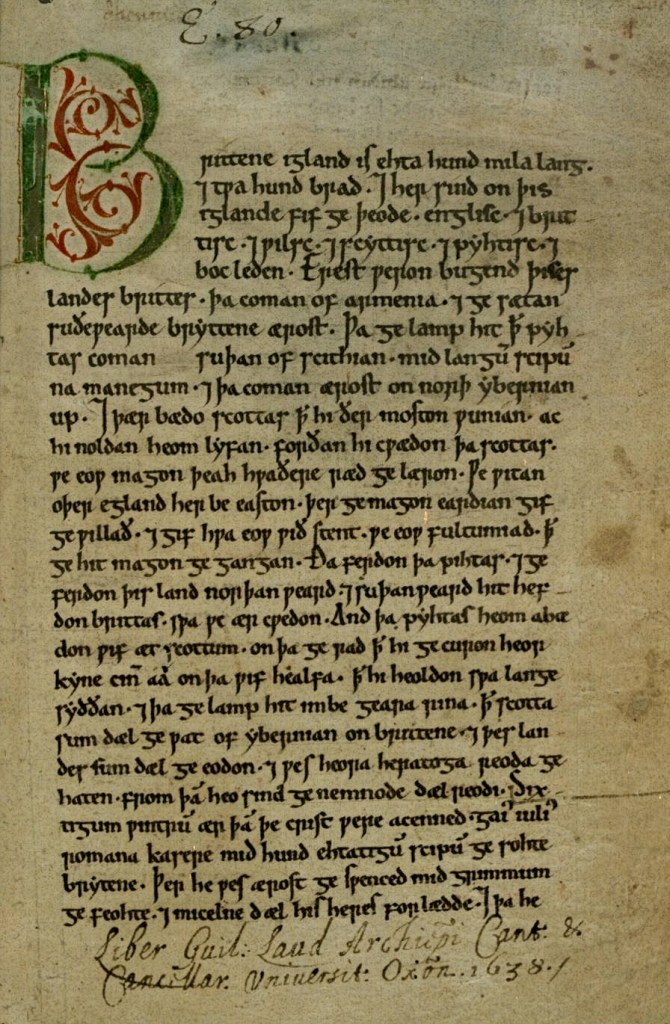
The Anglo-Saxon Chronicle, for its part—along with other English sources—attests to Viking chieftains such as Ivar, Ubbe, and Halfdan, as well as the Great Heathen Army’s assault in 865. However, none of these sources claims that any of these Viking warriors had a father named Ragnar Lodbrok.
Bragi the Old—or Bragi Boddason, as he was actually named—is the earliest Norse skald whose poetry has survived in part. He lived during the 9th century and served as a skald for a succession of kings and chieftains; he is said to have served Björn of Håga—the Björn associated with the Håga burial mound—as well as various other kings who straddle the fine line between saga and historical reality. Among them was a king named Ragnar, for whom Bragi composed the encomium Ragnarsdrápa. This poem is generally considered to contain early motifs linked to a Ragnar—though, unsurprisingly, it is unclear which Ragnar. Furthermore, the poem’s dating, its intended recipient, and its relationship to the later figure of Lodbrok remain subjects of debate.
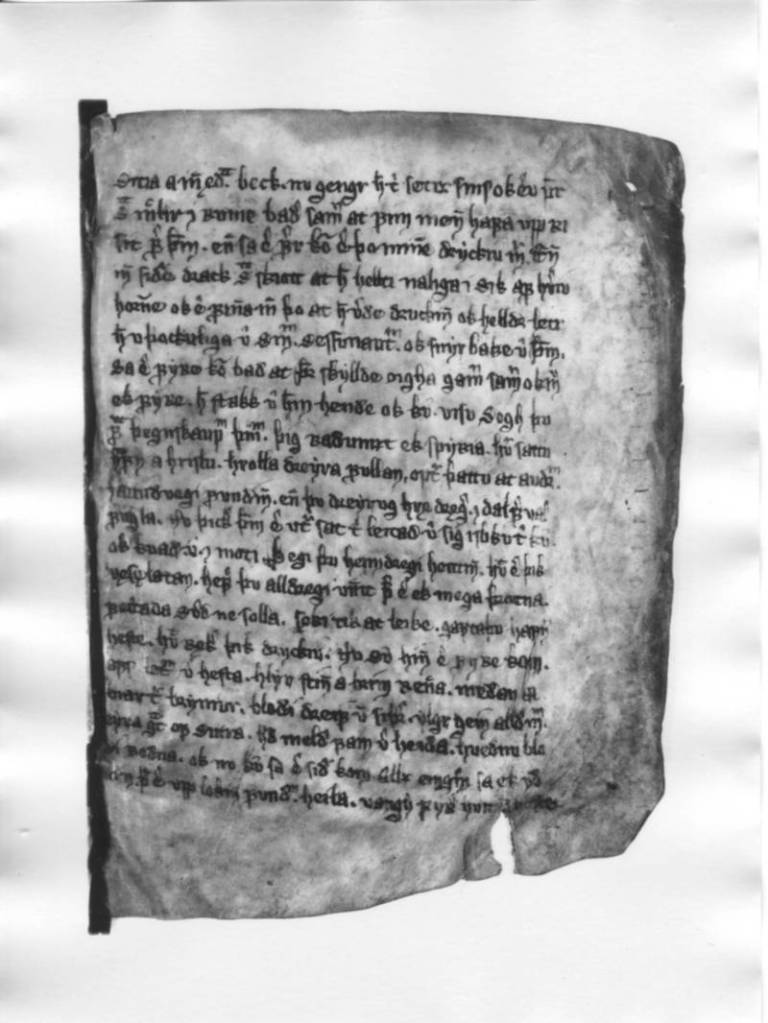
Then there is the Icelandic skaldic poem Krákumál, said to be Ragnar’s ”death song”; in it, while lying in King Ælla’s snake pit, he reflects upon his life—his battles, conquests, and other exploits. The problem with Krákumál, however, is simply that it was written in the 12th century—in other words, around 300 years after Ragnar is said to have died—and is therefore not a reliable source, let alone an eyewitness account.
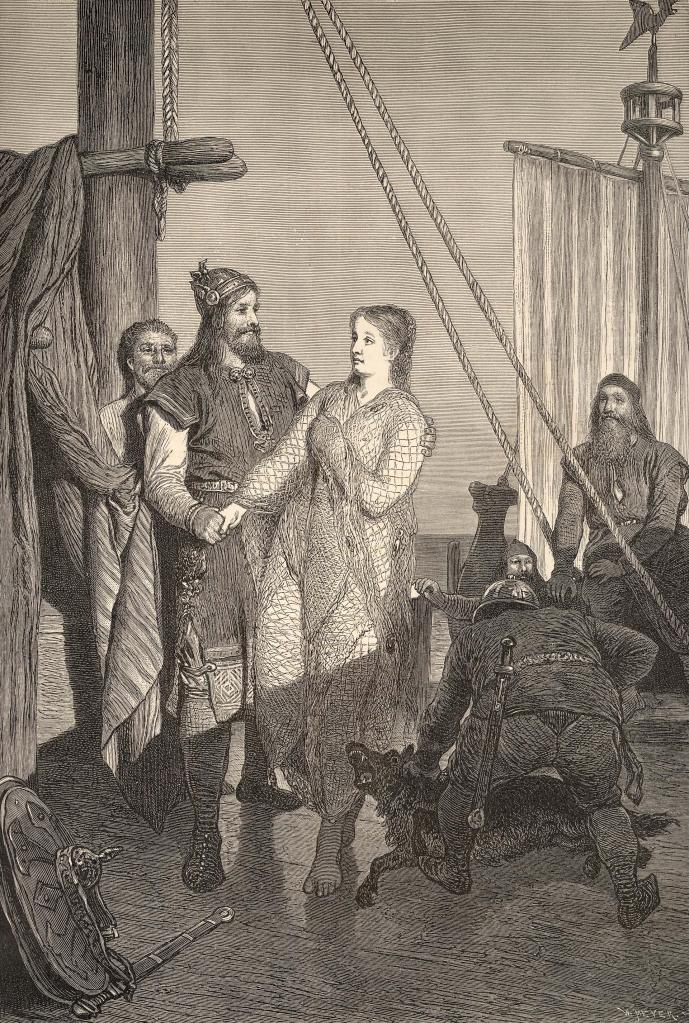
A century later—that is, in the 13th century—the Danish historian Saxo Grammaticus wrote Gesta Danorum, in which Regnerus (the man who led the attack on Paris and is presumed to be identical to Ragnar) is portrayed as a Danish king. Saxo conflates numerous military campaigns, wives, and sons into a sprawling amalgam of royal biography and depicts him dying at the hands of King Ælla. It is also in Saxo’s work that Ladgerda—or ”Lagertha”—appears as Ragnar’s love interest, the mother of his first two children (including ”Björn Ironside”), and later his comrade-in-arms; indeed, Ladgerda is not mentioned at all in the Saga of Ragnar Lothbrok, making Gesta Danorum the first work to mention her.
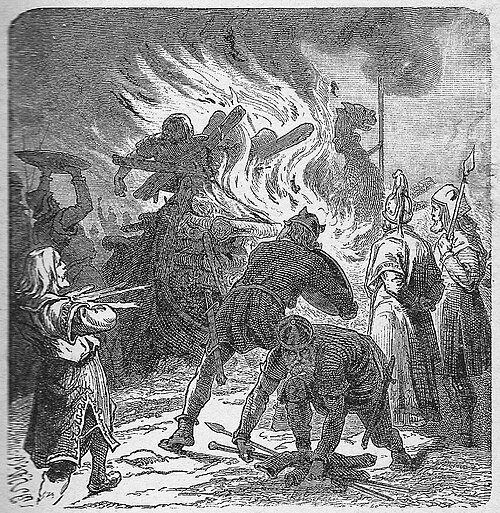
The Icelandic fornaldarsögur—specifically Ragnars saga loðbrókar (Saga of Ragnar Lodbrok) and Þáttr af Ragnars sonum (The Tale of Ragnar’s Sons)—present a different Ragnar than the one depicted by Saxo. In the West Norse tradition—and the Icelandic tradition in particular—Ragnar is the son of Sigurd Ring, best described as a Swedish king who, for at least a time, ruled over both Sweden and Denmark.
These sources provide the information about Uppland and its connection to Uppsala. This theory relies primarily on late genealogies found in Ragnars saga, Þáttr af Ragnars sonum, Sögubrot, and related saga literature. These lineages link Ragnar to earlier cycles of heroes and kings—thereby conferring dynastic prestige—which makes them difficult to use as evidence for his birthplace. As noted, Ladgerda is not mentioned in these sagas; instead, Ragnar is married successively to Thora and Aslaug (also known for a time as Kraka)—the latter being the daughter of other legendary figures such as Sigurd Fafnir’s bane (the dragon slayer) and the valkyrie Brynhild.
As noted above, Saxo and Danish historiography claim Ragnar as a Danish king. This is based on the fact that Reginheri—the man who captured Paris in 845—appears in Frankish sources as a leader within a Danish political context, likely linked to King Horik I. The strongest basis for this Danish theory lies in continental annals and the geographical setting found in Danish tradition. However, these annals only attest to Reginheri’s activities and connections; they do not prove he was identical to Ragnar Lodbrok.
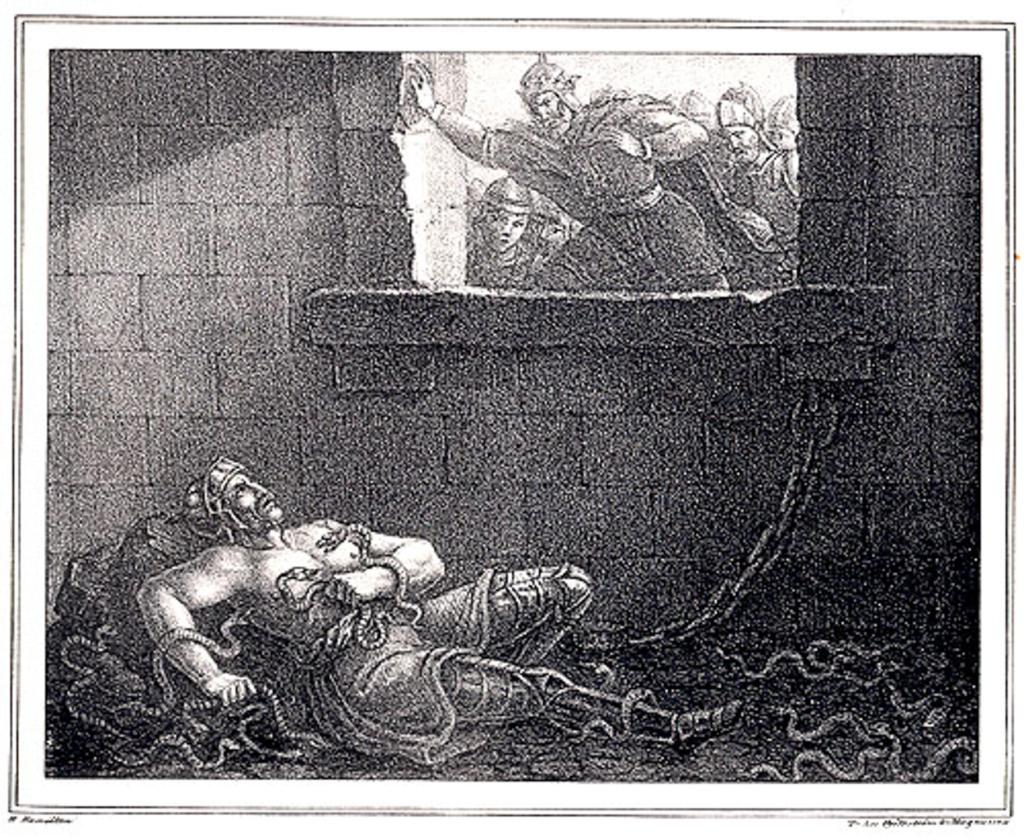
Naturally, Norway does not want to be outdone and has long joined the fray over Ragnar Lodbrok’s origins. This claim relies primarily on the geography of the tales and family histories, noting that the meeting with Aslaug/Kraka takes place in Norway and that Saxo’s Lagertha—who does not appear in the actual saga—is Norwegian. Yet, if one takes a critical stance, this proves nothing. In an era when it was possible to travel from the Mälardalen region to Constantinople, a journey from Mälardalen to Norway would certainly have been simple.
It should also be noted that the question of Ragnar’s potential birthplace is anachronistic—that is, it involves projecting modern concepts onto an earlier era. In the ninth century—the time when Ragnar Lodbrok is said to have lived, if indeed he existed at all—Denmark did not even exist as an actual nation-state.
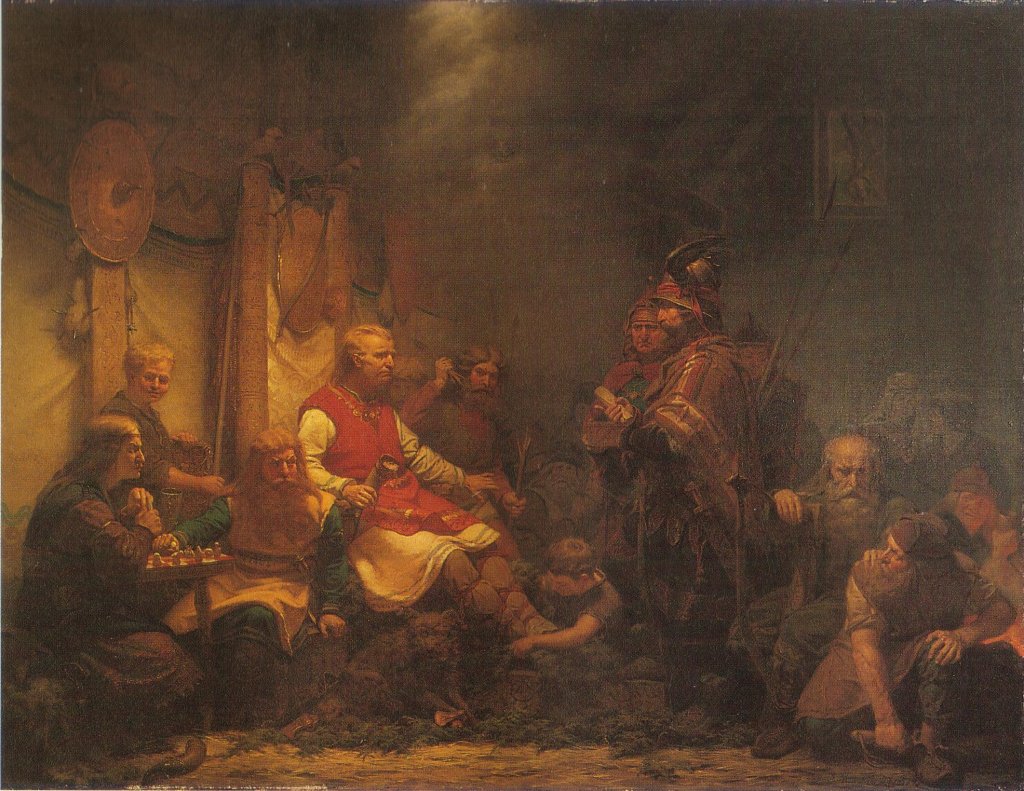
None of this, however, has prevented various Nordic royal dynasties from seeking to gain prestige through an alleged connection to Ragnar and his sons. The conclusion is that the Ragnar tradition was shared across Scandinavia, yet it offers a flimsy basis for pinpointing his birthplace.
Finally, it is worth noting that there is no mention of a ”Ragnar Lodbrok” in sources contemporary with his supposed lifetime; at the same time, the legend surrounding him and his sons appears to have originated early on, even though it was—for easily understandable reasons—only recorded in writing some centuries later. The only thing we can say with certainty about Ragnar Lodbrok is that, while no sources prove his existence, no sources prove he never lived. Perhaps that is how it should be.
Sources:
Anglo-Saxon Chronicle
Saxo Grammaticus, Gesta Danorum, bok IX (omkring 1200), för den danska Regnerusberättelsen.
Ragnars saga loðbrókar
Þáttr af Ragnars sonum,
Krákumál
Encyclopaedia Britannica, ”Ragnar Lothbrok”.
Lex.dk, ”Ragnar Lodbrog”.
Store norske leksikon, ”Ragnar Lodbrok”,
World History Encyclopedia, Emma Groeneveld, ”Ragnar Lothbrok”,
McTurk, Rory W., Studies in Ragnars saga loðbrókar and Its Major Scandinavian Analogues, 1991
Smyth, Alfred P., Scandinavian Kings in the British Isles 850–880, 1977.
Sawyer, Peter, The Age of the Vikings, 2 uppl., 1971,


Lämna en kommentar